
Polideini
Genus Guides
9Polideini is a tribe of bristle flies (Diptera: Tachinidae) comprising approximately 16 and at least 40 described . The tribe is notable within Tachinidae for its unusual diversity of , which extends beyond typical insect larvae to include spiders, scorpions, and centipedes. This broad host range distinguishes Polideini from most other tachinid tribes.
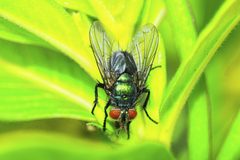
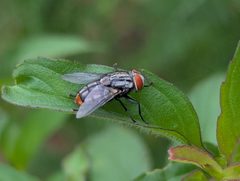
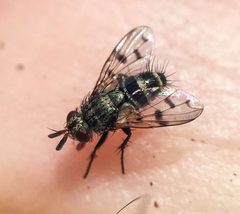
Pronunciation
How to pronounce Polideini: //ˌpɒlɪˈdeɪˌɪnaɪ//
These audio files are automatically generated. While they are not always 100% accurate, they are a good starting point.
Identification
Polideini can be distinguished from other Tachinidae tribes by a combination of morphological characters and, more definitively, by their distinctive associations. Members of this tribe exhibit a broader host spectrum than typical tachinids, with documented of arachnids and myriapods in addition to insects. Generic-level identification requires examination of chaetotaxy, male terminalia, and wing venation patterns. The tribe includes such as Hystricia, Lydina, and Lypha, which can be separated by details of facial profile, scutal setation, and abdominal shape.
Images
Distribution
Polideini has a broad distribution with records from multiple biogeographic regions. The tribe is represented in the Nearctic region (north of Mexico), where O'Hara (2002) provided a comprehensive revision. Multiple occur in the Neotropical region, including Argentina, Brazil, Chile, and Mexico. The tribe is also present in the Palaearctic region (Europe, Russia, China) and has been recorded from Taiwan, Japan, and various Pacific islands including Tahiti and French Polynesia. Specific distribution varies by genus, with some genera showing restricted ranges while others are more widespread.
Diet
Larval Polideini are . The tribe exhibits exceptional diversity within Tachinidae, with documented hosts including: insect larvae (Lepidoptera, Coleoptera, and other insects), spiders (Araneae), scorpions (Scorpiones), and centipedes (Chilopoda). This range extends beyond the typical insect-larva hosts of most tachinid flies. Specific host associations vary by and .
Host Associations
- Araneae (spiders) - unusual for Tachinidae
- Scorpiones (scorpions) - unusual for Tachinidae
- Chilopoda (centipedes) - unusual for Tachinidae
- Lepidoptera larvae - typical tachinid
- Coleoptera larvae - typical tachinid
Life Cycle
As with other Tachinidae, Polideini undergo complete with , larval, pupal, and stages. Females deposit eggs or larvae (depending on ) on or near . Larvae penetrate host bodies and develop as internal , eventually killing the host. typically occurs in the host remains or in soil. Specific details of oviposition mode and larval development vary among genera.
Ecological Role
Polideini functions as agents of various . Their of spiders, scorpions, and centipedes represents a unique ecological role among Tachinidae, potentially regulating populations of these predatory arthropods. The tribe contributes to arthropod dynamics through top-down across multiple .
Human Relevance
Some Polideini have been investigated for potential, particularly against pest insects. The broad range of certain species may present both opportunities and risks for biocontrol applications. No species are known to be of direct medical or veterinary importance to humans.
Similar Taxa
- other Tachinidae tribesPolideini differs from related tribes primarily in range; most Tachinidae are restricted to insect hosts, while Polideini regularly parasitizes arachnids and myriapods. Morphological distinctions require detailed examination of chaetotaxy and male terminalia.
More Details
Taxonomic history
The tribe was revised for America north of Mexico by O'Hara (2002, Studia Dipterologica Supplement 10). The classification and generic composition have been subject to revision as phylogenetic relationships within Tachinidae are clarified.
Notable genera
The tribe includes approximately 40 described in 16 , including: Hystricia Macquart, 1844; Lydina Robineau-Desvoidy, 1830; Lypha Robineau-Desvoidy, 1830; Anagrus (not to be confused with the mymarid genus); and numerous other genera established primarily by Townsend in the early 20th century.