
Hystricia
Macquart, 1844
Species Guides
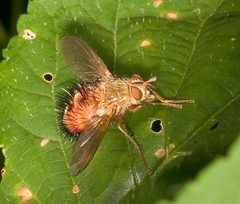
1- Hystricia abrupta(Spiny-butt fly)
Hystricia is a of tachinid flies established by Macquart in 1844, containing approximately 23 described distributed primarily in the Americas. These flies are characterized by large body size and spiny abdominal tergites, a trait common to many Tachinidae. Like other members of their , they are of other insects. The genus has been subject to taxonomic revision, with species described by multiple authors including Curran, Wulp, and Rondani.
Pronunciation
How to pronounce Hystricia: /hɨˈstrɪʃiə/
These audio files are automatically generated. While they are not always 100% accurate, they are a good starting point.
Identification
Hystricia are large, robust tachinid flies frequently confused with Adejeania and Paradejeania. Hystricia abrupta specifically resembles Adejeania vexatrix but lacks the elongated palps that form a beak-like around the mouthparts present in that species. Members of Hystricia can be distinguished from Paradejeania rutilioides by generally less robust body form and less pronounced abdominal spination. Species-level identification within Hystricia requires examination of specific characters such as tibial coloration, scutal patterning, and palp structure; several species were described by Curran in 1942 based on these features.
Images
Distribution
The Hystricia is distributed in the Americas, with records from North America including the United States (Vermont) and extending southward through Central and South America based on epithets such as argentinensis and authorship by South American dipterists. Specific distribution data varies by species.
Host Associations
- caterpillars - Hystricia abrupta has been observed as a of caterpillars, though specific documentation is lacking
Behavior
of at least one , Hystricia abrupta, have been observed taking nectar from flowers. This is inferred to occur in late summer and fall based on observations of similar sympatric tachinid species.
Ecological Role
As of caterpillars, Hystricia contribute to natural of lepidopteran . flower-visiting suggests potential role as , complementing bees and other primary pollinators.
Human Relevance
Tachinid flies including Hystricia provide services through control of pest caterpillar , reducing potential agricultural and forestry damage without direct human management.
Similar Taxa
- AdejeaniaLarge size and general body form cause frequent confusion; Adejeania vexatrix possesses distinctive beak-like elongated palps absent in Hystricia
- ParadejeaniaShared large size and abdominal spination lead to misidentification; Paradejeania rutilioides is more robust and spinier with more subdued orange coloration
- MacromyaMacromya crocata resembles Adejeania vexatrix and by extension Hystricia abrupta; lacks beak-like palps like Hystricia
More Details
Taxonomic History
The has undergone substantial -level description, with numerous species erected by Charles Howard Curran in 1942. James E. O'Hara described Hystricia currani in 2002, indicating ongoing taxonomic attention. Some species have been transferred into Hystricia from other genera, as indicated by parenthetical authorships in species names.
Nomenclatural Note
Hystricia rufohirta appears twice in lists with different authorships (Engel, 1920 and Curran, 1942), suggesting either homonymy, replacement name, or taxonomic confusion requiring resolution.