
Ernestiini
Genus Guides
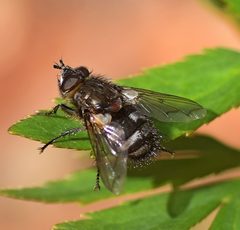
8Ernestiini is a tribe of flies within the Tachinidae. The tribe contains approximately 40 distributed across multiple continents. Members are recognized as tachinid flies that serve as parasitoids of other insects, though specific associations vary by genus and .
Pronunciation
How to pronounce Ernestiini: /ɛrˈnɛstiː.iːnaɪ/
These audio files are automatically generated. While they are not always 100% accurate, they are a good starting point.
Identification
Ernestiini can be distinguished from other Tachinidae tribes by combinations of morphological characters including chaetotaxy (bristle arrangement), wing venation patterns, and male genitalia structure. The tribe is morphologically diverse, encompassing with varied body forms from slender to robust. Definitive identification to genus level requires examination of specific diagnostic characters such as the presence or absence of proclinate orbital setae, postscutellum development, and details of the abdominal sternite structure.
Images
Distribution
The tribe has a broad distribution with recorded from the Palearctic, Nearctic, Afrotropical, Oriental, and Australasian regions. Specific distribution patterns vary considerably among constituent genera, with some genera restricted to single regions while others span multiple continents.
Ecological Role
As members of Tachinidae, Ernestiini function as , contributing to the of other insect . The tribe includes that parasitize various orders, though specific host ranges are documented for individual species rather than the tribe as a whole.
Similar Taxa
- TachininiTachinini is another tribe within Tachininae; Ernestiini can be separated by differences in abdominal chaetotaxy and male terminalia structure, though precise boundaries between these tribes have been subject to taxonomic revision.
- MacquartiiniAlso within Tachininae, Macquartiini shares general tachinid but differs in specific bristle arrangements and wing characteristics that require detailed examination to distinguish.
More Details
Taxonomic History
The tribal classification within Tachininae has undergone significant revision. The composition of Ernestiini has been modified through various taxonomic treatments, with some transferred to or from the tribe based on phylogenetic analyses and morphological re-evaluations.