
Nemoraeini
Genus Guides
2Nemoraeini is a tribe of tachinid flies ( Tachinidae) within the Tachininae. The tribe contains approximately ten , including Nemoraea, Macromya, and Lasion. Members are flies, though specific associations remain poorly documented for most genera. The tribe has a broad distribution with records across multiple continents.
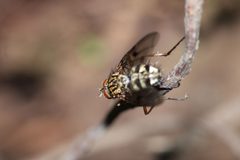
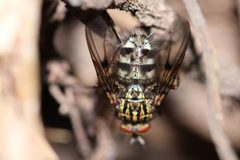
Pronunciation
How to pronounce Nemoraeini: //nɛˈmɔr.aɪ.aɪˌnaɪ//
These audio files are automatically generated. While they are not always 100% accurate, they are a good starting point.
Identification
Nemoraeini can be distinguished from other tachinid tribes by combinations of bristle patterns on the and , though precise diagnostic characters vary by . The type genus Nemoraea and related genera such as Macromya often exhibit distinctive abdominal coloration patterns. Identification to tribe level generally requires examination of postpronotal bristles, discal bristle arrangement on the scutellum, and male terminalia structure. Separation from the closely related tribe Tachinini often depends on subtle differences in the and leg bristling.
Images
Distribution
Records of Nemoraeini span the Palearctic, Nearctic, Neotropical, Oriental, and Afrotropical regions. The genus Nemoraea has been documented across Europe and Asia. Macromya occurs in the Palearctic region. Several genera including Calohystricia and Xanthophyto are primarily Neotropical. The tribe is absent from oceanic islands and has limited representation in Australia.
Ecological Role
As members of Tachinidae, Nemoraeini function as , though specific ranges are largely undocumented. The tribe contributes to of herbivorous insects through larval , but quantitative ecological impact has not been assessed.
Human Relevance
No direct economic importance has been documented. Individual have potential value in programs, but none have been commercially developed.
Similar Taxa
- TachininiOverlaps in general and shares Tachininae; distinguished by prosternal and leg bristle characters
- ErnestiiniAnother Tachininae tribe with similar body plan; differs in abdominal bristle patterns and male terminalia structure
More Details
Generic composition
The tribe comprises ten recognized : Calohystricia, Ceromasiopsis, Hypotachina, Hystriomyia, Lasiona, Lasiopalpus, Macromya, Nemoraea, Xanthophyto, and Xylocamptomima. Generic boundaries have been historically unstable, with some transferred between Nemoraeini and related tribes based on phylogenetic revisions.