
Atrusca
Kinsey, 1930
Species Guides
9- Atrusca aggregata
- Atrusca brevipennata(little oak-apple gall wasp)
- Atrusca capronae(striped oak-apple gall wasp)
- Atrusca carolina
- Atrusca clavuloides
- Atrusca cubitalis
- Atrusca quercuscentricola(Spotted Oak Apple Gall Wasp)
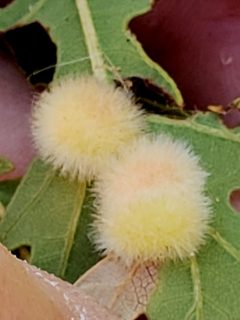
- Atrusca trimaculosa(Woollybear Gall Wasp)
- Atrusca unica
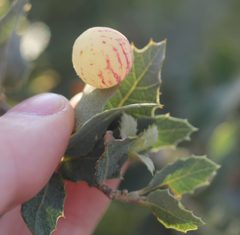
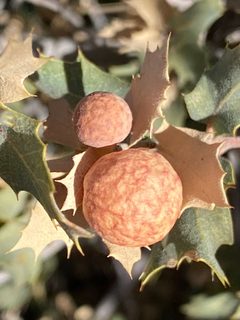
Atrusca is a of gall wasps in the Cynipidae, tribe Cynipini, comprising approximately 42 distributed across North and Central America. These tiny are specialized herbivores that induce characteristic galls on oak (Quercus) plants. The genus forms a phylogenetically distinct clade most closely related to Cynips, Philonix, and Xanthoteras, and morphologically resembles Cynips and Antron. Species exhibit high host specificity, with each typically restricted to one or a few closely related oak species.
Pronunciation
How to pronounce Atrusca: /æˈtrʌska/
These audio files are automatically generated. While they are not always 100% accurate, they are a good starting point.
Identification
Members of Atrusca can be distinguished from related cynipid by their morphological affinities to Cynips and Antron. The genus is characterized by its phylogenetically distinct position within the Cynipini. -level identification requires examination of gall , plant association, and detailed morphological features; a key to species is available in taxonomic revisions. The bella includes several closely related species that require careful .
Images
Habitat
Oak-dominated including woodlands, forests, and savannas where Quercus occur. Specific preferences vary by species and follow the distribution of their respective oak hosts, ranging from dry scrub to mesic forest environments.
Distribution
Nearctic and Neotropical regions, primarily North America (United States and Mexico) and Central America. The extends from Baja California Norte, Mexico through the southwestern and eastern United States.
Host Associations
- Quercus - Gall induction; larval development within plant tissueAll induce galls on oak ; host specificity varies from monophagous to oligophagous
- Quercus dumosa - Gall inductionSpecific for Atrusca dumosae in Baja California Norte, Mexico
- Quercus stellata - Gall induction for Atrusca quercuscentricola, which produces colorful leaf galls
Life Cycle
Complex typical of Cynipini with alternating sexual and , though some are known only from asexual females. Females inject into oak leaf or stem tissue using their ovipositor. Larvae secrete plant growth-like that induce gall formation, within which they feed and develop. Development proceeds through larval and pupal stages before through a pre-formed exit hole.
Behavior
females use their elongated ovipositor like a hypodermic needle to inject directly into plant tissues. The are incapable of stinging humans. Larval development involves manipulation of plant growth processes to create specialized gall structures that provide nutrition and protection.
Ecological Role
As gall inducers, Atrusca act as engineers that create novel plant structures providing microhabitats for a diverse of gall , , and hyperparasitoids. Their high specificity contributes to the structural complexity of oak ecosystems and supports interactions involving multiple .
Human Relevance
Atrusca galls serve as indicators of oak health and biodiversity. The has been subject to intensive taxonomic study, with recent revisions clarifying boundaries and synonymies. Some species produce visually distinctive galls that attract attention from naturalists and photographers.
Similar Taxa
- CynipsMorphologically similar; both produce round detachable galls on oaks and share phylogenetic proximity within the Cynipini
- AntronMorphological resemblance in general body plan and gall-forming habits on oaks
- PhilonixPhylogenetically closely related within the same clade of Cynipini
- XanthoterasPhylogenetically closely related; formerly included now transferred back to this re-established
Sources and further reading
- BugGuide
- Wikipedia
- GBIF taxonomy match
- iNaturalist taxon
- NCBI Taxonomy
- Catalogue of Life
- Cynipidae | Beetles In The Bush
- nature | Beetles In The Bush | Page 9
- Insecta | Beetles In The Bush | Page 8
- glades | Beetles In The Bush
- landscapes | Beetles In The Bush | Page 5
- entomology | Beetles In The Bush | Page 7
- New Atrusca gallwasp species from Baja California, Mexico (Hymenoptera: Cynipidae: Cynipini)
- Review of the Nearctic and Neotropical genus Atrusca Kinsey, 1930 (Hymenoptera: Cynipidae, Cynipini)