
Antron
Kinsey, 1930
Species Guides
3- Antron douglasii(Spined Turban Gall Wasp)
- Antron quercusechinus(urchin gall wasp)
- Antron quercusnubila
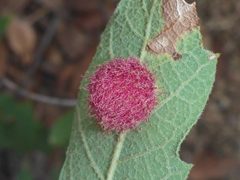
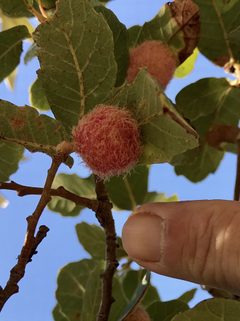
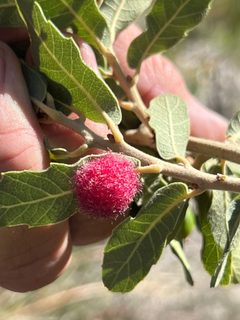
Antron is a of gall wasps in the Cynipidae. These insects induce distinctive galls on oak trees (Quercus ), with the urchin gall induced by A. quercusechinus being particularly notable for its striking appearance. The genus belongs to the tribe Cynipini, which contains the majority of oak gall wasps. Species in this genus are specialized to specific oak and gall locations.
Pronunciation
How to pronounce Antron: //ˈæntrɒn//
These audio files are automatically generated. While they are not always 100% accurate, they are a good starting point.
Identification
Antron are distinguished from other Cynipidae by the specific of the galls they induce on oaks. The urchin gall (induced by A. quercusechinus) is approximately 1.5 cm in diameter with a spiny, spherical structure that has been described as among the most bizarre galls on oaks. Identification to species level typically requires examination of the gall structure, oak species, and microscopic features of the .
Images
Habitat
in this are associated with oak woodlands and forests, particularly those containing blue oak (Quercus douglasii), valley oak (Q. lobata), and other white oak species (section Quercus).
Distribution
The is found in North America, with records from Denmark, Norway, and other regions based on distribution data. Specific such as A. quercusechinus are documented from California and western North America where their oaks occur.
Host Associations
- Quercus douglasii - gall inductionblue oak, of A. quercusechinus
- Quercus lobata - gall inductionvalley oak
- Quercus garryana - gall inductionOregon oak
- Quercus berberidifolia - gall inductionscrub oak
- Quercus durata - gall inductionleather oak
- Quercus dumosa - gall inductionscrub oak
- Quercus turbinella - gall inductionshrub live oak
- Quercus - gall induction-level association for multiple
Life Cycle
Like other Cynipidae, Antron have a involving gall induction on oak tissue. The female lays in actively growing plant parts, and the developing larva lives inside the gall, which provides shelter and food. The larva typically chews an exit tunnel before pupating, as the lacks mouthparts capable of penetrating the gall wall. Adults emerge from the galls to reproduce.
Behavior
Females are highly specific in oviposition site selection, choosing particular oak and precise locations on the plant (leaves, stems, buds). The gall formation is triggered by substances in the female's saliva or fluids, or by those of the developing offspring, though the exact mechanism remains unknown.
Ecological Role
As gall inducers, these manipulate plant growth to create specialized microhabitats. The galls may serve as food sources for other organisms and contribute to biodiversity in oak . The relationship is generally not lethal to trees, even when galls are abundant.
Human Relevance
Antron-induced galls are of interest to entomologists and naturalists for their remarkable morphological diversity. They have no known economic importance, unlike some other gall wasps such as those affecting grapes or commercially important oaks.
Similar Taxa
- CynipsAlso in tribe Cynipini with similar oak gall associations; distinguished by gall and morphological features
- DisholcaspisAnother Cynipidae inducing structurally complex galls on oaks; produces galls such as the beaked twig gall and oak apple galls with different forms
- AndricusLarge Cynipini with diverse gall types; some produce similar spiny or clustered galls but on different species or locations
- AcraspisInduces jewel oak galls and other distinctive forms; differs in gall location (often on acorns or leaves) and structure
- TrichoterasInduces crystalline tube galls on Oregon oak; gall structure is tubular rather than spherical
More Details
Taxonomic note
GBIF lists Antron as a synonym of Cynips, but NCBI and other sources maintain it as a valid . The taxonomic status may require verification.
Gall morphology
The urchin gall (A. quercusechinus) has been described as 1.5 cm in diameter and among the most striking galls on oaks, with trees sometimes bearing thousands of individual galls.