
Philonix
Fitch, 1859
oak gall wasps
Species Guides
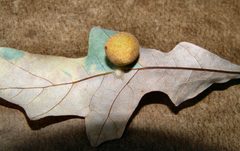
2Philonix is a of oak gall wasps in the Cynipidae, restricted to North America (Canada, United States, and Mexico). in this genus induce spherical, soft, fleshy galls on white oaks (Quercus sect. Quercus), typically on the undersides of leaves. The genus was first described by Asa Fitch in 1859. Unlike many cynipid , alternate sexual and have not been documented in Philonix.

Pronunciation
How to pronounce Philonix: //ˈfaɪ.loʊ.nɪks//
These audio files are automatically generated. While they are not always 100% accurate, they are a good starting point.
Identification
resemble Acraspis and require careful examination for definitive identification. The galls are diagnostic: spherical, soft, and fleshy structures on white oak leaves, usually on the underside. Gall and association (white oaks) distinguish Philonix from other cynipid inducing different gall types.
Images
Appearance
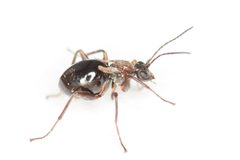
are small, typical of cynipid gall wasps. Externally similar in appearance to in the Acraspis. Detailed morphological descriptions of adults are not provided in available sources.
Habitat
Forests and woodlands containing white oaks (Quercus sect. Quercus). Galls form on living oak leaves, typically on leaf undersides. Mature galls abscise from leaf and drop to the forest floor.
Distribution
North America: Canada, United States, and Mexico. Documented from eastern North America including Pennsylvania and Vermont, with records on multiple white oak .
Seasonality
Galls form on oak leaves in spring. Galls mature and drop to forest floor when ripe. emerge in winter.
Host Associations
- Quercus alba - white oak
- Quercus bicolor - swamp white oak
- Quercus prinoides - dwarf chinkapin oak
- Quercus macrocarpa - bur oak
- Quercus muehlenbergii - chinkapin oak
Life Cycle
Larvae induce gall formation on white oak leaves. Galls develop through spring and summer, then abscise from leaf and fall to the forest floor. emerge from mature galls in winter. Alternate sexual and , common in many cynipids, have not been documented in this .
Behavior
Induces novel plant gall structures through chemical manipulation of oak tissue. Galls provide enclosed for larval development. Galls serve as habitat for inquilinous cynipids that cannot induce their own galls.
Ecological Role
Gall inducer that creates structure for . Contributes to gall and resource partitioning in oak-associated .
Human Relevance
No direct economic or agricultural significance documented. Of interest to entomologists studying gall wasp and oak .
Similar Taxa
- Acraspis are externally similar in appearance; requires careful morphological examination to distinguish
More Details
Taxonomic history
The was first named and described by Asa Fitch in 1859. Five are currently recognized: P. fulvicollis Fitch, 1859; P. gigas Weld, 1922; P. insulensis (Kinsey, 1936); P. lanaeglobuli (Ashmead, 1887); and P. latigenae (Kinsey, 1936).
Inquiline associations
Galls of at least one (P. nigra) are inhabited by inquilinous cynipids, including Synergus nigrus, which cannot induce its own galls and develops within the galls induced by Philonix.