
Philonix fulvicollis
Fitch, 1859
Philonix fulvicollis is a gall wasp in the Cynipidae, first described by Fitch in 1859. It has an alternation of sexual and , a phenomenon confirmed through molecular analysis of cytb and ITS2 sequences. The species is distributed across eastern and central North America, with records from the United States and Canada. Like other cynipid , it induces gall formation on plants, though specific host associations require further documentation.


Pronunciation
How to pronounce Philonix fulvicollis: /fɪˈloʊnɪks ˌfʊlvɪˈkɔlɪs/
These audio files are automatically generated. While they are not always 100% accurate, they are a good starting point.
Identification
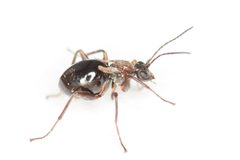
Philonix fulvicollis can be distinguished from other Philonix by morphological features of the , including details of the mesosoma and metasoma. The alternation of sexual and , confirmed through molecular data showing low sequence divergence (approximately 1.04% in cytb), may aid in identification when both forms are collected from the same locality. Accurate identification typically requires examination of gall on plants and adult wasp morphology under magnification.
Images
Distribution
Eastern and central North America. United States: New York, Michigan, Tennessee, Illinois, Kansas. Canada: Manitoba, Ontario, Quebec, New Brunswick, Alberta.
Life Cycle
Exhibits alternation of sexual and , with both forms producing females. The sexual generation produces both males and females, while the asexual generation produces only females. This cyclical is characteristic of many Cynipidae and has been confirmed in P. fulvicollis through molecular sequence data.
Ecological Role
As a gall-forming , induces abnormal plant growth (galls) on plants. The galls provide shelter and nutrition for developing larvae. The specific ecological impacts on host plant have not been quantified.
Sources and further reading
- BugGuide
- GBIF taxonomy match
- iNaturalist taxon
- NCBI Taxonomy
- Stylish Lepidoptera: Ermine Moth, Atteva aurea; Yellow-Collared Scape Moth, Cisseps fulvicollis; Pearl Crescent, Phyciodes tharos; Variegated Fritillary, Euptoieta claudia — Bug of the Week
- Aposematic autumn moths: Yellow-collared scape moth, Cisseps fulvicollis, and Ermine moth, Atteva aurea — Bug of the Week
- Archive — Bug of the Week