
Atrusca cubitalis
Atrusca cubitalis is a of cynipid gall wasp, a group of tiny known for inducing characteristic plant galls on their plants. As a member of the Cynipidae, this species exemplifies the highly specialized host relationships typical of gall wasps, where each species typically induces a distinct gall type on a specific host plant or closely related group of plants. The Atrusca is known for producing colorful and structurally distinctive galls on oak leaves (Quercus spp.), with A. cubitalis specifically associated with post oak (Quercus stellata) based on related species observations. The involves the female wasp using her ovipositor to inject into leaf tissue, after which the developing larvae secrete plant growth that cause the formation of a specialized gall structure within which they feed and develop.
Pronunciation
How to pronounce Atrusca cubitalis: //əˈtɹʌs.kə kjuːbɪˈtæ.lɪs//
These audio files are automatically generated. While they are not always 100% accurate, they are a good starting point.
Identification
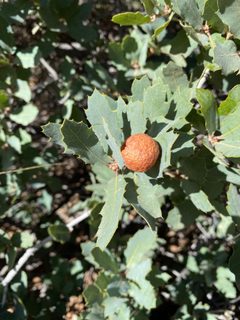
Identification of Atrusca cubitalis relies primarily on examination of the gall structure it produces rather than the itself, which is minute and difficult to distinguish from related without specialized examination. The galls of Atrusca species are typically colorful, rounded or disc-shaped structures on oak leaves with distinctive surface textures. A. cubitalis galls on post oak leaves feature a prominent hole where the adult exits upon maturity. The galls are often found on the upper leaf surface and may show color variation from green to reddish or brownish tones as they age. Adult wasps are small, typically less than 5 mm in length, with reduced wing venation characteristic of cynipids.
Images
Habitat
The of Atrusca cubitalis is determined by its plant, post oak (Quercus stellata), which occurs in dry to dry-mesic upland forests, woodlands, and glade margins across the south-central United States. The is found in oak-dominated natural where its host occurs, including post oak woodlands, oak-hickory forests, and at the interface between glades and surrounding forest. These habitats typically feature well-drained, often rocky or sandy soils with open to partially closed conditions.
Distribution
Based on plant distribution and related records, Atrusca cubitalis likely occurs across the range of post oak (Quercus stellata) in the south-central United States, including Missouri, Oklahoma, Texas, Arkansas, and adjacent states. The species has been documented in Missouri at Valley View Glades Natural Area in Jefferson County, where it was found on post oak leaves in fall 2021. The limited number of observations (6 records in iNaturalist) suggests it may be underreported due to the small size of the and the specialized knowledge required for gall identification.
Seasonality
and activity of Atrusca cubitalis occurs in fall, with observations from late September through October in Missouri. This seasonal pattern aligns with the typical of many oak-galling cynipid , which often have distinct spring and fall or single fall-emerging generations. The galls remain on leaves through fall and winter, with the developing pupating inside before emerging through a characteristic exit hole.
Host Associations
- Quercus stellata - gall inducerpost oak; forms colorful galls on leaves
Life Cycle
The of Atrusca cubitalis follows the typical pattern of cynipid gall wasps. The female uses her ovipositor to inject into the leaf tissue of the oak. Upon hatching, the larvae do not feed directly on leaf tissue but instead secrete plant growth that induce the formation of a specialized gall structure. The larva develops within this protective gall, feeding on the nutritive tissue that the plant produces in response to the wasp's chemical manipulation. Development continues through larval and pupal stages entirely within the gall. The adult wasp eventually emerges by chewing through the gall wall, leaving a characteristic round exit hole. The specific details of whether this has alternating sexual and on different oak tissues (a common pattern in Cynipidae) remain undocumented.
Behavior
female Atrusca cubitalis locate oak leaves and use their slender ovipositor to precisely insert into leaf tissue without causing visible damage at the oviposition site. The are incapable of stinging humans despite the wasp-like appearance and ovipositor structure. The larvae exhibit remarkable chemical manipulation of host plant development, redirecting normal plant growth to produce a specialized structure that provides both nutrition and protection. Adult wasps are short-lived and do not feed; their sole purpose is and locating appropriate host plants for oviposition.
Ecological Role
As a gall inducer, Atrusca cubitalis functions as a herbivore that manipulates plant resource allocation. The galls may serve as microhabitats for other organisms, including (other insects that occupy galls without inducing them) and that attack the gall wasp larvae. The contributes to local biodiversity through its specialized ecological interaction and may influence leaf-level nutrient cycling when galls senesce and decompose. As a species restricted to post oak, it is part of the complex of oak-associated insects that depend on this foundation tree species.
Human Relevance
Atrusca cubitalis has no direct economic or agricultural significance. The galls it produces may be encountered by naturalists, botanists, and entomologists studying oak-associated biodiversity. The exemplifies the intricate and often overlooked diversity of gall-inducing insects, with potential value for ecological education and research into plant-insect chemical interactions. The colorful and structurally interesting galls may attract attention from nature photographers and those interested in natural history.
Similar Taxa
- Atrusca quercuscentricolaAnother Atrusca that produces colorful galls on post oak (Quercus stellata) leaves; distinguished by gall and internal structure
- Andricus pattoniAlso a cynipid gall wasp on post oak leaves, but produces different gall type (clustered, hairy galls on leaf undersides rather than colorful disc galls)
- Disholcaspis quercusglobulusCynipid on oaks but produces round, detachable twig galls rather than leaf galls
More Details
Gall characteristics
The galls of A. cubitalis on post oak are notably colorful, often with pink, red, or yellow tones contrasting with green leaf tissue. The hole is typically positioned near the edge of the gall rather than centrally. The galls are generally solitary or in small numbers per leaf, not densely clustered like some related .
Conservation context
The limited number of documented observations suggests A. cubitalis may be naturally rare, locally distributed, or underreported due to detection challenges. Its association with post oak woodlands, a type that has declined in some regions due to land conversion and fire suppression, may warrant monitoring of status.