
Xanthoteras
Ashmead, 1897
Species Guides
4- Xanthoteras eburneum
- Xanthoteras politum(Pipe Organ Mud Dauber)
- Xanthoteras radicola
- Xanthoteras teres(Ball-tipped Gall Wasp)
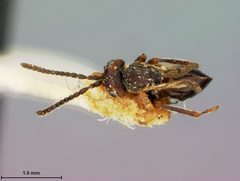
Xanthoteras is a of gall-inducing in the Cynipidae, first described by William Harris Ashmead in 1897. The genus includes that induce galls on oak trees (Quercus). The ball-tipped gall wasp, a notable member, was transferred to this genus from Trigonaspis. These wasps are part of the diverse of cynipids that manipulate plant tissue to form protective structures for their developing larvae.
Pronunciation
How to pronounce Xanthoteras: //zænˈθoʊtərəs//
These audio files are automatically generated. While they are not always 100% accurate, they are a good starting point.
Images
Habitat
Associated with oak woodlands and forests where Quercus occur. Gall formation occurs on oak tissues.
Distribution
Records from Denmark (DK), Norway (NO), and Sweden (SE). Distribution likely broader in temperate regions with oak presence, but specific records are limited.
Host Associations
- Quercus - gall induction on oak tissues
Behavior
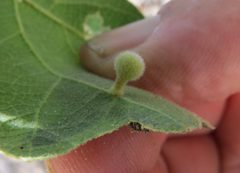
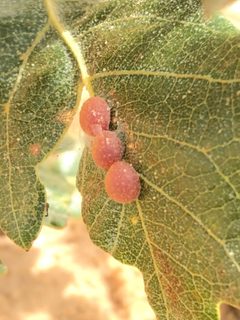
Induces gall formation on oak trees. The specific gall varies by ; the ball-tipped gall wasp produces distinctive rounded galls.
Ecological Role
As gall inducers, these create microhabitats that may be used by other organisms. Their galls can serve as food sources or shelter for and .
Human Relevance
No significant direct economic impact. Of interest to entomologists and ecologists studying plant-insect interactions and gall wasp diversity.
Similar Taxa
- TrigonaspisFormerly included the ball-tipped gall wasp; Xanthoteras was separated based on revised taxonomic understanding of gall wasp relationships.
- Other Cynipidae generaMany cynipid induce oak galls; precise identification requires examination of gall and characteristics.
More Details
Taxonomic Status
GBIF lists Xanthoteras as a synonym of Trigonaspis, while NCBI and iNaturalist maintain it as a valid . This indicates ongoing taxonomic revision in this group.
Observation Data
iNaturalist records 1,936 observations, suggesting the is relatively well-documented by naturalists, though many may be identified only to genus level.