
Trigonaspis
Hartig, 1840
Species Guides
5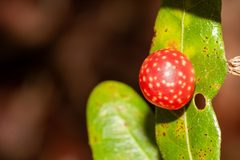
Pronunciation
How to pronounce Trigonaspis: //traɪˈɡoʊ.nə.spɪs//
These audio files are automatically generated. While they are not always 100% accurate, they are a good starting point.
Identification
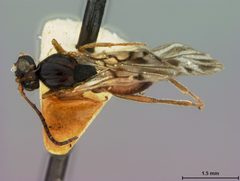
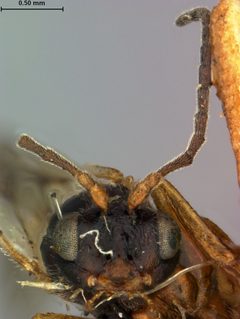
Trigonaspis are distinguished from other cynipine by structural features of the gall and . Members of this genus produce distinct galls that can aid in identification. Detailed morphological examination of , wing venation, and hypopygium is required for species-level identification.
Images
Distribution
The has been recorded in regions where oaks occur, with specific distribution varying by .
Host Associations
- Quercus - gall inducerTrigonaspis induce galls on oak species (Quercus), though specific associations vary among species.
Behavior
females induce the formation of galls on plant tissues. The larvae develop within these plant structures, which provide nutrition and protection.
Ecological Role
As gall inducers, these modify plant growth and create microhabitats that may be used by other organisms. They contribute to the complex structure associated with oak .
Human Relevance
Trigonaspis has minimal direct economic impact. The galls may be of interest to naturalists and researchers studying plant-insect interactions and gall .
Similar Taxa
More Details
Taxonomic Note
The name Trigonaspis has been used in different contexts; the primary usage is for this cynipid . The Glyphipterix trigonaspis Meyrick, 1907 is a homonym and unrelated, belonging to Lepidoptera.