Thanasimus formicarius
(Linnaeus, 1758)
ant beetle, European red-bellied clerid
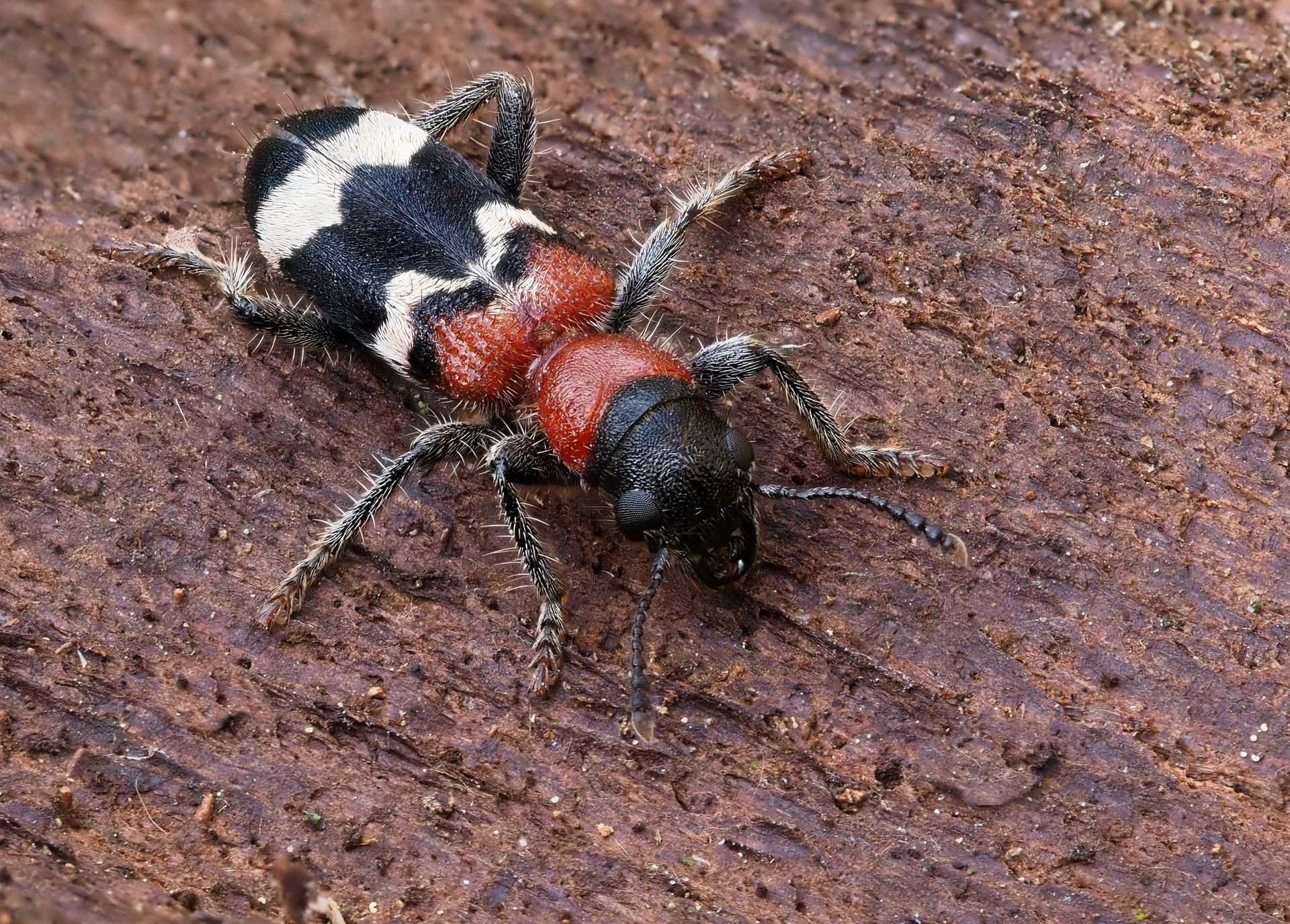
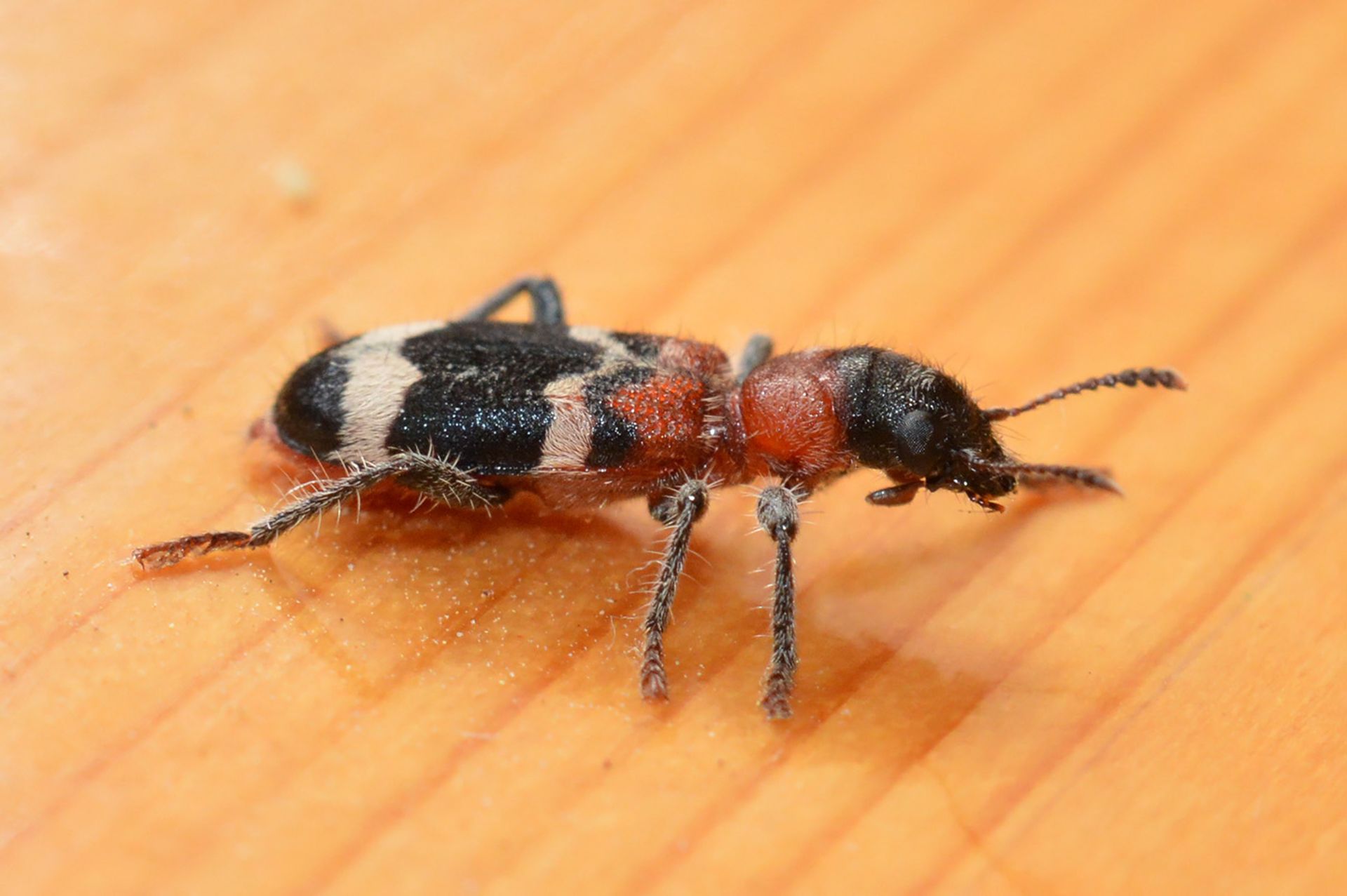
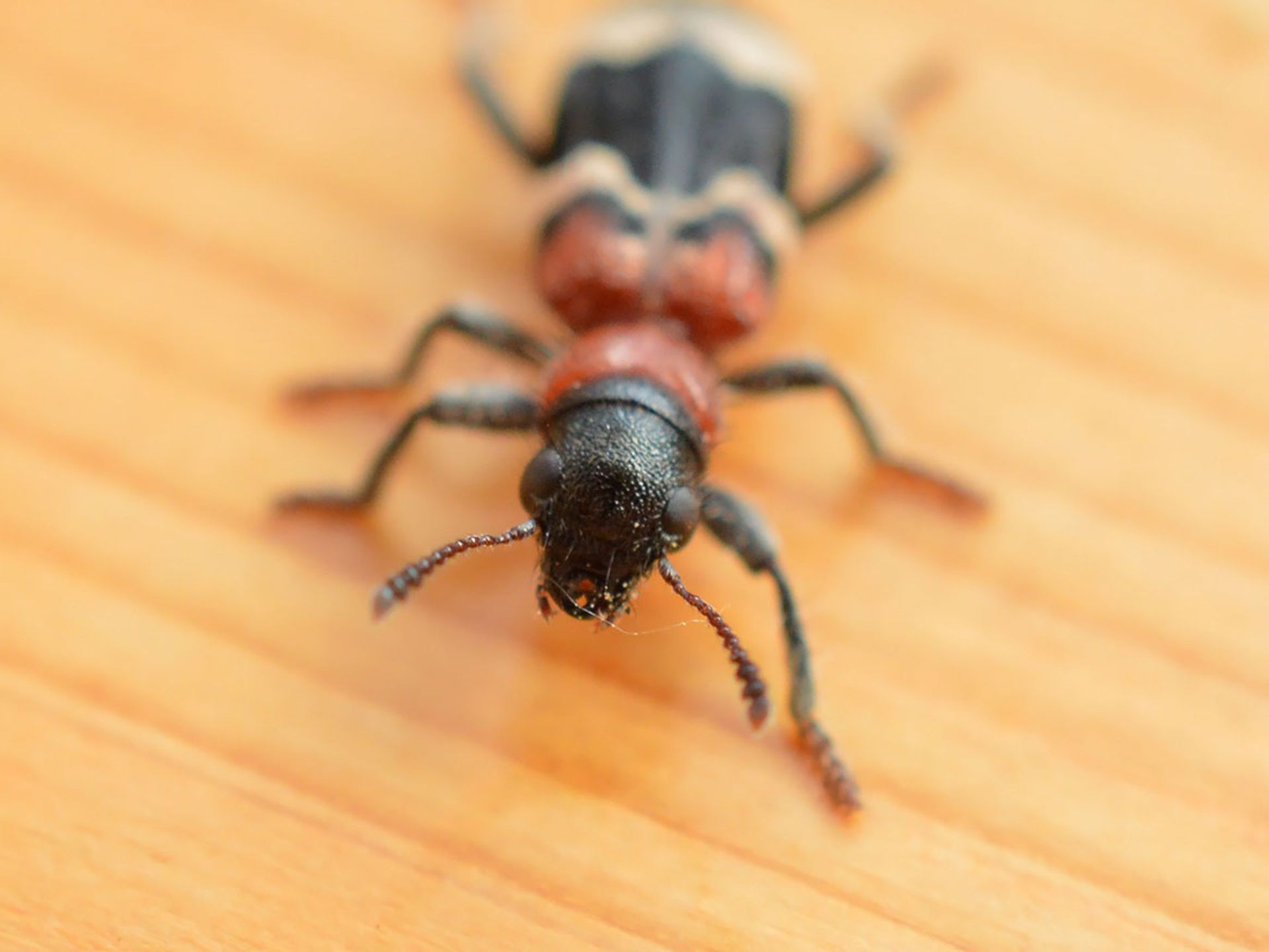
Thanasimus formicarius is a medium-sized, soft-bodied clerid specialized as a of bark beetles in European forests. possess strong capable of tearing between the hardened sclerotized plates of scolytine bark beetles to access soft tissues. The exhibits a predominantly two-year , with larvae spending two years developing under bark before pupating. Both larvae and adults are active predators, with larvae feeding on bark beetles within galleries and adults hunting on tree trunks. The species is attracted to monoterpenes from damaged conifers and to bark beetle , often leading to captures in pheromone monitoring traps.
Pronunciation
How to pronounce Thanasimus formicarius: //θəˈnæsɪməs fɔːrˈmɪkɛəriəs//
These audio files are automatically generated. While they are not always 100% accurate, they are a good starting point.
Identification
Medium-sized soft-bodied with strong, prominent . Body shape and coloration reportedly resemble velvet ants (Mutilla spp.), suggesting possible . have been observed using all legs to rapidly grasp prey, then biting between the and or and thorax to leverage out soft tissues.
Images
Habitat
Associated with coniferous and broad-leaved trees, particularly in managed and natural forests where bark beetles occur. overwinter at the base of conifers, rarely deciduous trees. Attracted to vertical trunk silhouettes; optical cues (stem-like shapes) are preferred over olfactory cues alone. Bark beetle and tree volatiles are only attractive when combined with trunk silhouettes.
Distribution
Europe; Eurasia. Records from Canada (Nova Scotia, Ontario, Quebec) and Belgium in GBIF database.
Seasonality
emerge in spring following two-year larval development. period begins in April for associated with Tomicus piniperda, and late May to June for those associated with . Adults live 4–10 months. Females lay from April to June.
Diet
Specialized of bark beetles (Scolytinae). Prey includes at least 27 across 15 : Agrilus, Dendroctonus, Dryocoetes, Hylastes, Hylesinus, Hylurgops, Hylurgus, Ips, Leperesinus, Orthotomicus, Pityogenes, Pityokteines, Polygraphus, Scolytus, Tomicus, and Trypodendron. Common prey species include Tomicus piniperda, T. minor, and . Larvae feed on bark beetle , larvae, and pupae within galleries. consume approximately 3 bark beetles per day; feeding bouts last about 10 minutes and are usually completed without waste.
Life Cycle
: 2.4 × 0.8 mm, laid in bark crevices near bark beetle tunnels; hatch after approximately one week at 21–25°C, or up to 28 days at 15°C. Three larval instars: 9–14 days per instar at 21–25°C; larvae spend two years in galleries under bark, feeding on bark beetle stages. Larvae form oval pupal chambers lined with mucus under outer bark; pupal stage lasts 15–33.5 days depending on temperature. emerge the spring following ; most individuals require two years from egg to adult, though approximately 6% may emerge in one year under favorable conditions. Newly emerged adults must feed before hibernation.
Behavior
are rapid, skilled movers in bark beetle galleries, capable of running backwards. Hunting involves waiting on bark of fallen pine or spruce trees, then seizing prey with all legs to prevent escape. Mating is brief and promiscuous: males and females mate repeatedly with multiple partners, with males grasping females firmly with on the pronotum. Adults and larvae are attracted to monoterpenes from damaged trees and to bark beetle components, including ipsenol, ipsdienol, and 2-methyl-3-buten-2-ol.
Ecological Role
Important agent of bark beetle in European forests. Functions as a specialized that reduces populations of economically significant forest pests including and Tomicus spp. Parasitized by the ichneumonid Enclisis vindex in pupal chambers.
Human Relevance
Used in forest protection strategies: attractants for T. formicarius combined with anti-attractants for have been tested to protect Norway spruce. Frequently captured in bark beetle monitoring traps, potentially complicating pest assessments.
Similar Taxa
- Mutilla spp. (velvet ants)Possible : body shape and coloration resemble these stinging hymenopterans that co-occur in same
- Other Thanasimus species share bark beetle ; T. formicarius distinguished by specific prey associations and two-year predominance
Sources and further reading
- BugGuide
- Wikipedia
- GBIF taxonomy match
- iNaturalist taxon
- NCBI Taxonomy
- sweetpotato weevil (Cylas formicarius) - Entomology Today
- Cylas formicarius Archives - Entomology Today
- Battle Beneath the Vines: Defending Sweet Potatoes From Fearsome Pests
- Are Sweetpotato Weevils Differentially Attracted to Certain Colors?
- The Entomology Profession Archives - Page 92 of 102 - Entomology Today
- DEVELOPMENT AND REPRODUCTION OF THANASIMUS FORMICARIUS (L.) (COLEOPTERA: CLERIDAE) AT THREE CONSTANT TEMPERATURES
- Evaluation of nutritional behavior and predation rate of Thanasimus formicarius (Coleoptera: Cleridae) in laboratory conditions
- Ein Beitrag zur Habitatselektion des Ameisenbuntkäfers,Thanasimus formicarius L. (Col., Cleridae) Studies on the habitatselection of the bark-beetlepredatorthanasimus formicarius L. (Col., Cleridae)
- Prolonged development time of the bark beetle predator Thanasimus formicarius (Col.: Cleridae) in relation to its prey species Tomicus piniperda (L.) and Ips typographus (L.) (Col.: Scolytidae)
- Mitigating Norway spruce mortality through the combined use of an anti-attractant for Ips typographus and an attractant for Thanasimus formicarius