
Hylesinus
Fabricius, J.C., 1802
crenulate bark beetles
Species Guides
6- Hylesinus aculeatus(eastern ash bark beetle)
- Hylesinus californicus(western ash bark beetle)
- Hylesinus criddlei(crenulate bark beetle)
- Hylesinus fasciatus(crenulate bark beetle)
- Hylesinus mexicanus
- Hylesinus pruinosus
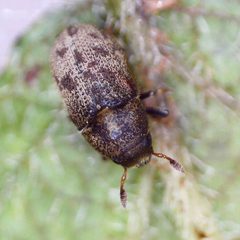
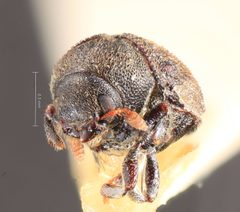
Hylesinus is a of bark beetles in the Curculionidae comprising more than 180 described . Members are commonly known as crenulate bark beetles and are primarily associated with woody plants, particularly ash (Fraxinus) and pistachio (Pistacia). Several species have been studied as pests of economic or ornamental importance.

Pronunciation
How to pronounce Hylesinus: /haɪˈliːsɪnəs/
These audio files are automatically generated. While they are not always 100% accurate, they are a good starting point.
Images
Habitat
Associated with bark and phloem of woody trees; larvae develop in galleries under bark; may overwinter at tree bases or in protected locations.
Distribution
Recorded from Europe (Denmark, Norway, Sweden, Poland), North America (United States, Canada), and western Asia (Iraq).
Seasonality
Activity patterns vary by ; of Hylesinus californicus emerge from sites mid-April to mid-May, with new adults appearing late July; Hylesinus vistitus adults present year-round in Iraq with spring attack on new twigs.
Diet
Phloem of trees; Hylesinus californicus feeds on Fraxinus pennsylvanica, Hylesinus vistitus on Pistacia vera, and Hylesinus crenatus on Fraxinus excelsior.
Host Associations
- Fraxinus pennsylvanica var. subintergerrima - green ash
- Fraxinus excelsior - European ash
- Pistacia vera - pistachio
- Rhaphitelus maculatus - Pteromalidae , most abundant of H. californicus
- Bursaphelenchus crenati - associated organism isolated from larval galleries and of H. crenatus
Life Cycle
Hylesinus californicus: with obligatory ; late April, three larval instars, pupae mid-July, new adults late July. Hylesinus vistitus: univoltine; eggs under bark November-December, hatch in 10-12 days, larvae January-March, March 26-31.
Behavior
walk or fly to tree crowns after spring to feed, mate, and oviposit. Pre- adults may feed in fresh phloem of healthy branches for several weeks before migrating to overwintering sites at tree bases by , dropping, or flying.
Ecological Role
Bark beetles that tunnel in phloem of living or dying trees; some function as pests of economic importance. Natural enemies include hymenopteran and organisms. Serve as for associated organisms including .
Human Relevance
Some are significant pests: Hylesinus californicus damages green ash in North America, Hylesinus vistitus affects pistachio production in Iraq. Management strategies include maintaining tree health, removing infested material, trap trees, and application.
Sources and further reading
- BugGuide
- Wikipedia
- GBIF taxonomy match
- iNaturalist taxon
- NCBI Taxonomy
- Catalogue of Life
- Biology and Control studies of the Pistachio Beetle, Hylesinus vistitus Muls., in Iraq
- LIFE HISTORY, BEHAVIOUR, AND MORTALITY OF THE WESTERN ASH BARK BEETLE, HYLESINUS CALIFORNICUS (SWAINE) (COLEOPTERA: SCOLYTIDAE), IN SOUTHERN ALBERTA
- Bursaphelenchus crenati Rühm, 1956 (Tylenchina: Aphelenchoididae), a nematode associated with the Greater ash bark beetle, Hylesinus crenatus Fabricius, in dying ash, Fraxinus excelsior L., in Europe