
Hylurgops
LeConte, J.L., 1876
Species Guides
6Hylurgops is a of bark beetles in the Curculionidae. in this genus are distributed across Eurasia and North America. Members are phloeophagous, feeding on the inner bark of coniferous trees. selection is chemically mediated, with species responding to specific monoterpene cues from host trees.
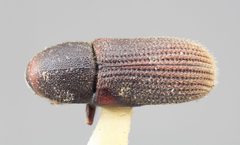
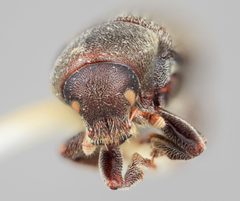

Pronunciation
How to pronounce Hylurgops: //haɪˈlɜːrɡɒps//
These audio files are automatically generated. While they are not always 100% accurate, they are a good starting point.
Images
Habitat
Inner bark (phloeophagous ) of coniferous trees; associated with Pinus and Picea based on documented records.
Distribution
Eurasia and North America; documented occurrence in Denmark, Norway, Sweden, Poland, and the United States (Vermont).
Diet
Phloeophagous; feeds on inner bark of coniferous trees.
Host Associations
- Pinus sylvestris - Documented for H. palliatus in Poland
- Picea abies - Preferred for H. palliatus based on olfactory response studies
- Picea - Primary for H. palliatus
Behavior
selection mediated by olfactory response to monoterpene chemical cues. Hylurgops palliatus has been observed to respond preferentially to host-specific odor signals and avoid volatiles from non-host conifers. Attraction to specific compounds including β-pinene, terpinolene, and myrtenol has been documented.
Ecological Role
of fungal associates; transport ophiostomatoid fungi including Leptographium lundbergii, Ophiostoma minus, and O. piceae to trees.
Sources and further reading
- BugGuide
- Wikipedia
- GBIF taxonomy match
- iNaturalist taxon
- NCBI Taxonomy
- Catalogue of Life
- Mycobiota associated with Hylurgops palliatus (Gyll.) on Pinus sylvestris L. in Poland
- Monoterpenes governing host selection in the bark beetles Hylurgops palliatus and Tomicus piniperda
- Host and non‐host odour signals governing host selection by the pine shoot beetle, Tomicus piniperda and the spruce bark beetle, Hylurgops palliatus (Col., Scolytidae)