
Allocapnia rickeri
Frison, 1942
Midwest Snowfly
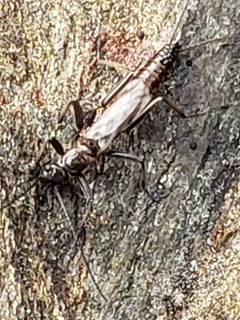
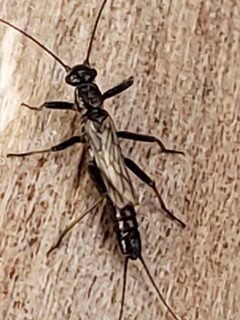
Allocapnia rickeri is a in the Capniidae, commonly known as the Midwest Snowfly. It is one of numerous small, dark stoneflies in the Allocapnia that emerge during cold months when few other insects are active. The has been documented across the central and eastern United States. Like other capniids, it is associated with clean, cold streams and is an important indicator of water quality.
Pronunciation
How to pronounce Allocapnia rickeri: //ˌæloʊˈkæpniə ˈrɪkəri//
These audio files are automatically generated. While they are not always 100% accurate, they are a good starting point.
Identification
Allocapnia rickeri is a small , with generally measuring under 10 mm in body length. Members of the Allocapnia are characterized by reduced or absent wings in females (brachyptery or aptery), while males possess fully developed wings. Specific identification to level within Allocapnia requires examination of male genitalia, particularly the structure of the and paraprocts. The species is most reliably distinguished from by subtle differences in these terminal abdominal structures, which should be compared against published descriptions and illustrations in Frison (1942) and subsequent taxonomic revisions.
Images
Habitat
Clean, cold streams and rivers with well-oxygenated water. As a winter-emerging , it is associated with lotic that maintain low temperatures and high dissolved oxygen levels throughout the year.
Distribution
United States: Alabama, Arkansas, Delaware, Georgia, Illinois. The distribution appears centered in the Midwest and extends into the southeastern United States.
Seasonality
emerge during winter months, typically from January through March. This winter activity period is characteristic of the Capniidae and gives rise to the "snowfly."
Life Cycle
Hemimetabolous development with aquatic nymphal stages and terrestrial stage. Nymphs develop in streams for an extended period, likely one to two years based on related Allocapnia . Adults are short-lived and do not feed.
Behavior
are active during cold weather when air temperatures may be near or below freezing. Males are winged and capable of ; females are wingless or short-winged and remain near the water surface. Mating and oviposition occur in winter, with females entering the water to deposit on submerged substrates.
Ecological Role
Nymphs are or gatherers, processing allochthonous organic material in stream . As a winter-emerging , it provides a seasonal food resource for insectivorous birds and other when alternative prey is scarce. The species serves as a bioindicator of high-quality coldwater .
Human Relevance
Used as a biological indicator of water quality in stream monitoring programs. The presence of Allocapnia rickeri indicates well-oxygenated, cold, unpolluted stream conditions. No direct economic importance.
Similar Taxa
- Allocapnia viviparaOverlaps in distribution and ; distinguished by male genitalia structure, particularly .
- Allocapnia pygmaeaSimilar small size and winter ; requires genitalic examination for reliable separation.
- Other Allocapnia speciesMany are externally similar; definitive identification relies on microscopic examination of male terminalia and comparison with taxonomic keys.