
Allocapnia
Claassen, 1928
winter stoneflies
Species Guides
8- Allocapnia granulata(Common Snowfly)
- Allocapnia maria(Two-knobbed Snowfly)
- Allocapnia minima(boreal snowfly)
- Allocapnia nivicola(brook snowfly)
- Allocapnia pygmaea(Pygmy Snowfly)
- Allocapnia recta(Eastern Snowfly)
- Allocapnia rickeri(Midwest Snowfly)
- Allocapnia vivipara(Shortwing Snowfly)
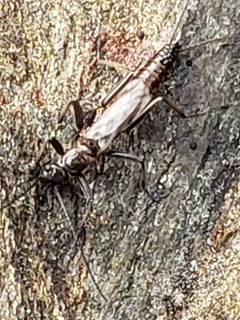
Allocapnia is a of small winter stoneflies in the Capniidae, comprising at least 40 described . emerge during winter months, typically from December through March. Nymphs inhabit stream substrates and exhibit vertical movement within the hyporheic zone, often retreating to deeper substrate during summer and returning to surface layers in autumn.
Pronunciation
How to pronounce Allocapnia: /ˌæloʊˈkæpniə/
These audio files are automatically generated. While they are not always 100% accurate, they are a good starting point.
Identification
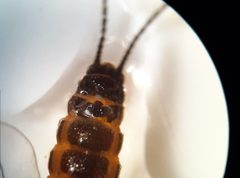
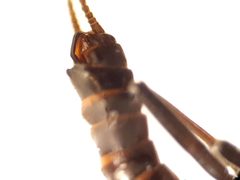
Small-bodied stoneflies distinguished by winter period (December–March) contrasting with most Plecoptera. Adults typically lack wings or have reduced wings in some ; specific identification requires examination of adult genitalia. Nymphs small, slender, with elongated and two caudal filaments.
Images
Habitat
Flowing freshwater streams and rivers; nymphs occupy spaces within streambed substrates, particularly upper 5 cm of gravel and cobble. Inhabits riffle, run, and pool across flow gradients. Some associated with karst headwater streams and mountainous intermittent streams.
Distribution
Eastern and central North America. Documented from Alabama, Arkansas, Connecticut, Delaware, and Florida. Regional endemics include A. mohri in the Interior Highlands (Ozark Highlands to Ouachita Mountains, Arkansas), with evidence of potential northward range shift. A. pygmaea recorded from southern Ontario.
Seasonality
active in winter, with typically December through March. Nymphs present year-round; peak abundance during summer months in some . Small nymphs first appear April–May.
Life Cycle
(one per year). Nymphal development includes phase during summer, with postdiapause growth and in winter. Nymphs demonstrate size-class segregation, with small nymphs more abundant in pools and runs, large nymphs in riffles.
Behavior
Nymphs exhibit three-dimensional movement within stream substrates, utilizing hyporheic zone as . Vertical stratification changes seasonally: most abundant at depth during summer , moving to surface layers after diapause break in autumn. No evidence of bankward prior to .
Ecological Role
Part of benthic in flowing waters; contributes to leaf litter processing and serves as prey for fish and other aquatic .
Human Relevance
Bioindicator of stream health; presence and distribution used in aquatic biomonitoring. Some of conservation concern due to restricted ranges and specificity.
Similar Taxa
- LeuctraAlso small winter stoneflies in Leuctridae; distinguished by -level characters including wing venation and nymphal gill presence
- CapniaOther in Capniidae; separation requires genitalia examination and subtle morphological differences
Sources and further reading
- BugGuide
- Wikipedia
- GBIF taxonomy match
- iNaturalist taxon
- NCBI Taxonomy
- Catalogue of Life
- Postdiapause Instar Discrimination and Life History of the Capniid Stonefly, Allocapnia granulata (Claassen) (Insecta: Plecoptera)
- Three-Dimensional Distribution of Winter Stonefly Nymphs, Allocapnia pygmaea, within the Substrate of a Southern Ontario River
- Life Cycles of Allocapnia recta and Leuctra spp. (Plecoptera: Capniidae and Leuctridae) Across a Flow Gradient in a Central Kentucky Karst Headwater Stream
- Predicting Habitat and Distribution of an Interior Highlands Regional Endemic Winter Stonefly (Allocapnia mohri) in Arkansas Using Random Forest Models