
Capnia
Pictet, 1841
small winter stoneflies
Species Guides
4- Capnia lineata(Straight Snowfly)
- Capnia promota(Pacific Snowfly)
- Capnia umpqua(Umpqua Snowfly)
- Capnia zukeli(Idaho snowfly)
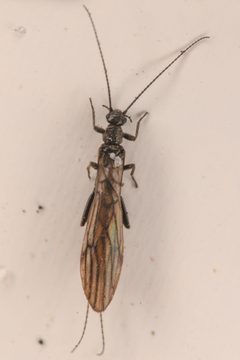
Capnia is a of small winter stoneflies in the Capniidae, containing at least 120 described . The genus has historically been considered polyphyletic, with recent taxonomic revisions resulting in the creation of several new genera (Arsapnia, Sierracapnia, Zwicknia, Eurekapnia, Sasquacapnia) from former Capnia species. Species in this genus are characterized by winter-active and are primarily distributed across the Northern Hemisphere.
Pronunciation
How to pronounce Capnia: /ˈkæp.ni.ə/
These audio files are automatically generated. While they are not always 100% accurate, they are a good starting point.
Identification
Small body size relative to other Plecoptera; winter-emerging distinguish them from most summer-active . Recent systematic revisions have split the genus, making identification to level require examination of genitalia and other detailed morphological features. Formerly broad genus now narrowed following elevation of several subgenera to generic status.
Images
Habitat
Freshwater lotic environments including creeks, streams, and rivers. Occupies cold-water systems with documented occurrences in West Norwegian rivers, Apennine creeks (Italy), and Japanese river systems.
Distribution
Northern Hemisphere with documented in North America, Europe (Norway, Italy), and Asia (Japan). Specific distributions vary by ; North American have been specifically studied.
Seasonality
Winter-active with nymphal growth occurring primarily during winter months. occurs February–April in studied ; timing varies slightly by latitude with southern populations emerging slightly later than northern ones.
Diet
Detritivorous; gut content analysis of Capnia pygmaea shows consumption primarily of detritus with diatoms as secondary component. Capnia bifrons nymphs feed mainly on detritus, coarse particulate organic matter, and fungi, with ontogenetic shift from collector-gatherer to habits detected.
Life Cycle
(one per year) with relatively short, fast nymphal development period. Nymphal growth occurs during winter; and in early spring. High secondary production reported for some .
Behavior
Winter growth pattern distinct from co-occurring summer-active aquatic insects; exhibits thermal preferences for cold-water conditions. Nymphs demonstrate ontogenetic dietary shifts as they develop.
Ecological Role
Primary consumer and in freshwater ; contributes to winter energy flow and nutrient cycling in cold-water river systems. Serves as prey for stoneflies and other aquatic .
Human Relevance
Used as bioindicators of cold-water stream quality; studied in the context of climate change effects on winter-emerging aquatic insects.
Similar Taxa
- BolshecapniaFormerly a subgenus of Capnia, elevated to status; contains previously included in Capnia
- ArsapniaNew created from former Capnia as part of revision addressing polyphyly
- ZwickniaResurrected/created containing formerly placed in Capnia
- BaetisCo-occurring with contrasting summer-active ; Capnia is winter-active
More Details
Taxonomic instability
The has undergone significant recent revision due to recognition of polyphyly. Three new or resurrected genera (Arsapnia, Sierracapnia, Zwicknia) were created partially or wholly from former Capnia . Additionally, seven species were transferred to Bolshecapnia when it was elevated from subgenus to genus, with three of those subsequently placed in new genera Eurekapnia and Sasquacapnia in 2019.
Research limitations
Most detailed biological studies available for the focus on specific (C. pygmaea, C. bifrons, C. atra, C. fukushimana); genus-level generalizations should be made cautiously given the taxonomic revisions and species-level variation in traits.
Sources and further reading
- BugGuide
- Wikipedia
- iNaturalist taxon
- NCBI Taxonomy
- Catalogue of Life
- Systematics and distribution of the winter stonefly genus Capnia (Plecoptera: Capniidae) in North America
- Growth patterns and food habits of Baetis rhodani, Capnia pygmaea and Diura nanseni in a West Norwegian river
- The life cycle ofCapnia fukushimanaKohno (Plecoptera: Capniidae) in River Sukawa (Fukushima), Japan
- The Effect of Temperature on Intraspecific Variation in Egg Biology and Nymphal Size in the Stonefly, Capnia atra (Plecoptera)
- Life history of <i>Capnia bifrons</i> (Newman, 1838) (Plecoptera: Capniidae) in a small Apennine creek, NW Italy
- Late Permissive Hypercapnia for Mechanically Ventilated Preterm Infants: A Randomized Trial.