
Allocapnia pygmaea
(Burmeister, 1839)
Pygmy Snowfly
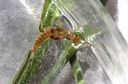
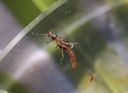
Allocapnia pygmaea, commonly known as the pygmy snowfly, is a in the Capniidae. It is one of the smallest members of its and is found across eastern and midwestern North America. As a winter stonefly, it is active during cold months when most other insects are .

Pronunciation
How to pronounce Allocapnia pygmaea: //ˌæloʊˈkæpniə pɪɡˈmiːə//
These audio files are automatically generated. While they are not always 100% accurate, they are a good starting point.
Identification
Distinguished from other Allocapnia primarily by its notably small size. Accurate identification to species level typically requires examination of male genitalia. Distinguished from other winter stonefly by characteristics of the Capniidae, including reduced wing venation and specific tarsal segment counts.
Images
Habitat
Associated with freshwater stream environments. Larvae inhabit the benthic zone of streams. Specific microhabitat preferences for larvae (such as substrate type or flow velocity) are not well documented in available sources.
Distribution
Recorded from Connecticut, Iowa, Kentucky, Maine, Massachusetts, and additional localities across eastern and midwestern North America. The full extent of its range within North America requires further documentation.
Seasonality
are active during winter months, typical of winter stoneflies ( Capniidae). This cold-season activity pattern is a defining characteristic of the group.
Similar Taxa
- Other Allocapnia speciesLarger body size; A. pygmaea is distinguished by being among the smallest in the
- Other Plecoptera families (non-Capniidae)Winter stoneflies in Capniidae are distinguished by reduced wing venation and specific tarsal characteristics; most other families are active in warmer months
More Details
Taxonomic Note
Originally described as Semblis pygmaea by Burmeister in 1839 before transfer to Allocapnia. The basionym reflects historical placement in a different genus within Plecoptera.
Data Availability
As of current records, iNaturalist documents 70 observations of this , indicating it is infrequently encountered or underreported relative to more conspicuous insects. GBIF distribution records remain limited to a handful of U.S. states.
Sources and further reading
- BugGuide
- Wikipedia
- GBIF taxonomy match
- iNaturalist taxon
- NCBI Taxonomy
- Catalogue of Life
- Tiny Insect, Big Questions: Is the World's Smallest Dragonfly Splitting Into Two Species?
- A suitable ode to Warren Knaus | Beetles In The Bush
- Surveying for the Maerdy Monster Millipede - Buglife Blog - Buglife
- Cynnal arolygon Miltroed Anghenfil y Maerdy - Buglife Blog - Buglife
- Glorious Earthworms - Buglife Blog - Buglife
- Arctic botany amongst the fjords