
Melittobia
Westwood, 1848
Melittobia is a of tiny in the Eulophidae, notable for extreme , complex social , and highly female-biased sex ratios. Females exhibit three distinct morphs—winged 'fliers,' short-winged 'jumpers,' and wingless ''—determined by larval rather than genetics. Males are blind, flightless, and comprise only about 5% of offspring, produced asexually through arrhenotokous . The genus attacks and pupae of solitary bees, wasps, and other insects in their ' nests, with some also parasitizing fruit flies and flesh flies. Several species are well-studied model organisms for genetics, developmental , and behavioral , though taxonomic confusion persists due to extreme morphological plasticity.
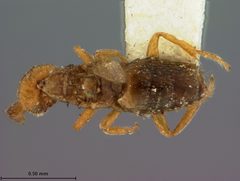
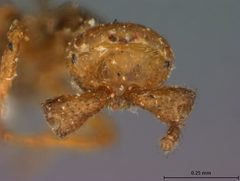
Pronunciation
How to pronounce Melittobia: //mɛˌlɪˈtoʊbiə//
These audio files are automatically generated. While they are not always 100% accurate, they are a good starting point.
Images
Habitat
Found in nests of insects including solitary bees, , mud daubers, and other cavity-nesting Hymenoptera; also recorded from fruit fly in fallen fruits. Occupies pre-existing cavities and enclosed spaces rather than constructing independent nests.
Distribution
distribution with records from North America (eastern U.S., Florida, Oregon), Central America, Caribbean, South America (Brazil), Europe (Russia), Asia (India, Japan, New Zealand), and Pacific islands. Introduced to Hawaii, Micronesia, and other regions through human commerce.
Diet
Ectoparasitoid feeding on and pupae; larvae are exophagous, consuming host tissues externally. Hosts include solitary bees (Megachilidae, Apidae), solitary (Crabronidae, Sphecidae, Vespidae), and occasionally other insects cohabiting host nests including beetles, , and flies.
Host Associations
- Trypoxylon - mud dauber
- Sceliphron - mud dauber
- Anastrepha ludens - Mexican fruit fly, evaluated as potential target
- Monobia quadridens - mason wasp for M. chalybii
- Ancistrocerus campestris - mason wasp for M. chalybii
- Pachodynerus nasidens - keyhole wasp for M. chalybii
- Symmorphus - mason wasp for M. chalybii
- Vespula germanica - German wasp, social for M. australica
- Pison spinolae - mason wasp for M. australica
- Neobellieria bullata - flesh fly, used as laboratory
Life Cycle
Rapid development with approximately 25 days under laboratory conditions. Multiple overlapping can occur on a single individual. Females attracted to host and pupae for oviposition. Larval during development determines adult female morph (, jumper, or flier).
Behavior
Females exhibit primitive social traits including kin recognition, parental care, and altruistic cooperative escape . Males engage in lethal combat with siblings, killing rival males. Elaborate courtship ritual involves coordinated leg, wing, and movements; males attract females via (α- and β-trans-bergamotene in M. digitata). Virgin females may sting and paralyze without ovipositing, preserving them for later exploitation after mating. Females use status as cue to adjust sex ratios based on relatedness of competitors.
Ecological Role
Gregarious ectoparasitoid regulating of solitary bees and ; potentially useful for of pest fruit flies. High , lack of specificity, and behavioral flexibility create potential for economic harm to beneficial . Serves as important model organism for studying sex allocation, , and morph determination.
Human Relevance
Used extensively as laboratory model for genetics, developmental , and ethology research. Potential agent for pest fruit flies (Anastrepha). Considered economically harmful to and beneficial due to broad range and high reproductive potential.
Similar Taxa
- Chrysiscuckoo wasps also parasitize nests of solitary and bees, but are typically larger, metallic-colored, and roll into defensive ball when attacked rather than exhibiting Melittobia's polymorphic social structure
- Melittobia chalybiiformerly considered distinct but may be temporal, nutritional, or -based variant of M. megachilis; part of ongoing taxonomic confusion within the acasta species group
Sources and further reading
- BugGuide
- Wikipedia
- GBIF taxonomy match
- iNaturalist taxon
- NCBI Taxonomy
- Catalogue of Life
- Bug Eric: Wasp Wednesday: Symmorphus
- Bug Eric: How to (Almost) Catch a Leaf-tier Caterpillar (Video)
- Bug Eric: Wasp Wednesday: Black & Yellow Mud Dauber
- Bug Eric: Wasp Wednesday: Pachodynerus
- Bug Eric: Wasp Wednesday: Four-toothed Mason Wasp
- Bug Eric: August 2011
- Biology and Control ofMelittobia Acasta
- trans-Bergamotenes—Male Pheromone of the Ectoparasitoid Melittobia digitata
- Morph determination in Melittobia , a eulophid wasp
- The first record for Melittobia australica Girault in New Zealand and new host records for Melittobia (Eulophidae)
- Extremely female-biased sex ratio and lethal male-male combat in a parasitoid wasp, Melittobia australica (Eulophidae)
- Solving the sex ratio scandal in Melittobia wasps
- Host Preference and Utilization by Melittobia digitata (Hymenoptera: Eulophidae) in Relation to Mating Status
- Evaluating the quality of the Mexican fruit-fly, Anastrepha ludens, as host for the parasitoid Melittobia digitata
- The acasta conundrum: Polymorphism and taxonomic confusion within the parasitoid genus Melittobia (Hymenoptera: Eulophidae)
- Development of microsatellite markers and estimation of inbreeding frequency in the parasitoid wasp Melittobia
- Distribución y huéspedes de Melittobia (Hymenoptera: Eulophidae) en México
- Evaluating the quality of the Mexican fruit-fly, Anastrepha ludens, as host for the parasitoid Melittobia digitata
- Paralyzation and Developmental Delay of a Factitious Host by Melittobia digitata (Hymenoptera: Eulophidae)
- Host-Acceptance Requirements of Melittobia digitata (Hymenoptera: Eulophidae), a Parasitoid of Mud Dauber Wasps
- Extremely female-biased primary sex ratio and precisely constant male production in a parasitoid wasp Melittobia
- High Microsatellite but No Mitochondrial DNA Variation in an Invasive Japanese Mainland Population of the Parasitoid Wasp Melittobia sosui.