
Sarcophaga pleskei
(Rohdendorf, 1937)
flesh fly
Sarcophaga pleskei is a of in the Sarcophagidae, first described by Rohdendorf in 1937. The Sarcophaga is characterized by larviparous (depositing live larvae rather than ) and association with decomposing organic matter. Species in this genus are morphologically similar and often require examination of male genitalia for definitive identification. Distribution records indicate presence in Norway and Sweden.
Pronunciation
How to pronounce Sarcophaga pleskei: /sɑːrˈkɒfəɡə ˈplɛskeɪ/
These audio files are automatically generated. While they are not always 100% accurate, they are a good starting point.
Identification
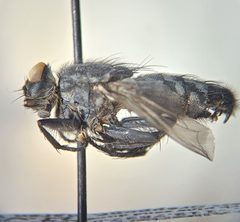
Identification to level within Sarcophaga is notoriously difficult due to uniform external across species. The is characterized by gray with three longitudinal black stripes and checkered abdominal patterning. Male terminalia are the only reliable characters for species-level identification; no suitable external key exists for Neotropical or Palearctic Sarcophaga species. The ptilinal fissure (frontal ) and lunule are present, with aristate bearing a seam on the —characters placing it within the calyptrate .
Images
Distribution
Recorded from Norway and Sweden based on GBIF distribution data. Specific microhabitat preferences within this range are not documented.
Life Cycle
Members of Sarcophagidae are larviparous, depositing first-instar larvae directly onto substrate rather than . This reproductive strategy is characteristic of the and distinguishes them from related calliphorid blow flies.
Ecological Role
As with other sarcophagid flesh flies, likely contributes to nutrient cycling through association with decomposing organic matter. Specific ecological role of S. pleskei has not been documented separately from the .
Human Relevance
The Sarcophaga contains of forensic importance due to predictable of carrion; however, S. pleskei specifically has not been documented in forensic casework. Some Sarcophaga species are of other insects, but this has not been confirmed for S. pleskei.
Similar Taxa
- Sarcophaga haemorrhoaOverlapping Palearctic distribution and similar external ; requires genital dissection for separation
- Sarcophaga carnariaCommon Palearctic with nearly identical thoracic striping and abdominal checkering; distinguished only by male terminalia characters
- Calliphora vicinaBlow fly with similar size and carrion association, but distinguished by metallic blue-green coloration and (-laying)