
Sarcophaga
Meigen, 1824
Common Flesh Flies
Species Guides
9- Sarcophaga aldrichi(Friendly Fly)
- Sarcophaga bullata(grey flesh fly)
- Sarcophaga cadyi
- Sarcophaga johnsoni
- Sarcophaga melanura(flesh fly)
- Sarcophaga nearctica
- Sarcophaga pleskei(flesh fly)
- Sarcophaga sarraceniae
- Sarcophaga sinuata
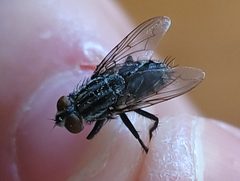
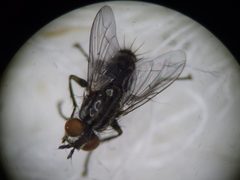
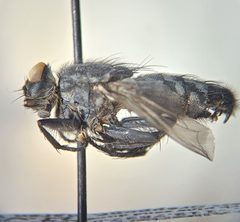
Sarcophaga is a large of true flies (Diptera) comprising over 1000 worldwide. These flies are commonly known as flesh flies due to the necrophagous habits of many species. are medium to large-sized with characteristic gray coloration, three longitudinal dark stripes on the , and checkered abdominal patterning. Species identification requires microscopic examination of male genitalia due to uniform external . The genus exhibits diverse including necrophagy, , , and .
Pronunciation
How to pronounce Sarcophaga: /ˈsɑrkəˌfeɪɡə/
These audio files are automatically generated. While they are not always 100% accurate, they are a good starting point.
Identification
Distinguished from similar calyptrate by combination of: gray non-metallic coloration (vs. metallic green/blue in Calliphoridae); three longitudinal thoracic stripes (vs. four in some Muscidae); with four setae (two strong, two small) vs. two in Calliphoridae; meron with setae (lacking in Muscidae). Differentiated from Tachinidae by generally larger size, distinct thoracic stripes, and less bristly overall appearance. -level identification requires dissection and microscopic examination of male terminalia due to convergent external across species.
Images
Habitat
Highly adaptable; found in diverse environments including urban areas, forests, grasslands, and agricultural settings. Frequently associated with carrion, decaying organic matter, and animal waste. Some adapted to human-modified environments.
Distribution
; occurs on all continents except Antarctica. Particularly diverse in temperate and tropical regions. Records from North America, South America, Europe, Asia, Africa, and Australia.
Seasonality
active during warmer months in temperate regions; year-round activity in tropical and subtropical areas. Peak abundance typically coincides with availability of breeding substrates such as carrion.
Diet
Larvae: primarily necrophagous (feeding on decaying meat/carrion); some feed on bacteria and microorganisms on carrion rather than tissue directly; species feed on ; species feed on living . : feed on nectar, honeydew, and other sugary substances; also consume fluids from carrion and decaying matter.
Host Associations
- Carrion - larval food sourcePrimary breeding substrate for most
- Feces - larval food source utilize animal waste
- Pest caterpillars - for larvaeSome beneficial in forestry and orchards
- Humans - occasional for myiasisSome cause facultative myiasis
Life Cycle
Females of most are larviparous (), depositing first-instar larvae directly onto substrate rather than . Larvae pass through three instars, feeding on substrate. Third instar larvae leave food source to pupate in soil or dry protected locations. Pupal stage variable in duration depending on temperature and species. emerge from using eversible to break free. time highly temperature-dependent, with multiple generations per year possible in favorable conditions.
Behavior
often perch on sunlit surfaces including dead wood, rocks, and vegetation. Strong attraction to carrion and decaying organic matter for oviposition. Some exhibit at food sources. Males patrol and defend territories near potential larval resources.
Ecological Role
Important decomposers in terrestrial , accelerating breakdown of carrion and recycling nutrients. Some serve as agents through of pest insects. Food source for including birds, spiders, and other insects.
Human Relevance
Forensic importance: arrival time and larval development used to estimate postmortem interval in death investigations. Medical/veterinary significance: some ; larvae cause myiasis ( of living tissue). Nuisance pests in urban environments. Beneficial: species help control pest caterpillars in forestry and agriculture.
Similar Taxa
- Calliphoridae (blow flies)Similar size and association with carrion; distinguished by metallic green/blue/bronze coloration, two notopleural setae, and absence of distinct thoracic stripes.
- Muscidae (house flies and relatives)Similar gray coloration and habits; distinguished by four thoracic stripes in many , absence of meron setae, and generally smaller size.
- Tachinidae (tachinid flies)Similar and bristly appearance; distinguished by more robust bristling, often more varied coloration, and different abdominal patterning.
More Details
Taxonomic Complexity
The Sarcophaga is divided into numerous subgenera, some of which are occasionally treated as distinct genera. The group requires comprehensive revision due to the difficulty of -level identification without male genitalia examination.
Notable Species
Well-known include Sarcophaga bullata (grey flesh fly, laboratory model organism), Sarcophaga crassipalpis (used in physiological studies), Sarcophaga aldrichi (friendly fly, of forest ), and Sarcophaga haemorrhoidalis (red-tailed flesh fly, medically significant).
Sources and further reading
- BugGuide
- Wikipedia
- GBIF taxonomy match
- iNaturalist taxon
- NCBI Taxonomy
- Catalogue of Life
- Flies, Maggots and Forensic Entomologists at Bohart Museum on Sunday, July 9 | Bug Squad
- The Flies and Beetles That Turn Death Into Dinner
- Sarcophagidae | Beetles In The Bush
- Super Crop Challenge #4 | Beetles In The Bush