
Symmorphus
Wesmael, 1836
mason wasps, potter wasps
Species Guides
4- Symmorphus albomarginatus(White-bordered Potter Wasp)
- Symmorphus canadensis(Canadian potter wasp)
- Symmorphus cristatus(Tufted Potter Wasp)
- Symmorphus projectus
Symmorphus is a of solitary mason wasps in the Eumeninae, distributed primarily across the Holarctic region with 36 recognized . These small (6–20 mm) are cavity-nesters that utilize pre-existing holes in wood, hollow stems, or twigs, partitioning them into multiple with mud walls. Females are that mass-provision nests with paralyzed larvae of leaf beetles (Chrysomelidae), weevils (Curculionidae), or leaf-mining caterpillars. The genus occupies a relatively isolated phylogenetic position within Eumeninae and includes two subgenera: S. (Symmorphus) and S. (Parasymmorphus).
Pronunciation
How to pronounce Symmorphus: /sɪˈmɔrfəs/
These audio files are automatically generated. While they are not always 100% accurate, they are a good starting point.
Identification
Distinguished from other Eumeninae by the combination of: (1) horizontal carina on the first abdominal tergite, (2) shallow vertical groove on the same segment, and (3) simple (non-hooked, non-coiled) terminal antennal segment in males. Symmorphus are generally more slender-bodied than related genera such as Ancistrocerus or Euodynerus. Identification to species level requires examination of male genitalia and other subtle morphological characters; keys exist for regional faunas including North America and Vietnam. Four species occur in North America: S. albomarginatus (widespread), S. canadensis (smallest, transcontinental), S. cristatus (widespread), and S. projectus (western only).
Images
Appearance
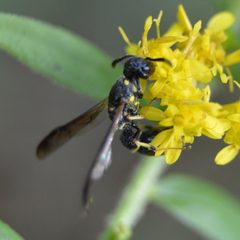
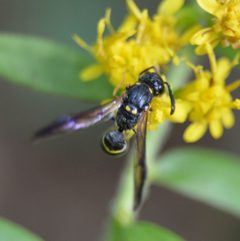
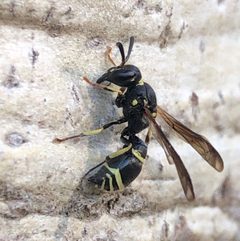
Small to medium-sized solitary , typically 6–10 mm in length (some sources cite up to 20 mm). Body slender compared to other mason wasps, with males often more slender than females. Coloration variable among , commonly black with yellow or white markings. First abdominal tergite bears a distinctive horizontal carina (ridge) approximately midway along its length, accompanied by a shallow vertical groove. Male terminate in a simple last segment (not hooked or coiled as in related ). Wings membranous with reduced venation typical of Eumeninae. Sexual size dimorphism present: females larger than males, with differences mediated by size and larval growth rate.
Habitat
Occupies diverse temperate across its Holarctic range. Requires access to pre-existing cavities for nesting, including: borings in dead or dying wood (especially from Anobiidae/ deathwatch beetles), hollow twigs and stems, plant galls, abandoned nests of other Hymenoptera, and natural hollows in wood. Nesting sites typically in dead, standing or fallen trees with bark stripped, often in shaded locations. Readily accepts artificial nesting substrates such as drilled wooden blocks ( blocks/ bee condos) with holes 3–4 mm in diameter. frequently observed near colonies where they feed on honeydew.
Distribution
Primarily Holarctic distribution. Palearctic: most of Europe, East , Near East, and including Vietnam, China, India, and Philippines. Nearctic: three in North America (S. albomarginatus, S. canadensis, S. cristatus, S. projectus), ranging from Alaska and Canada through the United States. Northernmost Neotropical region also represented. Some species have shown range contractions in parts of Europe (e.g., S. fuscipes, S. murarius) and Finland, possibly linked to decline in dead deciduous trees.
Seasonality
activity period varies by latitude and . In temperate regions, active primarily during late spring through summer. Males typically emerge 2 days earlier than females and remain active for approximately 4 weeks. Females begin nesting activities 4–5 days after . Some species possibly in southern parts of range (e.g., southern Finland). Mating occurs shortly after female emergence, with majority of copulations during first day after female emergence.
Diet
feed on nectar and honeydew; frequently observed at colonies consuming liquid . Larvae are , provisioned by females with paralyzed prey.
Host Associations
- Chrysomelidae - larvae of leaf beetles are primary prey; stinging pattern includes regular stings to throat, three thoracic segments, and first abdominal segment
- Curculionidae - larvae of weevils used as prey
- Gracillariidae and other microlepidoptera - leaf-mining caterpillars occasionally used as prey
Life Cycle
Complete . Females construct nests in pre-existing cavities, partitioning tunnels into multiple with mud walls (starting from back, working forward). Each cell receives one laid on or before prey provisioning. Cells are mass-provisioned with 3–15+ paralyzed larvae depending on prey size and offspring sex (female larvae require more food). Nest completion rapid: one 7-cell nest of S. canadensis completed in approximately 3 days. Nests often include empty 'vestibular' cell at entrance and sometimes 'intercalary' cells between provisioned cells, possibly as defense against . Larvae consume prey, pupate within cell; emerge by chewing through mud partition. Sexual size dimorphism established through differential egg size and female larval growth rate.
Behavior
Solitary nesting with females working individually, though multiple females may nest in proximity where suitable cavities abundant. mating system: males patrol nest , search for receptive females; minimal male-male interaction at low , territoriality at higher density. Male include , abdominal stroking, wing vibration, and specific mounting position. Females monandrous (mate once), with inseminated females rejecting remating attempts. Postcopulatory riding by males lasts 3–790 seconds. Females demonstrate nest defense against , including physical confrontation with cuckoo wasps at nest entrances.
Ecological Role
Important agent due to on leaf beetle and weevil larvae that can defoliate trees and shrubs. Serves as for multiple and commensals including: cuckoo wasps (Chrysididae), eulophid (Melittobia), wasps (Monodontomerus), satellite flies (Amobia), Pyemotes ventricosus mites, phorid flies, and dermestid beetles. Contributes to nutrient cycling through utilization of dead wood resources.
Human Relevance
Beneficial insects providing services through of herbivorous larvae. Readily attracted to ' blocks' or 'bee condos'—artificial nesting substrates with drilled holes 3–4 mm diameter—making them accessible for garden conservation and citizen science observation. Not structurally damaging; does not create its own holes in wood. No significant negative impacts; stings possible but uncommon given solitary, non-aggressive nature.
Similar Taxa
- AncistrocerusAlso Eumeninae cavity-nesters, but Symmorphus distinguished by slender body, simple male antennal tip, and presence of horizontal carina on first tergite; Ancistrocerus males have hooked or coiled terminal antennal segments
- EuodynerusSimilar nesting habits but Symmorphus more slender with distinctive tergal carina and groove; Euodynerus generally more robust with different abdominal
- TrypoxylonBoth use pre-existing holes, but Trypoxylon (keyhole wasps) hunt spiders rather than larvae, and have different body proportions and nest closure materials (often silk or mud plugs rather than internal partitions)
More Details
Subgeneric classification
Two subgenera recognized: S. (Symmorphus) with three informal groups (hoozanensis, declivis, murarius groups), and S. (Parasymmorphus) containing three species. Subgenus Parasymmorphus recorded from Vietnam, Philippines, and other Oriental localities.
Nesting efficiency
Remarkably rapid nest provisioning documented: one 7- nest of S. canadensis completed in approximately 3 days, demonstrating high foraging .
Sex allocation control
Females can control offspring sex through decisions, adjusting size and prey quantity accordingly—larger cells with more prey provisioned for daughters.
Sources and further reading
- BugGuide
- Wikipedia
- GBIF taxonomy match
- iNaturalist taxon
- NCBI Taxonomy
- Catalogue of Life
- Bug Eric: Wasp Wednesday: Symmorphus
- Bug Eric: Wasp vs. Wasp
- Bug Eric: A "Boring" Place to Nest
- Behavioural Elements Influencing Mating Success ofSymmorphus Allobrogus(Hymenoptera: Eumeninae)
- Mating behaviour and behavioural ecology of a Predatory Wasp, Symmorphus allobrogus (de Saussure) (Hymenoptera: Eumeninae)
- Taxonomic notes on the solitary wasp genus Symmorphus Wesmael, 1836 (Hymenoptera, Vespidae, Eumeninae) from Vietnam
- CLASSIFICATION AND EVOLUTION OF THE EUMENINE WASP GENUSSYMMORPHUSWESMAEL (HYMENOPTERA: VESPIDAE)
- Sexual size dimorphism in the ontogeny of the solitary predatory wasp Symmorphus allobrogus (Hymenoptera: Vespidae)
- Nesting Behavior and Prey Use in Two Geographically Separated Populations of the Specialist Wasp Symmorphus cristatus (Vespidae: Eumeninae)
- Description of mature larvae of Allodynerus rossii (Lepeletier), Ancistrocerus auctus (Fabricius), Euodynerus dantici (Rossi) and Symmorphus murarius (Linnaeus) (Hymenoptera, Vespidae)
- Distribution and phenology of the <i>Ancistrocerus</i> and <i>Symmorphus</i> species in eastern Fennoscandia (Hymenoptera, Eumenidae)¹
- Applicability of the ‘Locomotor Ganglia’ Hypothesis to the Stinging Behaviour of Symmorphus Allobrogus, A Predatory wasp Hunting Chrysomelid Larvae