
Monodontomerus
Westwood, 1833
Species Guides
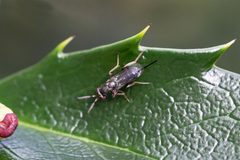
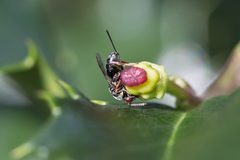
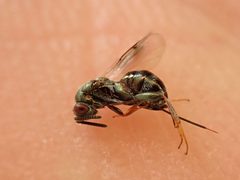
2Monodontomerus is a of in the Torymidae, distributed globally with greatest diversity in the Holarctic Region. in this genus are parasitoids of various insect orders, with documented associations including such as megachilid bees and other hymenopterans. Some species have economic importance as agents or pests of beneficial insects. The genus includes at least 25 described species in the New World, with ongoing taxonomic revisions revealing additional diversity.
Pronunciation
How to pronounce Monodontomerus: //ˌmoʊ.nəˌdɒnˈtoʊ.mɛr.əs//
These audio files are automatically generated. While they are not always 100% accurate, they are a good starting point.
Identification
Identification to level requires examination of microscopic morphological characters including: facial profile (bulging or not), malar definition and shape, flagellomere proportions (F1-F7 subquadrate or otherwise), dorsellum (longitudinal irregular carinae or split carinae forming open "V"), mesepimeron sculpture pattern, scutellum rim shape (produced posteriorly, or not), wing venation details including costal setation and admarginal setae extent, and Mt1 tergite sculpture pattern. A revised key to New World species is available for identification.
Images
Habitat
varies by . Monodontomerus verdigris has been documented from sand dune habitat at St. Anthony's Sand Dunes, Idaho. The Pacific Northwest region where multiple species occur encompasses evergreen forests, meadows, deserts, and alpine habitats. General habitat associations include areas where insects nest or occur.
Distribution
Global distribution, concentrated in the Holarctic Region. Documented from: Pacific Northwest of North America (British Columbia, Canada; Idaho, Oregon, Arizona, Utah, USA); Greece; Iraq; Japan ( of M. obscurus); Saratov (Russia); Mexico (Veracruz). The occurs on multiple continents with records from North America, Europe, Asia, and potentially other regions.
Diet
Larval development occurs within insects; do not feed as . Specific adult feeding habits are not documented.
Host Associations
- Megachilidae - Monodontomerus aeneus of megachilid solitary bees; uses and cocoon volatiles for location
- Trypoxylon mexicanum - Monodontomerus mexicanus recorded from mud-nest of this crabronid
Life Cycle
Development is endoparasitic within insects. Specific stages and duration vary by and host. Monodontomerus obscurus in Japan exhibits extremely low genetic diversity consistent with founder effects from very few individuals, suggesting successful establishment from single-female or effectively single-lineage founding events.
Behavior
Courtship is -specific and involves distinct male displays and female responses; behavioral sequences vary among species. Monodontomerus dentipes exhibits discriminate selection behavior. Monodontomerus aeneus uses and cocoon volatiles to locate hosts. intercept traps have been used successfully for collection of some species.
Ecological Role
of and other insects; some are economically important either as agents or as pests of beneficial pollinators. can significantly impact insect , as demonstrated by increasing rates of M. obscurus in Japan.
Human Relevance
Some have economic importance in agriculture and apiculture. (e.g., M. obscurus in Japan) demonstrate potential for establishment and spread with minimal genetic diversity. Used in contexts and studied for invasion insights regarding founder effects and establishment success.
Similar Taxa
- BrachymeriaBoth in Torymidae; distinguished by morphological characters in identification keys
- Other Torymidae generaMonodontomerus distinguished by combination of antennal proportions, dorsellum and mesepimeron patterns, and wing venation details
More Details
Taxonomic history
The New World fauna was revised 25 years prior to 2025; two new (M. rhinokopia and M. verdigris) were described from the Pacific Northwest in 2025, prompting creation of a revised identification key.
Genetic characteristics
Microsatellite studies of M. obscurus reveal extreme founder effects with star-like networks, providing rare empirical evidence for single-female founding under natural conditions.
Sources and further reading
- BugGuide
- Wikipedia
- GBIF taxonomy match
- iNaturalist taxon
- NCBI Taxonomy
- Catalogue of Life
- Discriminate Host Selection by Monodontomerus dentipes1
- Comparative Courtship Behavior and Karyology in Monodontomerus (Hymenoptera: Torymidae)
- Two new species of Monodontomerus (Hymenoptera, Torymidae) from the Pacific Northwest of North America and a revised key to the genus
- Microsatellite Data Indicate an Extreme Founder Event with a Single Female Lineage in the Parasitoid Wasp Monodontomerus obscurus
- The Role of Frass and Cocoon Volatiles in Host Location by Monodontomerus aeneus, a Parasitoid of Megachilid Solitary Bees
- Melittobia digitata dahms (hymenoptera: eulophidae) y monodontomerus mexicanus gahan (hym.: pteromalidae) on a nest of trypoxylon (trypargilum) mexicanum (saussure) (hym.: crabronidae) collected near Xalapa, Veracruz, Mexico
- NEW RECORD OF THE PARASITOID WASP MONODONTOMERUS OBSCURUS WESTWOOD, 1833 (HYMENOPTERA, TORYMIDAE) IN IRAQ
- Additional distributional data of the genera Brachymeria Westwood and Monodontomerus Westwood (Hymenoptera, Chalcidoidea), with two new records from Greece