
Nicobium
LeConte, 1861
deathwatch beetles
Species Guides
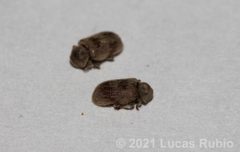
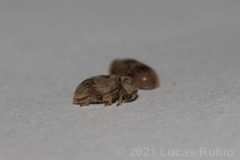
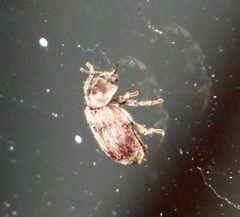
1- Nicobium castaneum(death-watch beetle)
Nicobium is a of wood-boring beetles in the Ptinidae ( Anobiinae), commonly known as deathwatch beetles. The genus includes extant and at least two described extinct species from the Eocene. Larvae are specialized lignocellulose feeders that degrade wood, with documented flexibility in metabolism depending on dietary starch availability.
Pronunciation
How to pronounce Nicobium: //nɪˈkoʊbiəm//
These audio files are automatically generated. While they are not always 100% accurate, they are a good starting point.
Identification
Extant of Nicobium can be distinguished from the extinct species Nicobium necrocrator by dense, conspicuous elytral and non-rectangular, non-sharp pronotal angles. Within the , specific identification requires examination of subtle morphological characters not detailed in available sources.
Images
Habitat
Woodland and forest environments with dead or decaying wood; Eocene representatives inhabited amberiferous forests.
Distribution
Japan (documented for N. hirtum); Baltic amber deposits (Kaliningrad region, Russia) for extinct N. necrocrator; broader distribution suggested by GBIF records in Southeast Asia.
Diet
Larvae feed on wood (lignocellulose). Starch serves as an essential carbon source for growth. Cellulose and hemicellulose function as key nutrients for physiological maintenance and survival.
Behavior
Larvae exhibit preferential decomposition of starch when available, shifting to cellulose and hemicellulose degradation when starch is limited. Wood-boring habit documented in extant and extinct .
Ecological Role
Wood degrader; contributes to lignocellulose decomposition in forest . Some are significant pests of wooden structures.
Human Relevance
Nicobium hirtum is an important wood pest in Japan, causing damage to wooden materials. The has been subject to laboratory rearing studies to understand nutritional requirements for potential pest management.
Similar Taxa
- Other Anobiinae generaShare wood-boring larval habits and lignocellulose-feeding ; distinguished by specific morphological characters of elytral and pronotal structure.
- Nicobium necrocratorExtinct Eocene distinguished from extant Nicobium by sparse inconspicuous elytral and rectangular sharp pronotal angles.
More Details
Fossil record
The has a documented fossil history extending to the Eocene, with Nicobium necrocrator described from Baltic amber providing a reference point for studying the origin and historical distribution of deathwatch beetles.
Nutritional ecology
Laboratory studies demonstrate that larval survival and growth are differentially affected by dietary composition: highest survival occurs on medium-starch diets, while largest body size occurs on high-starch diets, indicating trade-offs between survival and growth optimization.
Sources and further reading
- BugGuide
- GBIF taxonomy match
- iNaturalist taxon
- NCBI Taxonomy
- Effects of dietary variation on lignocellulose degradation and physiological properties of Nicobium hirtum larvae
- First record of Nicobium LeConte (Coleoptera: Ptinidae: Anobiinae) from Baltic amber with the description of a new extinct species