
Symmorphus albomarginatus
(Saussure, 1856)
White-bordered Potter Wasp
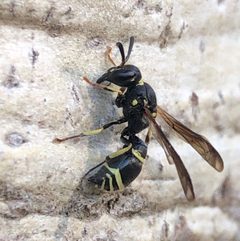
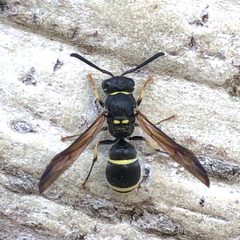
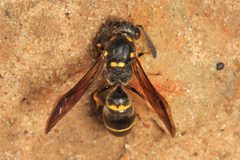
A small, slender mason wasp in the Eumeninae. Females construct multi-celled nests in pre-existing wood cavities, provisioning with paralyzed leaf beetle larvae (Chrysomelidae), weevil larvae (Curculionidae), or leaf-mining caterpillars. Two recognized: nominate S. a. albomarginatus and S. a. midas from southern Texas. The ranges across much of North America from Alaska to California and eastward.
Pronunciation
How to pronounce Symmorphus albomarginatus: //sɪˈmɔrfəs bæloʊˌmɑrdʒɪˈneɪtəs//
These audio files are automatically generated. While they are not always 100% accurate, they are a good starting point.
Identification
Small and slender compared to other mason wasps, approximately 6–10 mm in length. First abdominal segment bears a horizontal ridge (carina) about midway along its length and a shallow vertical groove. Males have the terminal antennal segment simple (not hooked or coiled). Distinguished from other North American Symmorphus by distribution and subtle morphological characters; S. canadensis is smaller, S. cristatus and S. projectus differ in range and structural details.
Images
Habitat
Utilizes pre-existing cavities in dead wood, particularly abandoned borings (especially those of deathwatch beetles, Ptinidae/Anobiidae) in standing or fallen dead trees. Also nests in hollow twigs or stems. Favors shaded or partially shaded locations. Readily accepts artificial nest blocks with holes 3–4 mm in diameter.
Distribution
North America: Alaska to California, New Mexico, Quebec, and much of the eastern United States. S. a. midas known from Rio Grande Valley State Park, Bentsen, Texas.
Diet
feed on honeydew from colonies. Larvae are , consuming paralyzed prey provisioned by the female.
Host Associations
- Chrysomelidae - preyleaf beetle larvae
- Curculionidae - preyweevil larvae
- microlepidoptera - preyleaf-mining caterpillars (less common)
- Chrysididae - cuckoo wasps parasitize nests
- Melittobia - eulophid
- Monodontomerus -
- Amobia - satellite flies (Sarcophagidae)
- Pyemotes ventricosus - Grain Itch Mite infests nests
Life Cycle
Females mass-provision sequentially from the back of the cavity forward. Each cell receives one and multiple paralyzed prey larvae. Cells are separated by mud partitions. Nests often include an empty vestibular cell at the entrance and may contain vacant intercalary cells between provisioned cells. Developmental timing not specified in sources.
Behavior
Females hunt prey, paralyze it with venom, and transport it to the nest. They modify pre-existing cavities by chewing wood fibers to enlarge entrances or applying mud/resin to reduce opening size. Males patrol nest sites seeking mating opportunities. Females have been observed defending nest entrances against cuckoo wasps.
Ecological Role
of leaf beetle, weevil, and leaf-mining larvae, providing of herbivorous insects. Prey include potential defoliators of trees and shrubs. Serves as for multiple and nest associates.
Human Relevance
Beneficial for garden and forest pest control. Readily uses artificial / blocks, making it accessible for citizen science observation. Not a structural pest; does not damage sound wood.
Similar Taxa
- Symmorphus canadensisSmaller , transcontinental but absent from Florida, Texas, New Mexico, and Arizona
- Symmorphus cristatusWidespread from Canada southward, overlapping in range but differing in structural details
- Symmorphus projectusStrictly western distribution from Pacific Northwest to Montana, Wyoming, and southward
- TrypoxylonKeyhole wasps also use borings but hunt spiders rather than beetle larvae; males have different antennal structure
- PassaloecusAphid wasps use similar nest holes but prey on aphids and are morphologically distinct
Sources and further reading
- BugGuide
- GBIF taxonomy match
- iNaturalist taxon
- NCBI Taxonomy
- Catalogue of Life
- Bug Eric: Wasp Wednesday: Symmorphus
- Bug Eric: Wasp vs. Wasp
- Bug Eric: A "Boring" Place to Nest
- The Changing Distributions of our Grasshoppers, Crickets and Relatives - Buglife Blog - Buglife
- CLASSIFICATION AND EVOLUTION OF THE EUMENINE WASP GENUSSYMMORPHUSWESMAEL (HYMENOPTERA: VESPIDAE)