
Euthyrhynchus
Dallas, 1851
Florida predatory stink bug
Species Guides
1- Euthyrhynchus floridanus(Florida predatory stink bug)
Euthyrhynchus is a of predatory stink bugs in the Pentatomidae, Asopinae. The sole , E. floridanus (Florida ), is native to the southeastern United States and has expanded its range northward in recent decades, now regularly occurring as far north as the Mid-Atlantic and New England. This shield bug is considered beneficial in agricultural and garden settings due to its on pest insects.
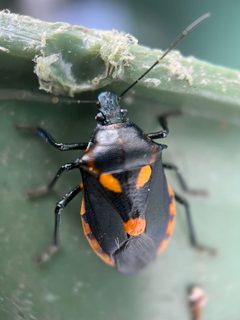
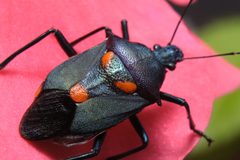
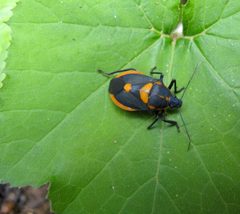
Pronunciation
How to pronounce Euthyrhynchus: /juːˈθɪrɪŋkəs/
These audio files are automatically generated. While they are not always 100% accurate, they are a good starting point.
Images
Distribution
Native to tropical and semi-tropical regions from Peru to the southeastern United States. Historical range limited to the hottest parts of the southeastern U.S., but has expanded northward to Maryland, Virginia, New Hampshire, and the Dakotas in response to warming climates.
Seasonality
Active during warmer months; and nymphs observed throughout summer and autumn in expanded northern range. capability in milder winters allows earlier spring activity.
Diet
. Prey includes caterpillars, larvae, other stink bugs, and various soft-bodied insects. Documented prey: greater wax moth larvae (Galleria mellonella), Mexican bean beetle (Epilachna varivestis), tobacco budworm larvae (Heliothis virescens), black cutworm larvae (Agrotis ipsilon), beetles, planthoppers, weevils, long-tailed skipper larvae (Urbanus proteus), and southern green stink bug (Nezara viridula). Also preys on brown marmorated stink bugs and kudzu bugs.
Life Cycle
Females lay batches of 20–90 barrel-shaped with small projections at the edge of the . Nymphs pass through five instars. First instars remain near egg mass; later instars aggregate and sometimes feed on common prey items. At 24°C, eggs hatch in 35 days and nymphal development takes 65 days; at 27°C, these shorten to 20 and 40 days respectively. females require approximately two weeks to mature and lay about 140 eggs total. Developmental period is longer than close relatives in Asopinae.
Behavior
Predatory feeding using beak-like mouthparts to impale and immobilize prey, then suck body fluids. Nymphs exhibit gregarious , particularly early instars remaining near mass and later instars grouping together. and nymphs observed resting on tree bark and man-made structures including utility meters.
Ecological Role
of soft-bodied insects in terrestrial . Contributes to of agricultural and garden pests.
Human Relevance
Considered beneficial for biological pest control in gardens and agriculture. Range expansion into northern regions linked to climate change and reduced winter mortality.
Similar Taxa
- Podisus maculiventris (spined soldier bug)Also in Asopinae, with similar ecological role; distinguished by presence of spine on underside of of front leg, which Euthyrhynchus lacks.
- Perillus bioculatus (two-spotted stink bug)Another predatory Asopinae with similar body plan; color pattern and humeral spine differ.
Sources and further reading
- BugGuide
- Wikipedia
- GBIF taxonomy match
- iNaturalist taxon
- NCBI Taxonomy
- Catalogue of Life
- Bugs in Orange and Black, Part II: A spooky southern predator heads north in a warming world – Florida predatory stink bug, Euthyrhynchus floridanus — Bug of the Week
- Northern hospitality for the Florida predatory stink bug, Euthyrhynchus floridanus, and wax scales, Ceroplastes spp. — Bug of the Week
- Archive — Bug of the Week
- Immature Stages and Notes on the Biology of Euthyrhynchus floridanus (L.) (Hemiptera: Pentatomidae)1