
Galleria
Fabricius, 1798
greater wax moth, honeycomb moth
Species Guides
1- Galleria mellonella(Greater Wax Moth)
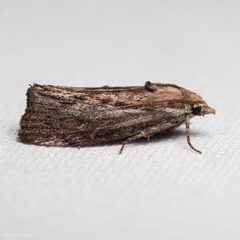
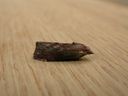
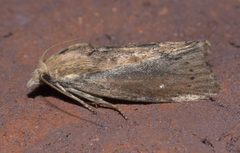
Galleria is a of snout moths (Pyralidae) containing only Galleria mellonella, commonly known as the greater wax or honeycomb moth. The is globally distributed and notorious as a pest of colonies, where larvae tunnel through combs consuming wax, pollen, and honey. are ; females enter hives after dark to lay in cracks and crevices. The larvae have gained scientific prominence as an alternative model organism for studying - interactions, immunology, and antimicrobial therapies, and have shown remarkable ability to degrade polyethylene and polystyrene plastics.
Pronunciation
How to pronounce Galleria: /ɡæˈlɪəriə/
These audio files are automatically generated. While they are not always 100% accurate, they are a good starting point.
Identification
Galleria mellonella is distinguished from the lesser wax moth (Achroia grisella) by its larger size— wingspan approximately 30–40 mm compared to 13–20 mm for A. grisella. Larvae of G. mellonella are larger and more robust, with well-developed adapted for chewing wax. Adults have grayish-brown forewings with a distinctive snout-like projection formed by elongated labial palps, characteristic of the Pyralidae . Males produce ultrasonic sound pulses during courtship, a trait not reported in A. grisella.
Images
Habitat
Natural includes colonies and nests; also found in stored equipment and inadequately maintained wax comb storage. In laboratory settings, reared on honeycomb frames or artificial diets.
Distribution
distribution; found throughout the world wherever honey bees are kept. Records include North America (United States, Canada), Europe (Denmark, Norway, Sweden, United Kingdom, Italy, Germany, Russian Federation), Asia (China, Japan, Korea, India), and other regions. Commercially reared in northern USA and Europe for research and fish production.
Seasonality
laid in spring; active year-round in temperate climates, with peak activity during warmer months. Females fly to hives one to three hours after dark and depart shortly before daylight.
Diet
Larvae feed on honeycomb wax, pollen, honey, and cocoon silk; do not feed. Laboratory studies have documented larval consumption of synthetic polymers including polyethylene and polystyrene.
Life Cycle
Four life stages: , larva, pupa, . Eggs laid in cracks and crevices of hives; larvae tunnel through combs, lining tunnels with silk. Larvae pass through five to six instars. occurs in silk cocoons. Adult lifespan 3–30 days; females produce fewer than 300 eggs on average, though some may lay up to 2000. Developmental temperature thresholds: eggs survive 45°C for one hour with 0% mortality; larvae experience 83.3% mortality at 45°C; 100% mortality of all stages with 2–3 hour exposure at 45°C.
Behavior
activity pattern in . Females exhibit hive-seeking , entering colonies after dark to oviposit. Larvae display negative : at 35°C remain on frames feeding; at 50–55°C, more than 98% move to cold compartments within 15–20 minutes. This thermal response has been exploited for mechanized sorting in laboratory rearing. Larvae produce silk for tunnel lining and cocoon construction.
Ecological Role
Pest of weak or poorly maintained colonies; presence often signals underlying colony stress such as queenlessness, , or starvation. In natural , may contribute to decomposition of abandoned nests. Increasingly used in scientific research as a replacement for mammalian models in immunology, microbiology, toxicology, and drug efficacy studies due to functionally similar innate immune responses.
Human Relevance
Major economic pest in apiculture; beekeepers combat through freezing frames, airtight storage, and chemical treatments. Larvae commercially produced as fish and animal feed. Scientific applications include: model organism for studying bacterial and fungal (including Staphylococcus aureus ), testing - combination therapies, production of and chitosan for medical and cosmetic applications, and investigation of plastic biodegradation mechanisms.
Similar Taxa
- Achroia grisellaLesser wax moth; smaller size (wingspan 13–20 mm vs. 30–40 mm), less destructive to colonies, lacks ultrasonic communication in males.
- Dioryctria spp.Cone in same Pyralidae; differ in association (pine cones vs. hives), geographic distribution, and lack plastic degradation capabilities.
Sources and further reading
- BugGuide
- Wikipedia
- GBIF taxonomy match
- iNaturalist taxon
- NCBI Taxonomy
- Catalogue of Life
- National Moth Week: Here's One Moth that Beekeepers Won't Celebrate | Bug Squad
- Why These Moths Are Unwanted | Bug Squad
- It's National Moth Week! | Bug Squad
- Neonics: Should They Be Banned? | Bug Squad
- It's Like Winning the Triple Crown | Bug Squad
- New Wasp Species Discovered Parasitizing Pests of Pine Trees
- GALLERIA MELLONELLA L. GARBAGE SORTING MECHANIZATION TECHNOLOGY
- The Joint Action of Bacteriophage and Antibiotics in the Treatment of Staphylococcus aureus infections in Galleria mellonella.