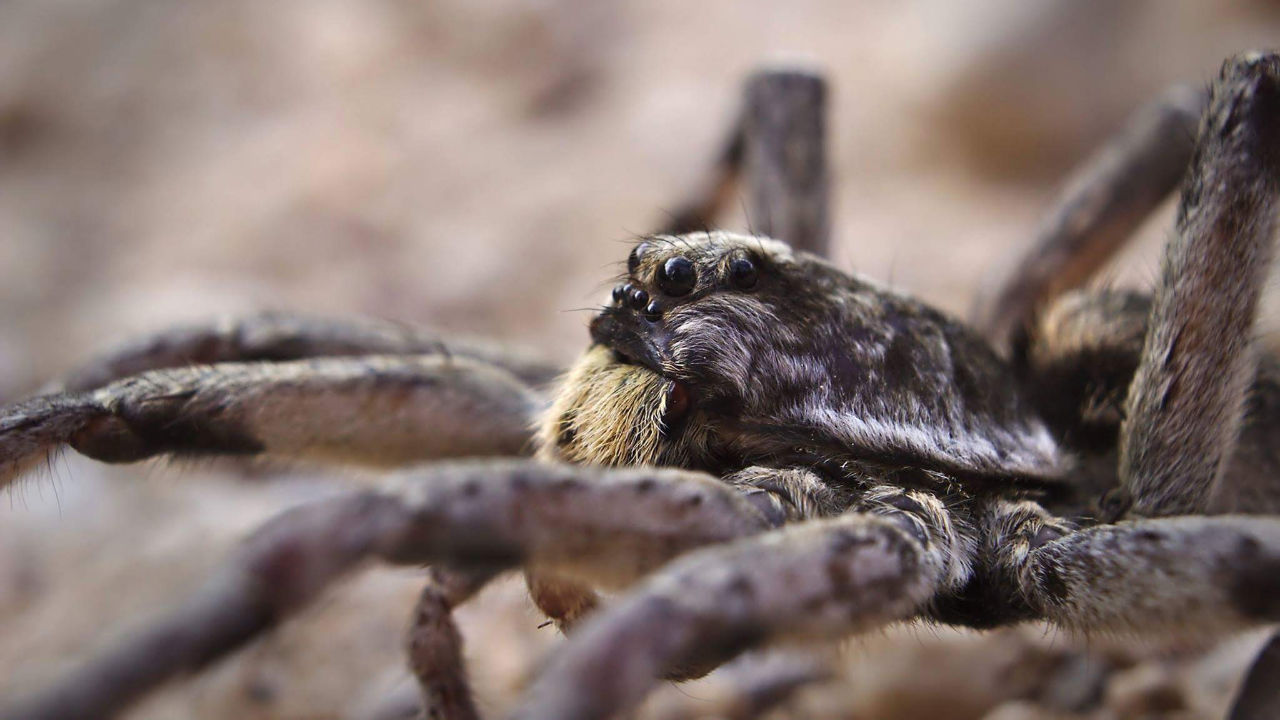
Zelotes monachus is a ground spider species in the family Gnaphosidae, described by Chamberlin in 1924. The species is distributed in North America, with records from the United States and Mexico. Like other members of Zelotes, it is a nocturnal hunting spider that does not build webs to capture prey.
Zelotes pseustes is a species of ground spider in the family Gnaphosidae, first described by Chamberlin in 1922. It belongs to a large genus of active hunters that do not build webs to capture prey. The species is distributed across the United States and Mexico. Like other Zelotes species, it is a nocturnal predator that pursues prey on the ground or on low vegetation.
prowling spider
Zora hespera is a species of prowling spider described by Corey and Mott in 1991. It belongs to the family Miturgidae, a group of wandering spiders that do not build permanent webs for prey capture. The species is found in North America across the United States and Canada.
Zora pumila is a species of prowling spider in the family Miturgidae. The species was first described by Nicholas Marcellus Hentz in 1850. It is known from the United States, though specific details regarding its biology and ecology remain poorly documented in the scientific literature. As a member of Miturgidae, it belongs to a family of wandering spiders that actively hunt prey rather than building webs to capture them.
Zornella is a genus of sheet-weaving spiders (family Linyphiidae) established by A. R. Jackson in 1932. The genus contains three described species with a disjunct distribution: two species occur in North America (USA and Canada), while one species ranges across northern Eurasia from northeastern Europe through Russia to Kazakhstan and Mongolia. As linyphiids, members construct horizontal sheet webs with a retreat.
Mediterranean Spiny False Wolf Spider, Nosferatu-Spinne
Zoropsis spinimana is a medium-sized zoropsid spider native to the Mediterranean region that has expanded its range northward into Central and Northern Europe and been introduced to the United States and United Kingdom. The species is notable for its wolf spider-like appearance but with eyes more spread out along the cephalothorax, and for its strong association with human dwellings where it finds mild temperatures and abundant prey. It is an active nocturnal hunter that does not build webs. Sexual maturity occurs in autumn, with egg-laying in spring. Climate change and human-mediated transport have facilitated its range expansion.
Zygiella atrica is an orb-weaving spider in the family Araneidae, closely related to the well-known Z. x-notata. It builds a distinctive orb web with two missing sectors and a signaling thread leading to a peripheral retreat. The species is more brown in coloration than Z. x-notata and occupies natural habitats away from human structures. It has been introduced to North America from Europe.
Zygiella carpenteri is an orb-weaving spider native to western North America. It was formerly classified in the genus Zygiella but has been reclassified to Parazygiella carpenteri in some taxonomic treatments. The species constructs complete orb webs rather than the incomplete webs with missing sectors typical of some related species. It occurs in disjunct populations in the Sierra Nevada mountains, the California coast, and southeastern Washington.
Nearctic Sector Orbweaver
Zygiella nearctica is a boreal orb-weaving spider in the family Araneidae. Like other members of its genus, it constructs a characteristic orb web with a missing sector in the upper portion. The species is native to North America and has been documented across a broad geographic range from coast to coast in Canada, extending southward into the northern United States.