
Zoropsis spinimana
(Dufour, 1820)
Mediterranean Spiny False Wolf Spider, Nosferatu-Spinne
Zoropsis spinimana is a medium-sized zoropsid spider native to the Mediterranean region that has expanded its range northward into Central and Northern Europe and been introduced to the United States and United Kingdom. The is notable for its wolf spider-like appearance but with more spread out along the , and for its strong association with human dwellings where it finds mild temperatures and abundant prey. It is an active hunter that does not build webs. Sexual maturity occurs in autumn, with -laying in spring. Climate change and human-mediated transport have facilitated its range expansion.
Pronunciation
How to pronounce Zoropsis spinimana: //zɔːˈrɒpsɪs ˌspɪnɪˈmɑːnə//
These audio files are automatically generated. While they are not always 100% accurate, they are a good starting point.
Identification
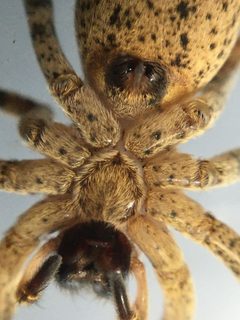
Distinguished from wolf spiders (Lycosidae) by placement: Zoropsis eyes are more spread out along the third of the , whereas wolf spiders have eyes more tightly grouped. Distinguished from other Zoropsis by size and distribution—Z. spinimana is larger and has expanded well beyond the Mediterranean native range. The combination of large size, habits, and distinctive cephalothoracic markings separates it from most European hunting spiders. Examination of copulatory organs (epigyne in females, palpal organs in males) provides definitive identification.
Images
Appearance
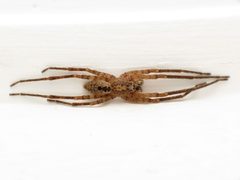
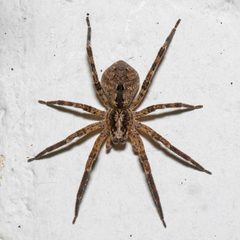
Medium-sized spider with sexually dimorphic body length: males 10–12 mm, females 15–18 mm. brownish with broad darker markings; the pattern of brown and light markings on the upper side has been likened to the of Nosferatu from the 1922 film. bears black markings. Legs speckled brown. arrangement resembles wolf spiders (Lycosidae) but with eyes more spread out along the front third of the cephalothorax rather than concentrated. Eight eyes total in three rows.
Habitat
Native includes forest edges where individuals shelter under rocks and tree bark. Strongly ; frequently found inside houses and buildings, particularly in regions with harsh outdoor climates. Occupies both interior and exterior building surfaces. In Central and Northern Europe, human habitation appears essential for winter survival. Associated with transport corridors and urban environments.
Distribution
Native to the Mediterranean region. Expanded northward along European transport routes since the mid-1990s, with records in Switzerland (Lucerne, Basel), Germany (Freiburg im Breisgau, Duisburg), Belgium (Brussels), Austria (Innsbruck), and Denmark (Copenhagen, 2023). Introduced to the United States (primarily San Francisco Bay Area) and the United Kingdom (primarily London area). Recorded in Slovakia as of 2021. GBIF records indicate additional presence in the Azores (Faial, Pico, Terceira), Turkey, Caucasus, Russia (Europe to Far East), Central Asia, China, Japan, and Morocco.
Seasonality
Sexually mature individuals present in autumn. -laying occurs in spring. Citizen science data in Germany indicates temporal appearance patterns, though specific seasonal activity windows beyond autumn maturity and spring are not detailed in available sources.
Diet
Prey items documented through citizen science surveys in Germany, though specific prey not detailed in available abstracts. No web-building; active hunter.
Life Cycle
Development includes , spiderling, and stages. Females construct a cocoon and rest in a chamber during egg-guarding. Specific developmental duration and instar counts not documented in available sources.
Behavior
active hunter; does not build webs for prey capture. Seeks in human dwellings when outdoor conditions are harsh. Two cases of accidental human documented in Germany. Range expansion facilitated by association with vehicles and mobile homes along transport corridors.
Human Relevance
Frequently encountered in houses, causing occasional concern due to large size and wolf spider-like appearance. "Nosferatu-Spinne" in German-speaking regions derives from perceived resemblance to the film character. Subject of extensive citizen science engagement in Germany (over 15,000 records in five weeks). Not known to be medically significant. Accidental transport by humans documented.
Similar Taxa
- Lycosidae (wolf spiders)Similar arrangement and hunting , but wolf spiders have eyes more concentrated on and are primarily ground-dwelling outdoors rather than
- Zoropsis speciesOther Zoropsis are smaller and restricted to Mediterranean native range; Z. spinimana distinguished by larger size and documented range expansion
- Tegenaria hasperiAnother spider expanding in Europe; distinguished by web-building (agelenid funnel webs) versus free hunting in Z. spinimana
More Details
Range expansion mechanism
Ecologists hypothesize that climate change enabled establishment north of the Alps, though the was likely transported earlier via Mediterranean holiday traffic with mobile homes and caravans. The lag between potential transport (popular since 1970s) and observed establishment (mid-1990s onward) suggests climatic barriers were previously limiting.
Citizen science significance
The German nationwide mapping appeal for this represents one of the most successful arachnid citizen science initiatives, generating 2.3-fold increase in known occupied territory within five weeks and demonstrating the value of media engagement for biodiversity monitoring.
Sources and further reading
- BugGuide
- Wikipedia
- GBIF taxonomy match
- iNaturalist taxon
- NCBI Taxonomy
- Catalogue of Life
- Development and reproduction in the range-expanding spider, Zoropsis spinimana (Araneae, Zoropsidae)
- Tegenaria hasperi Chyzer, 1897 and Zoropsis spinimana (Dufour, 1820), newly recorded synanthropic spiders from Slovakia (Araneae, Agelenidae, Zoropsidae)
- Updated distribution of Zoropsis spinimana (Dufour, 1820; Araneae: Zoropsidae) in Germany and novel insights into its ecology based on a citizen science survey