
Zoropsis
Simon, 1878
false wolf spiders
Species Guides
1- Zoropsis spinimana(Mediterranean Spiny False Wolf Spider)
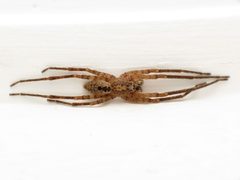
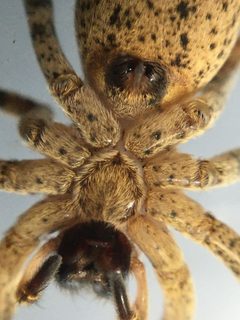
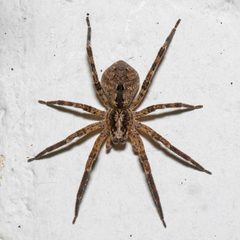
Zoropsis is a of spiders in the Zoropsidae, established by Eugène Simon in 1878. The genus name derives from Zora (another spider genus) and Greek ópsis ("aspect"), referring to their similar appearance. The genus contains approximately 15 described distributed across the Mediterranean region, extending into Asia. At least one species, Z. spinimana, has been introduced to Central and Northern Europe and North America, where it has established .
Pronunciation
How to pronounce Zoropsis: /zɔˈrɔpsɪs/
These audio files are automatically generated. While they are not always 100% accurate, they are a good starting point.
Identification
Zoropsis are distinguished from true wolf spiders (Lycosidae) by their association with the Zoropsidae. Specific diagnostic characters for the require examination of copulatory organs; digital images of habitus and copulatory organs are available in taxonomic literature for species-level identification.
Images
Habitat
, particularly interiors and exteriors of buildings in urban environments. Native occur in the Mediterranean region; introduced occupy human-modified environments in Central and Northern Europe.
Distribution
Native to the Mediterranean region, extending eastward through Turkey, Iran, and Central Asia to China and Korea. Introduced established in Germany, Slovakia, and the USA. Citizen science surveys in Germany documented a 2.3-fold expansion of occupied territory.
Behavior
; strongly associated with human habitation. Two cases of accidental human documented in Germany.
Ecological Role
Introduced, non-native in Central and Northern Europe where it occupies .
Human Relevance
Accidental via human activity has facilitated range expansion. Subject of citizen science monitoring due to conspicuous presence in buildings.
Similar Taxa
- ZoraSimilar general appearance, referenced in etymology of name; belongs to different (Zoridae)
- Lycosidae (wolf spiders)Superficially similar appearance but distinct ; Zoropsis are distinguished by zoropsid characteristics and habits
Sources and further reading
- BugGuide
- Wikipedia
- GBIF taxonomy match
- iNaturalist taxon
- NCBI Taxonomy
- Catalogue of Life
- Development and reproduction in the range-expanding spider, Zoropsis spinimana (Araneae, Zoropsidae)
- Tegenaria hasperi Chyzer, 1897 and Zoropsis spinimana (Dufour, 1820), newly recorded synanthropic spiders from Slovakia (Araneae, Agelenidae, Zoropsidae)
- Updated distribution of Zoropsis spinimana (Dufour, 1820; Araneae: Zoropsidae) in Germany and novel insights into its ecology based on a citizen science survey