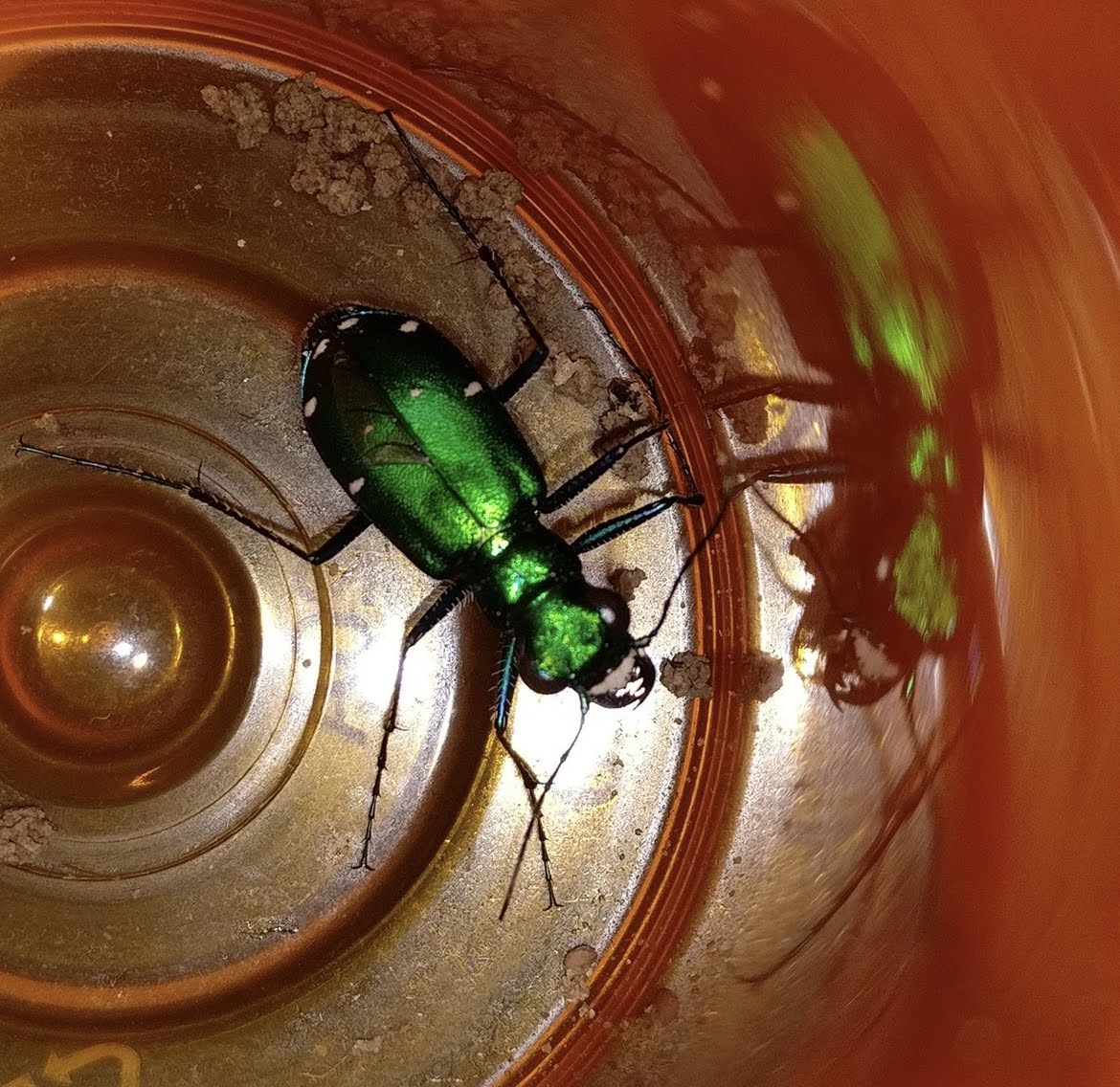
Emelinus melsheimeri is a species of ant-like leaf beetle in the family Aderidae, first described by LeConte in 1855. The species is distributed across Central America and North America. Members of the family Aderidae are characteristically small beetles with a compact, somewhat ant-like appearance, though specific morphological details for this species remain limited in published sources.
Emmesa is a genus of false darkling beetles in the family Melandryidae, established by Newman in 1838. The genus comprises approximately five described species. These beetles belong to the order Coleoptera and are classified within the family Melandryidae, a group commonly known as false darkling beetles.
Blackman's False Darkling Beetle
Emmesa blackmani is a species of false darkling beetle in the family Melandryidae, described by Hatch in 1927. It is known from a small number of observations in eastern Canada, primarily Québec. The species belongs to a genus of beetles associated with decaying wood and fungal habitats in forest ecosystems.
Lipped False Darkling Beetle
Emmesa labiata is a species of false darkling beetle in the family Melandryidae. It is found in eastern North America, with records from New Brunswick to Ontario and Québec. The species was first described by Thomas Say in 1824. Common name is the Lipped False Darkling Beetle.
Tiled False Darkling Beetle
Emmesa testacea is a species of false darkling beetle in the family Melandryidae. The common name "Tiled False Darkling Beetle" refers to this species, though published natural history information is extremely limited. The species is listed in museum collections but lacks substantial observational or ecological documentation in scientific literature. As a member of Melandryidae, it belongs to a family of beetles typically associated with decaying wood and fungal substrates in forested habitats.
Emphyastes fucicola is a species of true weevil in the beetle family Curculionidae, described by Mannerheim in 1852. As a member of the largest family of beetles, it possesses the characteristic elongated snout (rostrum) typical of weevils. The species is documented from North America. Relatively few observations exist, with iNaturalist recording 46 observations.
Enallonyx is a genus of soft-winged flower beetles (family Melyridae) described by Wolcott in 1944. The genus is poorly documented, with minimal available information regarding its constituent species, biology, or ecology. Its taxonomic status is flagged as doubtful in some databases, suggesting potential issues with its validity or circumscription. The genus belongs to a family characterized by soft, flexible elytra and frequent association with flowers.
Enallonyx sculptilis is a species of soft-winged flower beetle in the family Melyridae. The genus Enallonyx is a small group within this diverse family of predatory and pollen-feeding beetles. As with many melyrid species, detailed biological information for this particular species appears to be limited in the available literature.
Enchodes is a genus of beetles in the family Melandryidae (false darkling beetles), established by LeConte in 1866. Members of this genus are small to medium-sized beetles associated with decaying wood and fungal habitats. The genus contains multiple species distributed primarily in North America.
Enchodes sericea is a species of false darkling beetle in the family Melandryidae. It is native to North America, with records from multiple Canadian provinces including Alberta, British Columbia, Manitoba, New Brunswick, and Nova Scotia. The species was described by Haldeman in 1848. As a member of the Melandryidae, it belongs to a family of beetles commonly associated with decaying wood and fungal habitats.
oak bark scaler
Encyclops caerulea is a species of longhorn beetle in the family Cerambycidae, commonly known as the oak bark scaler. It was described by Thomas Say in 1827. The species belongs to the subfamily Lepturinae, a group often referred to as flower longhorns due to their frequent association with flowers. The specific epithet "caerulea" refers to a blue coloration.
Endecatomus rugosus is a small beetle species in the family Bostrichidae (formerly placed in Endecatomidae). The species was first described by Randall in 1838 under the basionym Triphyllus rugosus. It is known from North America with records from Canada (Manitoba, New Brunswick) and the United States. The genus Endecatomus comprises wood-boring beetles, and the specific epithet rugosus refers to the wrinkled or rough surface texture characteristic of this group.
soft-winged flower beetles
Endeodes is a genus of soft-winged flower beetles in the family Melyridae, containing approximately six described species. Members of this genus are flightless beetles that have been documented visiting flowers, including California golden poppy, where they acquire pollen. The genus was established by LeConte in 1859 and is distributed in North America.
Endeodes insularis is a species of soft-winged flower beetle in the family Melyridae, first described by Blackwelder in 1932. The species belongs to the genus Endeodes, which is part of a family commonly known as soft-winged flower beetles. Very little specific information is available about this particular species beyond its taxonomic placement.
Two-spotted Handsome Fungus Beetle
Endomychus biguttatus is a species of handsome fungus beetle in the family Endomychidae. It is known from North America, with records from Canada (Manitoba, New Brunswick, Newfoundland) and the United States. The species is characterized by two distinct spots on its elytra, reflected in both its specific epithet and common name.
handsome fungus beetle
Endomychus limbatus is a species of handsome fungus beetle described by Horn in 1870. It belongs to the family Endomychidae, a group of beetles commonly associated with fungal substrates. The species is documented from western North America, with records from Alberta and British Columbia in Canada. Information on its biology remains limited.
Enicmus aterrimus is a minute beetle in the family Latridiidae (plaster beetles), described by Motschulsky in 1866. Like other members of this family, it is extremely small and associated with moist, mold-rich environments. The species has been documented in several Canadian provinces including New Brunswick, Nova Scotia, Ontario, Quebec, and Saskatchewan.
plaster beetle, lathridid beetle
Enicmus brevicornis is a minute beetle in the family Latridiidae, commonly known as plaster beetles or lathridids. The species is native to Europe and has been introduced to other regions including North America. Like other members of the genus, it is associated with moist, moldy environments where it feeds on fungal growth. The species is distinguished from congeners by its relatively short antennae, as indicated by the specific epithet "brevicornis" (short-horned).
Enicmus histrio is a species of minute brown scavenger beetle in the family Latridiidae, described by Joy & Tomlin in 1910. The species is native to Europe and has been recorded in Belgium, with additional distribution records from New Brunswick and Nova Scotia in Canada. Like other members of Latridiidae, it is associated with moist, decaying organic matter. Specific ecological details for this species remain poorly documented in published literature.
Enicmus tenuicornis is a minute beetle in the family Latridiidae, commonly known as plaster beetles or minute brown scavenger beetles. The species was described by LeConte in 1878 and is native to North America. Like other members of the genus, it is likely associated with moist, decaying organic matter and fungal growth. The specific epithet 'tenuicornis' refers to its slender antennae.
cryptic fungus beetles
Enneboeus is a genus of small beetles in the family Archeocrypticidae, commonly called cryptic fungus beetles. The genus contains at least two described species: Enneboeus caseyi and Enneboeus marmoratus. It is restricted to the Neotropical region, with records from Colombia. The family Archeocrypticidae is a small, poorly studied group with limited ecological data available.
Enneboeus caseyi is a species of cryptic fungus beetle in the family Archeocrypticidae, described by Kaszab in 1981. The species occurs in both Central America and North America, with confirmed records from Middle America and North America. Like other members of the genus Enneboeus, this species is associated with fungal habitats. Very limited biological information is available for this species.
Enneboeus marmoratus is a species of beetle in the family Archeocrypticidae, a small and poorly known family of coleopterans. The species epithet 'marmoratus' refers to a marbled or mottled appearance. Very little published information exists on the biology, ecology, or distribution of this species. The family Archeocrypticidae contains relatively few species globally and is not well represented in entomological literature.
Water Scavenger Beetle
Enochrus cinctus is a species of water scavenger beetle in the family Hydrophilidae. It is native to North America, with documented records across much of the United States and southern Canada. As a member of the Hydrophilidae, it is an aquatic beetle associated with freshwater habitats. The species was originally described by Thomas Say in 1824 under the basionym Hydrobius cinctus.
Enochrus consors is a species of water scavenger beetle in the family Hydrophilidae, described by John Lawrence LeConte in 1863. The species is broadly distributed across eastern and central North America. As a member of the genus Enochrus, it belongs to a group of aquatic beetles commonly known as water scavenger beetles.
Enochrus cristatus is a species of water scavenger beetle in the family Hydrophilidae, described by John Lawrence LeConte in 1855. The species is native to western North America, with records from the southwestern United States and Mexico. As a member of the Hydrophilidae, it is associated with aquatic or semi-aquatic habitats. Very little published biological information is available for this specific species.
Enochrus sayi is a species of water scavenger beetle in the family Hydrophilidae. It occurs across much of eastern and central North America, with introduced populations in the Hawaiian Islands. The species inhabits freshwater aquatic environments.
Red-girdled Gray Enoclerus
A species of checkered beetle in the family Cleridae, native to North America. It is one of approximately 32 species in the genus Enoclerus north of Mexico. Like other members of its family, it is likely a predator of woodboring beetles and their larvae, though specific prey relationships for this species remain undocumented.
checkered beetle
Enoclerus decussatus is a species of checkered beetle in the family Cleridae. It is found in Central America and North America.
Enoclerus hoegei is a species of checkered beetle in the family Cleridae. The species was originally described by Gorham in 1883 under the genus Cymatodera, and is currently recognized as a valid species within the large genus Enoclerus, which contains 32 species in North America north of Mexico. Very few observations of this species exist in public databases. The genus Enoclerus is characterized by bright coloration and bold patterning, with many species exhibiting mimicry of velvet ants (Mutillidae) and other hymenopterans.
Enoclerus laetus nexus is a subspecies of checkered beetle in the family Cleridae, described by Barr in 1976. It is distributed in western North America, with records from British Columbia, Canada and parts of the western United States. The species Enoclerus laetus belongs to the largest genus of North American Cleridae. Like other members of the genus, it likely inhabits dead wood habitats where it preys on other wood-associated insects, particularly bark beetles.
Enoclerus lunatus is a species of checkered beetle in the family Cleridae. The species is distributed across North America. As a member of the genus Enoclerus—the largest genus of Cleridae in North America north of Mexico with 32 species—E. lunatus shares the family characteristic of being a predator of woodboring beetles rather than a woodborer itself. Specific details regarding its appearance, habitat preferences, and prey associations remain poorly documented in the available literature.
Enoclerus opifex is a species of checkered beetle in the family Cleridae. It occurs in Central America and North America. As a member of the genus Enoclerus, it belongs to the largest genus of Cleridae in North America north of Mexico. Checkered beetles in this family are predators, particularly of woodboring beetles such as bark beetles.
Enoclerus schaefferi is a species of checkered beetle in the family Cleridae, described by Barr in 1947. The species is known from western North America, with records from Alberta and British Columbia in Canada. Like other members of the genus Enoclerus, it is likely associated with dead wood habitats where it preys on other insects, though specific details about this species remain poorly documented.
Enopliinae is a subfamily of checkered beetles (family Cleridae) established by Gistel in 1848. The subfamily contains approximately 20 genera distributed across multiple continents. Some authorities consider Enopliinae a synonym of Korynetinae, reflecting ongoing taxonomic debate. Members of this subfamily are part of the diverse Cleridae radiation within the superfamily Cleroidea.
Ephelinus is a genus of rove beetles (Staphylinidae) in the subfamily Omaliinae, described by Cockerell in 1906. The genus belongs to the tribe Coryphiini and is characterized by small body size and association with coastal or intertidal habitats. Species in this genus are poorly documented, with limited ecological and behavioral information available.
Ephelops triguttatus is a species of weevil in the family Curculionidae, described by Dietz in 1891. The genus Ephelops is a small group within the weevil superfamily Curculionoidea. The specific epithet "triguttatus" refers to three spots or markings, likely describing a diagnostic color pattern on the elytra or pronotum. This species is provisionally accepted in taxonomic databases and is recorded from North America.
Brown Leaf Notcher, Mexican Root Weevil
Epicaerus mexicanus is a species of broad-nosed weevil in the beetle family Curculionidae, commonly known as the brown leaf notcher or Mexican root weevil. It is found in North America, with records from Mexico including states such as Guanajuato, Guerrero, and Oaxaca. The species belongs to the subfamily Entiminae, a diverse group of weevils often associated with feeding on plant foliage and roots.
Epicauta arizonica is a species of blister beetle in the family Meloidae, first described by Werner in 1944. The species is assigned to the subgenus Macrobasis within Epicauta. It is found in Central America and North America, with 326 observations documented on iNaturalist. Like other Epicauta species, it produces cantharidin, a defensive toxin that causes blistering and is toxic to most vertebrates.
Epicauta bispinosa is a North American blister beetle in the family Meloidae, described by Werner in 1944. The species belongs to the large genus Epicauta, which contains numerous species often difficult to distinguish without detailed examination. Like other Epicauta species, it possesses chemical defenses based on cantharidin. The specific epithet 'bispinosa' refers to two spines, likely describing a diagnostic morphological feature of this species.
Florida blister beetle
Epicauta floridensis is a blister beetle in the family Meloidae, endemic to the southeastern United States. As a member of the large genus Epicauta, it shares the family's characteristic production of cantharidin, a defensive toxin. The species was described by Werner in 1944 and is distinguished from related Epicauta species by features of its Florida distribution and morphology. Like other Epicauta species, adults are likely associated with flowering vegetation, though specific ecological details remain poorly documented.
Epicauta gissleri is a species of blister beetle in the family Meloidae, native to North America. It was described by Horn in 1878 and is currently classified within the subgenus Macrobasis of the genus Epicauta. The species is known from limited museum specimens and observations, with records indicating presence in western North American regions. As with other Epicauta species, it likely possesses chemical defenses based on cantharidin, though specific biological details remain poorly documented.
Ochre Beaded Blister Beetle
Epicauta ochrea is a blister beetle in the family Meloidae, commonly known as the Ochre Beaded Blister Beetle. The species was described by LeConte in 1853 and is placed in the subgenus Macrobasis. It occurs across Central America and North America, with museum records indicating substantial collections from western regions. Like other Epicauta species, it likely produces cantharidin, a defensive compound that causes blistering on contact with skin.
Epicauta rehni is a North American blister beetle in the family Meloidae, first described by Maydell in 1934. The species is part of the large genus Epicauta, which contains numerous species that are often difficult to distinguish without detailed examination. Like other members of its genus, it is expected to possess chemical defenses based on cantharidin, a toxic compound characteristic of blister beetles.
clown beetles
Epierus is a genus of clown beetles in the family Histeridae, established by Erichson in 1834. The genus contains more than 50 described species. Members of this genus are classified within the subfamily Tribalinae. Like other histerid beetles, they are likely associated with decomposing organic matter, though specific ecological details for the genus remain poorly documented.
clown beetle
Epierus mehicanus is a species of clown beetle in the family Histeridae, first described by John Lawrence LeConte in 1860. It belongs to the genus Epierus, a group of histerid beetles characterized by their association with decomposing organic matter. The species is known from limited collection records in the southwestern United States and Mexico.
clown beetle
Epierus regularis is a species of clown beetle in the family Histeridae, first described by Palisot de Beauvois in 1818. It is native to North America, with records from eastern Canada and across the eastern and central United States. As a member of the Histeridae, it belongs to a family commonly known as clown beetles or hister beetles, which are typically associated with decaying organic matter and are often found in carrion, dung, and under bark.
hooded shore beetles
Epimetopus is a New World genus of semiaquatic beetles commonly known as hooded shore beetles, comprising 56 species ranging from Argentina to Arizona and Arkansas. The genus was revised in 2012, with 36 new species described and new collection records provided for 15 previously described species. Species diversity is concentrated in South America (37 species) and areas north of South America (17 species), with only two species known from both regions. The genus is absent from the Amazon basin and is divided into seven species groups based on morphological characters.
false click beetles
Epiphanis is a genus of false click beetles in the family Eucnemidae, established in 1829. It is the type genus of the tribe Epiphanini. The genus includes both extant and extinct species distributed across Europe, North America, and Southeast Asia.
false click beetle
Epiphanis cornutus is a species of false click beetle in the family Eucnemidae. The species occurs across Europe, including the British Isles, and in North America. As a member of Eucnemidae, it belongs to a group of beetles commonly known as false click beetles, which are distinguished from true click beetles (Elateridae) by subtle morphological differences. The specific epithet 'cornutus' refers to horned or horn-like features, though detailed morphological descriptions of this particular species are limited in available sources.