
Enicmus brevicornis
(Mannerheim, 1844)
plaster beetle, lathridid beetle
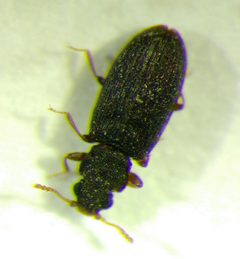
Enicmus brevicornis is a minute beetle in the Latridiidae, commonly known as plaster beetles or lathridids. The is native to Europe and has been introduced to other regions including North America. Like other members of the , it is associated with moist, moldy environments where it feeds on fungal growth. The species is distinguished from by its relatively short , as indicated by the specific epithet "brevicornis" (short-horned).
Pronunciation
How to pronounce Enicmus brevicornis: /ˈɛnɪkməs ˌbrɛvɪˈkɔrnɪs/
These audio files are automatically generated. While they are not always 100% accurate, they are a good starting point.
Identification
Distinguished from other Enicmus primarily by the relatively short ; E. histro and E. testaceus have longer, more slender antennae. May be separated from E. fungicola by body shape and elytral punctation patterns. Microscopic examination of male genitalia may be required for definitive identification. In the field, likely indistinguishable from other small lathridids without magnification.
Images
Habitat
Found in moist indoor and outdoor environments with active fungal growth. Common in buildings with damp plaster, wallpaper, or wooden materials affected by mold. Also occurs in leaf litter, compost, and other decaying organic matter in natural settings. Requires high humidity for survival.
Distribution
Native to Europe, with records from Belgium and other western and central European countries. Introduced to North America, with established in the northeastern United States and eastern Canada. The has spread through human commerce in building materials and stored products.
Seasonality
may be found year-round in suitable indoor . Outdoors, activity likely peaks during spring and autumn when moisture and temperature conditions favor fungal growth. No specific seasonal data documented.
Diet
Feeds on fungal and spores, particularly molds (Aspergillus, Penicillium, and related ) growing on damp organic substrates. Has been observed grazing on surface mycelium rather than penetrating deeply into substrate.
Life Cycle
Development includes , larval, pupal, and stages. Larvae are elongate, lightly sclerotized, and feed actively on fungal growth. occurs in sheltered locations within the substrate. time varies with temperature and humidity; multiple generations per year possible under favorable conditions. Specific details of duration and poorly documented.
Behavior
are active walkers and capable of , allowing to new fungal resources. Aggregates in areas of heavy mold growth. When disturbed, may feign death or retreat into crevices. activity pattern suggested but not confirmed.
Ecological Role
Primary decomposer in moist microhabitats, facilitating nutrient cycling through consumption of fungal . In buildings, serves as an for moisture problems and mold growth. Prey for small predatory arthropods including mites and pseudoscorpions in natural .
Human Relevance
Considered a nuisance pest in buildings where damp conditions promote mold growth. Presence indicates underlying moisture problems requiring remediation. Does not damage sound structural materials directly, but may contribute to surface degradation of mold-affected substrates. Occasionally found in stored products with high moisture content. Not known to transmit or cause allergic reactions.
Similar Taxa
- Enicmus histroSimilar size and coloration, but distinguished by longer and more elongate body form.
- Enicmus testaceusOverlaps in preference; separated by antennal proportions and male genitalic characters.
- Thes bergrothiAnother small lathridid in similar ; differs in pronotal shape and elytral .
- Dienerella spp.Similar minute beetles in moldy environments; generally smaller with different antennal structure.
More Details
Taxonomic history
Originally described by Mannerheim in 1844. The Enicmus has undergone repeated taxonomic revision, with boundaries historically difficult to establish due to morphological similarity.
Conservation status
Not evaluated by IUCN. Widespread and abundant in suitable ; no conservation concerns identified.