
Endomychus limbatus
(Horn, 1870)
handsome fungus beetle
Endomychus limbatus is a of handsome fungus beetle described by Horn in 1870. It belongs to the Endomychidae, a group of beetles commonly associated with fungal substrates. The species is documented from western North America, with records from Alberta and British Columbia in Canada. Information on its remains limited.
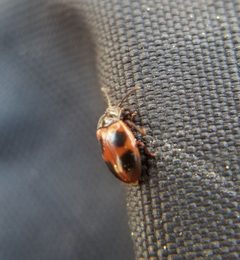
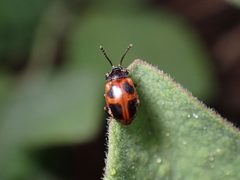
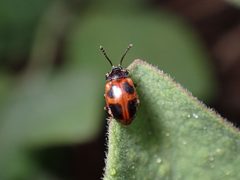
Pronunciation
How to pronounce Endomychus limbatus: //ɛnˈdɒmɪkəs lɪmˈbeɪtəs//
These audio files are automatically generated. While they are not always 100% accurate, they are a good starting point.
Identification
As a member of Endomychus, this can be distinguished from other Endomychidae by the combination of: antennal club with three segments; pronotum with distinct lateral margins; and that completely cover the . Within Endomychus, E. limbatus is distinguished by the specific pattern of dark markings on the pale elytra, with the species epithet 'limbatus' referring to the bordered or margined appearance. Accurate identification to species level requires examination of male genitalia or comparison with .
Images
Habitat
Associated with fungal substrates, consistent with -level of Endomychidae. Specific microhabitat preferences for this are undocumented.
Distribution
Western North America. Documented from Alberta and British Columbia, Canada. The full extent of its range within North America is not well characterized.
Ecological Role
Presumed to contribute to fungal decomposition processes as a member of the mycophagous Endomychidae, though specific ecological functions for this are unstudied.
Similar Taxa
- Endomychus biguttatusOverlaps in distribution and shares the ; distinguished by elytral maculation pattern and male genitalia structure.
- Other Endomychidae genera (e.g., Cyclotoma, Mycetina)Similar general appearance as handsome fungus beetles; distinguished by antennal structure, pronotal shape, and elytral coverage of .
More Details
Nomenclature
The specific epithet 'limbatus' is Latin for 'bordered' or 'edged', likely referring to the dark marginal markings on the .
Taxonomic history
Originally described by George Henry Horn in 1870, a prominent American coleopterist of the 19th century.