
Endomychidae
Leach, 1815
Handsome Fungus Beetles
Subfamily Guides
8- Endomychinae(handsome fungus beetles)
- Epipocinae(handsome fungus beetles)
- Hadromychus(handsome fungus beetles)
- Leiestinae(handsome fungus beetles)
- Lycoperdininae
- Merophysiinae
- Trochoideus(handsome fungus beetles)
- Xenomycetes
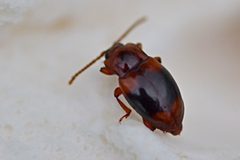
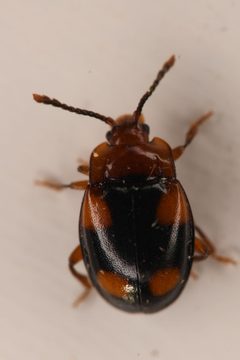
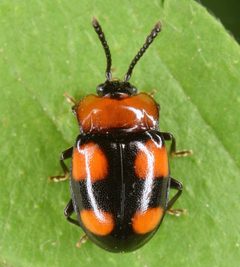
, commonly known as handsome fungus beetles, is a moderately diverse of mycetophagous beetles comprising approximately 90 and 1600 . The family is distributed across all biogeographic realms with highest diversity in tropical regions. Members are obligate fungus-feeders, typically associated with fruiting bodies of mushrooms and other fungi. The family has undergone significant taxonomic revision, with former Anamorphinae, Mycetaeinae, and Eupsilobiinae elevated to separate families based on molecular phylogenetic studies.
Pronunciation
How to pronounce Endomychidae: //ˌɛndoʊˈmɪkɪdiː//
These audio files are automatically generated. While they are not always 100% accurate, they are a good starting point.
Identification
Distinguished from other coccinelloid beetles by the combination of tarsal formula (4-4-4 or 3-3-3), the elongated sensory appendage on the second antennal segment, and absence of a closed radial in the wing. The was historically confused with Coccinellidae and grouped with them in the 'Trimera' based on pseudotrimerous , but molecular studies have clarified their placement within Coccinelloidea. Separated from related families Anamorphidae, Mycetaeidae, and Eupsilobiidae by various combinations of antennal, tarsal, and genitalic characters.
Images
Habitat
Primarily associated with fungal fruiting bodies, including mushrooms, bracket fungi, and other macrofungi. Often found on decaying wood bearing fungi. Specific microhabitat preferences vary by and .
Distribution
distribution with representatives in all biogeographic realms; highest occurs in tropical regions. The Danascelinae is known from North America (USA/Canada), Pakistan, and China.
Diet
Mycetophagous; and larvae feed on fungal tissues, particularly fruiting bodies of mushrooms and other macrofungi.
Behavior
Ecological Role
Primary consumers of fungal tissues; contribute to nutrient cycling in forest by consuming and fragmenting fungal fruiting bodies. Serve as prey for various predatory beetles and other arthropods in fungal microhabitats.
Human Relevance
Generally harmless to human interests; occasionally encountered by mushroom foragers. Some may be present on cultivated mushrooms but are not considered significant pests. Serve as indicators of fungal diversity and forest health.
Similar Taxa
- Erotylidae (Pleasing Fungus Beetles)Also feed on fungi and share similar ; distinguished by different tarsal formula, antennal structure, and typically more elongate body form
- Mycetophagidae (Hairy Fungus Beetles)Similar mycetophagous habits and preferences; separated by body , antennal club structure, and other morphological details
- Ciidae (Minute Tree-Fungus Beetles)Associated with fungi but typically smaller (usually under 5 mm), more cylindrical, and specialized for life in polypore pores and fungal tunnels
- AnamorphidaeFormerly classified as Anamorphinae within ; elevated to status based on molecular ; distinguished by various morphological characters including antennal and genitalic features
More Details
Taxonomic History
The has undergone substantial revision based on molecular phylogenetic studies. A 2015 study found Cucujoidea to be non-monophyletic, leading to reclassification of . Former Anamorphinae, Mycetaeinae, and Eupsilobiinae were elevated to family rank as Anamorphidae, Mycetaeidae, and Eupsilobiidae respectively. The family now contains nine subfamilies: Danascelinae, Endomychinae, Epipocinae, Leiestinae, Lycoperdininae, Merophysiinae, Pleganophorinae, and Xenomycetinae, organized into two main clades: the 'merophysiine complex' and the 'endomychine complex'.
Fossil Record
The has a documented fossil history extending to the Cretaceous. Fossil include Burmalestes, Cretolestes, Cretaparamecus, and Palaeomycetes from Burmese amber (Late Cretaceous, Cenomanian), and Zemyna from Baltic amber (Eocene). The origin of at least some lineages traces back over 100 million years to the mid-Cretaceous.
Sources and further reading
- BugGuide
- Wikipedia
- GBIF taxonomy match
- iNaturalist taxon
- NCBI Taxonomy
- Catalogue of Life
- Bug Eric: Fungus Party-y-y!
- Bug Eric: 2022
- A new provincial record of Sinocymbachus quadrimaculatus (Pic, 1927) (Coleoptera, Endomychidae) from China
- On the little-known genus Meilichius with descriptions of three new species from China (Coleoptera, Endomychidae).
- Discovering the Diversity and Evolution of Danascelinae: A New Genus and Species from Eastern Asia and Insights into the Phylogenetic Placement of This Subfamily in Endomychidae (Coleoptera).