
Palpita
Hübner, 1808
Palpita Moths
Species Guides
10- Palpita aenescentalis
- Palpita arsaltealis
- Palpita atrisquamalis(Gracile Palpita Moth)
- Palpita flegia(satin white moth)
- Palpita freemanalis(Freeman's Palpita Moth)
- Palpita illibalis(inkblot palpita moth)
- Palpita kimballi(Kimball's palpita moth)
- Palpita magniferalis(splendid palpita snout moth)
- Palpita maritima
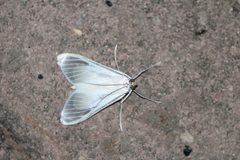
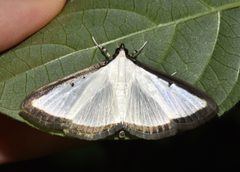
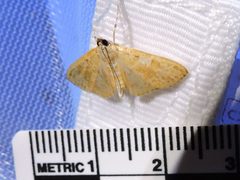
Palpita is a of crambid in the Crambidae, Spilomelinae. The genus includes numerous distributed across multiple continents, with several species recognized as significant agricultural pests. Notable pest species include Palpita forficifera and Palpita unionalis, which are major pests of olive trees in Brazil, Uruguay, and the Mediterranean region. Other species such as Palpita (Diaphania) indica feed on cucurbits, while Palpita flegia feeds on Cascabela thevetia. The genus is taxonomically complex, with members of the genus Stemorrhages appearing very similar in appearance.
Pronunciation
How to pronounce Palpita: /pælˈpiːtə/
These audio files are automatically generated. While they are not always 100% accurate, they are a good starting point.
Identification
Members of Palpita may be very similar in appearance to in the Stemorrhages. -level identification typically requires examination of genitalia and wing pattern details. Many species exhibit white or pale wings with dark markings, though specific patterns vary among species.
Images
Habitat
vary by : olive orchards (P. forficifera, P. unionalis); cucurbit fields including sweet melon, watermelon, and cucumber (P. indica); areas with Cascabela thevetia (P. flegia); and urban/suburban areas with Ligustrum japonicum (P. persimilis in Florida).
Distribution
Widespread distribution with -specific ranges: South America (Brazil, Uruguay) for P. forficifera; Mediterranean region and Middle East for P. unionalis; Yemen and broader distribution for P. indica; Florida and South America for P. persimilis; Asia for P. nigropunctalis. GBIF records indicate presence in Denmark, Norway, Sweden, and Vermont, USA.
Diet
Larval feeding habits vary by : P. forficifera larvae feed on olive tree shoots, leaves, flowers, and fruit; P. unionalis damages buds and fruits of olive; P. indica prefers Cucumis melo (sweet melon) over Citrullus vulgaris (watermelon) and Cucumis sativus (cucumber); P. flegia feeds on foliage of Cascabela thevetia; P. persimilis feeds on leaves of Ligustrum japonicum (Japanese privet) and defoliates olives and privet.
Host Associations
- Olea europaea L. (olive tree) - Primary for P. forficifera and P. unionalis; also used by P. persimilis
- Ligustrum japonicum Thunb. (Japanese privet) - Documented for P. persimilis in Florida
- Cucumis melo (sweet melon) - preferred Preferred for P. indica
- Citrullus vulgaris (watermelon) - for P. indica, though less preferred than C. melo
- Cucumis sativus (cucumber) - for P. indica
- Cascabela thevetia (L.) Lippold - for P. flegia
Life Cycle
Development is temperature-dependent. For P. unionalis: to period requires 582.9 degree days with lower thermal threshold of 7.1°C; significantly longer at 17°C and shorter at 30°C. For P. indica at 25–35.9°C: egg period 3.5 days, larval period 11.5 days, pupal period 6.2 days. For P. flegia: six larval instars, larval phase 25 days, pupal phase 16 days, adult survival 5 days, requiring 403.52 degree days for complete development. P. forficifera is multivoltine with synchronized adult .
Behavior
mating and oviposition activity observed in P. forficifera: copulation occurs between days 7–23 of life, most frequent during hours 3–6 of scotophase (dark period), with first copulation averaging 174 minutes; 35% of couples recopulate with up to five copulations recorded; oviposition concentrated between 20:00–02:00. Females emit that attract males, with up to five males per trap per night recorded in field studies.
Ecological Role
Several are significant agricultural pests causing yield reduction and quality degradation in olive production through larval feeding on vegetative and reproductive plant parts. Natural occurs through including Trichogramma foersteri ( parasitoid), Dolichogenidea, Hymenochaonia, and Temelucha hilux (larval parasitoids), and Brachymeria flegiae (pupal parasitoid).
Human Relevance
Economic impact as pests of olive in Brazil, Uruguay, and Mediterranean regions; management difficulties due to limited registered control products. P. persimilis has been introduced to Florida where it was historically confused with native . Monitoring and management strategies are being developed based on reproductive and thermal requirements.
Similar Taxa
- StemorrhagesMembers of this may be very similar in appearance to Palpita , requiring careful examination for proper identification.
More Details
Taxonomic Complexity
The Palpita has undergone extensive revision, with historically placed in related genera such as Diaphania (e.g., P. indica as Diaphania indica). Current classification places Palpita in Crambidae: Spilomelinae.
Research Gaps
Despite the economic importance of several Palpita , comprehensive biological studies exist for only a few species. Many species remain poorly known in terms of , associations, and distribution.
Pest Management Implications
Understanding of mating , thermal requirements, and natural enemy complexes is being applied to develop improved monitoring and management strategies, including potential use of for monitoring P. forficifera.
Sources and further reading
- BugGuide
- Wikipedia
- GBIF taxonomy match
- iNaturalist taxon
- NCBI Taxonomy
- Catalogue of Life
- Bug Eric: Wasp Wednesday: Four-toothed Mason Wasp
- Olive shootworm, Palpita persimilis Munroe (Insecta: Lepidoptera: Crambidae)
- Mating behavior and oviposition of Palpita forficifera (Lepidoptera: Crambidae)
- Mating behavior and oviposition of Palpita forficifera (Lepidoptera: Crambidae)
- Temperature-dependent development and life tables of Palpita unionalis (Lepidoptera: Pyralidae)
- Population dynamics of Palpita forficifera Munroe, 1959 (Lepidoptera: Crambidae) and associated parasitoids in olive orchards
- First Record of Palpita persimilis (Lepidoptera, Crambidae) and Oxycenus maxwelli (Acari, Eriophyidae) in South-eastern Uruguay
- Biología y comportamiento de Palpita flegia (Lepidoptera: Crambidae), mariposa blanca de las tevetias (Apocynaceae)
- Efficacy of eco-smart insecticides against certain biological stages of jasmine moth, Palpita unionalis Hb. (Lepidoptera: Pyralidae)
- Life cycle of the lilac pyralid Palpita nigropunctalis (Bremer) (Lepidoptera: Crambidae) on five oleaceous tree species
- Bionomics of the melon worm Palpita (Diaphania) indica (Saund) (Pyralidae: Lepidoptera) in PDR of Yemen
- Determination of the Life Cycle of the Olive Fruit Leaf Moth,Palpita unionalis (Lepidoptera:Pyralidae) in the Laboratory
- Biology, Thermal Requirements, and Fertility Life Table of Strains of Trichogramma foersteri (Hymenoptera: Trichogrammatidae) in Palpita forficifera (Lepidoptera: Crambidae)
- Effect of Different Thermal Conditions on Biology and Number of Generations of Palpita forficifera (Lepidoptera: Crambidae)