
Palpita illibalis
Hübner, 1818
inkblot palpita moth
Palpita illibalis, commonly known as the inkblot palpita , is a crambid moth described by Jacob Hübner in 1818. It occurs in the eastern and southeastern United States. The is associated with white fringetree as a larval . are active primarily during summer months.
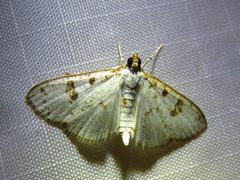
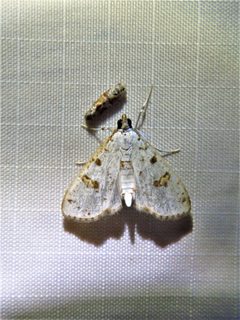
Pronunciation
How to pronounce Palpita illibalis: /ˈpælpɪtə ˌɪlɪˈbeɪlɪs/
These audio files are automatically generated. While they are not always 100% accurate, they are a good starting point.
Identification
The 'illibalis' and 'inkblot palpita ' suggest distinctive wing markings, though detailed diagnostic features are not documented in available sources. The Palpita contains numerous similar , making precise identification challenging without examination of genitalia or molecular data.
Images
Appearance
Wingspan approximately 25 mm. Specific coloration and pattern details are not documented in available sources.
Habitat
Associated with containing white fringetree (Chionanthus virginicus), the documented larval plant. Specific habitat preferences beyond host plant presence are not documented.
Distribution
Recorded from Alabama, Florida, Georgia, Maryland, Mississippi, North Carolina, Ohio, Oklahoma, Pennsylvania, South Carolina, Tennessee, Virginia, and West Virginia in the United States.
Seasonality
have been recorded from March to October, with peak activity from June to August.
Diet
Caterpillars feed on leaves of white fringetree (Chionanthus virginicus, Oleaceae). feeding habits are not documented.
Host Associations
- Chionanthus virginicus - larval plantwhite fringetree, Oleaceae
Life Cycle
Complete with , larval, pupal, and stages. Specific details of development duration and stage are not documented.
Ecological Role
Larval herbivore on white fringetree. Specific ecological functions are not documented.
Similar Taxa
- Other Palpita speciesThe Palpita contains many similar-looking , often requiring dissection or molecular analysis for reliable identification.
More Details
Taxonomic note
The was described by Jacob Hübner in 1818, making it one of the earlier described species in the Palpita.