
Palpita maritima
Sullivan & Solis, 2013
Palpita maritima is a crambid described in 2013 from coastal maritime forests of the southeastern United States. The name refers directly to its type. It is a relatively small moth with distinctive wing patterning and a restricted distribution along the Atlantic and Gulf coasts.
Pronunciation
How to pronounce Palpita maritima: //ˈpæl.pɪ.tə məˈrɪ.tɪ.mə//
These audio files are automatically generated. While they are not always 100% accurate, they are a good starting point.
Identification
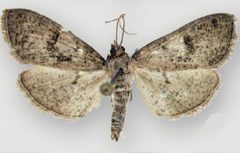
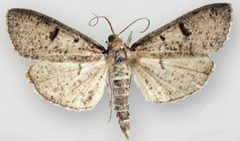
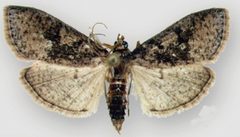
Distinguished from similar Palpita by the combination of coastal maritime forest , slightly rounded forewing apex, and specific pattern of chocolate and fuscous scaling with well-marked and spots. The white underside with visible spots is also distinctive. Known range in coastal Alabama, North Carolina, and Florida helps separate from inland species.
Images
Appearance
Small with wingspan of 29 mm. Forewings brown with mixture of chocolate and fuscous , slightly rounded apex. and spots well marked. Hindwings fuscous and less patterned than forewings. Underside of wings white and less patterned, with orbicular and reniform spots visible.
Habitat
Coastal maritime forests. Associated with this specific type throughout its range.
Distribution
United States: Alabama, North Carolina (Carteret County south to Brunswick County), and Florida.
Seasonality
recorded from late March to August.
Diet
Larvae probably feed on Osmanthus americana.
Host Associations
- Osmanthus americana - probable larval plantinferred from association; not confirmed by direct observation
Similar Taxa
- Other Palpita speciesSimilar general and patterning; distinguished by specificity, wing shape, and distribution
More Details
Etymology
The name 'maritima' refers directly to the coastal maritime forest where the species is most abundant in spring.