
Palpita magniferalis
Walker, 1861
splendid palpita snout moth, ash pyralid, ash leafroller
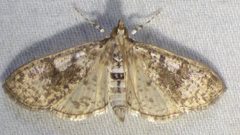
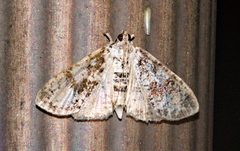
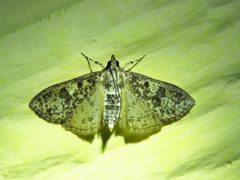
Palpita magniferalis is a small crambid native to eastern North America. are active from spring through fall, with a wingspan of 23–27 mm. The larvae are specialized feeders on Fraxinus (ash) , giving rise to the 'ash leafroller.' The species is sometimes confused with Palpita guttulosa, which some authors treat as a distinct species.
Pronunciation
How to pronounce Palpita magniferalis: //pælˈpaɪtə ˌmæɡnɪˈfɛrəlɪs//
These audio files are automatically generated. While they are not always 100% accurate, they are a good starting point.
Identification
Small size (23–27 mm wingspan) and association with ash help distinguish this from similar crambids. May be confused with Palpita guttulosa, which some authorities treat as a separate rather than synonymous.
Images
Habitat
Associated with Fraxinus (ash) , the larval plants. occur in wooded and semi-open where ash trees are present.
Distribution
Eastern North America. Documented from Canadian provinces including Alberta, Manitoba, and Saskatchewan, and from the United States including Vermont. Core range appears to be the eastern deciduous forest region.
Seasonality
are on wing from April to October, indicating a multivoltine or extended single- pattern across the growing season.
Diet
Larvae feed on Fraxinus (ash trees). feeding habits are not documented.
Host Associations
- Fraxinus - larval plantlarvae feed on ash foliage
Life Cycle
Complete with larval, pupal, and stages. Larvae are leafrollers on ash. Specific details of site and stage are not documented.
Ecological Role
Larval herbivore on ash trees. Serves as prey for and including solitary such as Monobia quadridens, which has been documented hunting leafroller caterpillars including crambid larvae.
Human Relevance
Minor significance. Larval feeding on ash trees is generally not economically damaging. The is an object of interest for lepidopterists and naturalists.
Similar Taxa
- Palpita guttulosaTreated as a valid by some authors; taxonomic boundaries between these two remain unclear and require expert examination for reliable identification.