
Palpita aenescentalis
Munroe, 1952
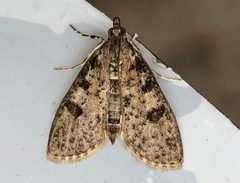
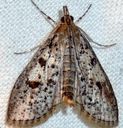
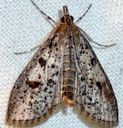
Palpita aenescentalis is a in the Crambidae, described by Eugene G. Munroe in 1952. It is known from eastern and central North America, with records spanning from Canada to the southeastern United States. The species belongs to a large of snout moths, many of which are associated with woody plants.
Pronunciation
How to pronounce Palpita aenescentalis: /pælˈpiːtə ɛneːsɛnˈtaːlɪs/
These audio files are automatically generated. While they are not always 100% accurate, they are a good starting point.
Images
Distribution
Recorded from Illinois, Indiana, Maine, Maryland, North Carolina, North Dakota, Ohio, Oklahoma, Ontario, Quebec, South Carolina, Tennessee, Virginia, Wisconsin, and Vermont. The range covers the northeastern, midwestern, and southeastern United States plus adjacent Canadian provinces.
More Details
Taxonomic Notes
The specific epithet 'aenescentalis' likely refers to the bronze or metallic coloration suggested by the root 'aeneus-' (bronze, -colored) combined with '-centalis', possibly indicating wing markings or pattern elements. The was described by Canadian entomologist Eugene G. Munroe, a in Pyraloidea.
Genus Context
Palpita is a large of approximately 200 described worldwide, with the majority distributed in tropical and subtropical regions. Most Palpita species have larvae that feed on woody plants, particularly in the Oleaceae (olive family), though associations for P. aenescentalis specifically have not been documented.