
Phyllocnistis
Zeller, 1848
Species Guides
12- Phyllocnistis ampelopsiella
- Phyllocnistis citrella(Citrus Leafminer)
- Phyllocnistis hyperpersea
- Phyllocnistis insignis
- Phyllocnistis liquidambarisella
- Phyllocnistis liriodendronella(Tulip Tree Leaf Miner)
- Phyllocnistis meliacella(Mahogany leaf miner)
- Phyllocnistis on-eubotrys-racemosa
- Phyllocnistis populiella(common aspen leaf miner)
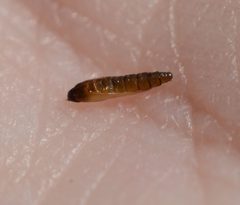
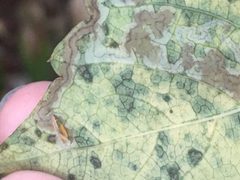
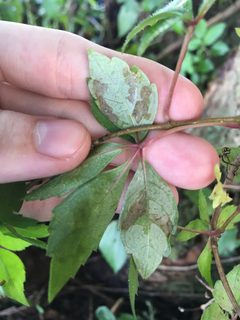
Phyllocnistis is a of microlepidopteran in the Gracillariidae, containing approximately 126 described as of 2012. The genus is notable for its highly specialized larval : early instars are sap-feeding leaf miners that create distinctive serpentine subepidermal mines with trails, while the fourth instar is a non-feeding, apodal stage specialized for cocoon construction. are minute moths with wingspans generally under 5 mm, characterized by reduced , maxillary palpi, and white wings marked with yellow to orange .
Pronunciation
How to pronounce Phyllocnistis: /fɪlːoʊkˈnɪstɪs/
These audio files are automatically generated. While they are not always 100% accurate, they are a good starting point.
Identification
Phyllocnistis can be distinguished from other Gracillariidae by their combination of extremely small size (under 5 mm wingspan), white wings with yellow-orange , reduced , and highly reduced maxillary palpi. The larval mines are diagnostic: serpentine, subepidermal, with a conspicuous trail. The fourth instar's apodal, non-feeding is unique among Lepidoptera. -level identification typically requires examination of pupal characters, particularly the frontal process and arrangement of recurved spines on abdominal , or genitalia dissection.
Images
Habitat
occur on diverse plants across at least 20 plant . range from agricultural settings (citrus orchards, vineyards) to natural vegetation supporting host plants including avocado, grapevine, and various woody and herbaceous species. The shows particular diversity in tropical regions.
Distribution
The has a global distribution with records from Europe, Asia, Africa, North America, Central America and Caribbean, South America, and Oceania. Individual show varying ranges: Phyllocnistis citrella is pantropical and subtropical; P. vitegenella occurs in Europe (Hungary, Italy, Romania, Slovakia, Slovenia, Switzerland) and North America (Canada, USA). The true diversity is likely underestimated, with hundreds of species possibly undescribed in the tropics.
Seasonality
Activity patterns vary by and climate. In temperate regions, are typically active during the warmer months. Phyllocnistis citrella shows continuous breeding in tropical and subtropical climates, with peaks correlating with new flush growth of plants. Specific seasonal data for most species is not documented.
Host Associations
- Citrus spp. - Phyllocnistis citrella, the citrus leafminer
- Vitis vinifera - Phyllocnistis vitegenella, the grapevine leafminer
- Persea spp. - Multiple New World
- Rutaceae - Multiple
Life Cycle
Four instars. First three instars are sap-feeding leaf miners. Fourth instar is non-feeding and specialized for cocoon construction. occurs within the mine.
Behavior
Larvae are specialized subepidermal miners. Early instars feed on sap while creating serpentine mines; the terminal instar does not feed but constructs a cocoon at the mine terminus. are presumably or , as they are attracted to blacklights.
Ecological Role
Larvae function as herbivores, creating subepidermal leaf mines that may affect plant . Several are economically significant agricultural pests. The serves as host for various including Ageniaspis citricola, Cirrospilus phyllocnistoides, and Semielacher petiolatus, which have been employed in programs.
Human Relevance
Phyllocnistis citrella (citrus leafminer) is a major pest of citrus worldwide, causing direct damage to leaves and indirect damage by creating entry points for citrus canker . P. vitegenella affects grapevines. programs using introduced (notably Ageniaspis citricola) have been implemented in multiple countries including Brazil and the United States. The has been subject to extensive taxonomic and biological study due to its economic importance and specialized .
Similar Taxa
- Other GracillariidaePhyllocnistis is distinguished by its unique fourth instar (apodal, non-feeding, cocoon-spinning) and highly reduced palpi; other gracillariids typically have more conventional larval development and better-developed mouthpart structures.
- Other leaf-mining LepidopteraThe combination of serpentine subepidermal mines with a trail, plus the four-instar with a specialized terminal instar, is diagnostic for Phyllocnistis; other leaf miners such as Nepticulidae or Lyonetiidae have different mine morphologies and larval development.
More Details
Taxonomic diversity
As of 2012, approximately 126 had been described, but this is considered a fraction of true diversity, particularly in tropical regions where hundreds of species may remain undescribed.
Morphological reduction
The exhibits extensive morphological reduction in (, palpi, wing venation) correlated with minute body size, representing an extreme within Gracillariidae.
Pupal diversity
Despite conservative and larval , pupae show remarkable structural diversity in the frontal process and abdominal spine arrangements, providing important -level characters.
Sources and further reading
- BugGuide
- Wikipedia
- GBIF taxonomy match
- iNaturalist taxon
- NCBI Taxonomy
- Catalogue of Life
- Biological Control in Brazil is Used on an Area that is Larger than Belgium
- Bug Eric: Don't Ignore the Small Bugs!
- Bug Eric: November 2016
- Bug Eric: 2016
- Phyllocnistis citrella . [Distribution map].
- Phyllocnistis citrella . [Distribution map].
- Phyllocnistis vitegenella . [Distribution map].
- Figure 2 from: Davis D, Wagner D (2011) Biology and systematics of the New World Phyllocnistis Zeller leafminers of the avocado genus Persea (Lepidoptera, Gracillariidae). ZooKeys 97: 39-73. https://doi.org/10.3897/zookeys.97.753
- Figure 3 from: Davis D, Wagner D (2011) Biology and systematics of the New World Phyllocnistis Zeller leafminers of the avocado genus Persea (Lepidoptera, Gracillariidae). ZooKeys 97: 39-73. https://doi.org/10.3897/zookeys.97.753
- Figure 5 from: Davis D, Wagner D (2011) Biology and systematics of the New World Phyllocnistis Zeller leafminers of the avocado genus Persea (Lepidoptera, Gracillariidae). ZooKeys 97: 39-73. https://doi.org/10.3897/zookeys.97.753
- Figure 1 from: Davis D, Wagner D (2011) Biology and systematics of the New World Phyllocnistis Zeller leafminers of the avocado genus Persea (Lepidoptera, Gracillariidae). ZooKeys 97: 39-73. https://doi.org/10.3897/zookeys.97.753
- Figure 16 from: Davis D, Wagner D (2011) Biology and systematics of the New World Phyllocnistis Zeller leafminers of the avocado genus Persea (Lepidoptera, Gracillariidae). ZooKeys 97: 39-73. https://doi.org/10.3897/zookeys.97.753
- Μελέτη βιολογικών χαρακτηριστικών παρασιτοειδών του phyllocnistis citrella stainton και της επίδρασης τους στη δυναμική του πληθυσμού του
- Citrus Leafminer, Phyllocnistis citrella Stainton (Insecta: Lepidoptera: Phyllocnistinae)