
Phyllocnistis liquidambarisella
Chambers, 1875
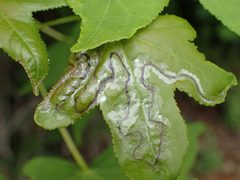
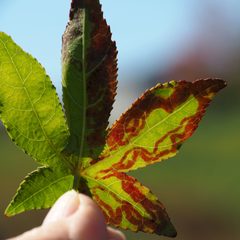
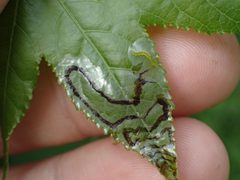
Phyllocnistis liquidambarisella is a microlepidopteran in the Gracillariidae, specialized as a leafminer on sweetgum trees (Liquidambar styraciflua). The creates distinctive, winding linear mines on the upper surface of leaves, leaving an indistinct trail without a central line. It is known from the eastern and southern United States, with records spanning from New York to Florida and west to Texas.
Pronunciation
How to pronounce Phyllocnistis liquidambarisella: //ˌfɪloʊˈknɪstɪs ˌlɪkwɪˌdæmbəraɪˈsɛlə//
These audio files are automatically generated. While they are not always 100% accurate, they are a good starting point.
Identification
The is identified primarily by its association with Liquidambar styraciflua and the characteristic leaf mine: a long, winding, linear mine on the upperside of the leaf that lacks a central line of . are typical of the Phyllocnistis—small, slender with narrow, wings and long fringing . Definitive identification of adults may require examination of genitalia.
Images
Habitat
Associated with sweetgum (Liquidambar styraciflua) in forests, woodlands, and urban plantings where this tree occurs.
Distribution
United States: New York, Maryland, Kentucky, Georgia, Texas, Florida, Illinois. The range corresponds to the distribution of its plant, Liquidambar styraciflua, in the eastern and southern United States.
Diet
Larval stage feeds internally on leaf tissue of Liquidambar styraciflua, creating mines between the upper and lower . feeding habits are not documented.
Host Associations
- Liquidambar styraciflua - obligate Larval plant; larvae mine leaves of this exclusively
Life Cycle
Larvae are leafminers, developing between leaf layers. The mine is formed on the upperside of the leaf. occurs within the mine or in a slight fold at the leaf edge. Specific details of placement, number of per year, and stage are not documented.
Behavior
Larvae create serpentine mines that wind across the leaf surface. The mines are rather indistinct compared to those of some other leafmining , lacking the prominent dark line often seen in linear mines.
Ecological Role
As a leafminer, larvae function as herbivores that consume photosynthetic tissue, potentially affecting plant at high densities. The is part of the of insects specialized on sweetgum.
Similar Taxa
- Phyllocnistis citrellaAlso a Phyllocnistis leafminer, but restricted to citrus (Rutaceae) rather than sweetgum; mines may appear similar but plant distinguishes them
- Other Phyllocnistis speciesMany create similar linear leaf mines; plant association is the primary distinguishing character for P. liquidambarisella
- Gracillariidae leafminers in other generaOther gracillariid leafminers may create blotch mines or have different patterns; Phyllocnistis mines are characteristically long, winding, and linear with indistinct frass
More Details
Leaf mine characteristics
The mine is specifically described as 'long, winding, linear' on the upperside of the leaf, and 'rather indistinct, without any central line of '—distinguishing it from many other leafmining that deposit frass in a visible central line.
Taxonomic note
The epithet 'liquidambarisella' directly references its Liquidambar, following a common naming convention for host-specific leafmining .