
Phyllocnistis meliacella
Becker, 1974
Mahogany leaf miner
, commonly known as the mahogany , is a microlepidopteran in the Gracillariidae. The was described by Becker in 1974. It is a leaf-mining species whose larvae feed internally on plant foliage. Originally known only from Rica, it has recently been documented in Florida, USA, representing a range expansion into North America.
Pronunciation
How to pronounce Phyllocnistis meliacella: /fɪˌlɒkˈnɪstɪs ˌmiːliəˈsɛlə/
These audio files are automatically generated. While they are not always 100% accurate, they are a good starting point.
Identification
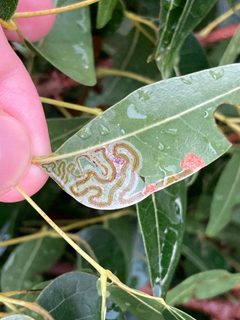
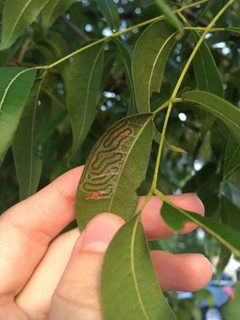
As a member of the Phyllocnistis, this likely exhibits the characteristic features of the group: extremely small size (typical of microlepidoptera), narrow wings with long fringing , and a metallic or reflective appearance. Definitive identification to species level typically requires examination of genitalia or molecular analysis. The leaf mines produced by larvae may provide a diagnostic field character, though specific mine patterns for this species are not well documented in available sources.
Images
Habitat
Associated with Meliaceae plants. In Rica, likely occurs in tropical forest where mahogany and related grow. In Florida, found in suburban and natural areas where suitable Meliaceae hosts are present.
Distribution
Rica (type locality); United States, Florida (recently recorded, representing range expansion).
Diet
Larvae feed on Meliaceae (mahogany ). Specific plant species within this family have not been documented in available sources.
Host Associations
- Meliaceae - larval plant-level association only; specific or within Meliaceae not documented
Life Cycle
As with other Phyllocnistis , larvae are leaf miners that feed between the epidermal layers of leaves. The complete details ( placement, larval instars, site, number of ) are not documented for this species specifically.
Behavior
are and attracted to light. Larvae are endophytic leaf miners, feeding internally within leaf tissue rather than externally on the surface.
Ecological Role
As a , larvae create serpentine or blotch mines in foliage. The ecological impacts of this herbivory on host plant and interactions have not been studied. The may serve as host for , though no records are documented.
Human Relevance
The recent detection in Florida suggests potential for establishment as an in the United States, though economic or ecological impacts have not been assessed. Related in the , such as Phyllocnistis citrella (), are significant agricultural pests, but P. meliacella's specificity on Meliaceae may limit its agricultural relevance.
Similar Taxa
- Phyllocnistis citrellaBoth are Phyllocnistis with leaf-mining larvae; P. citrella is a major citrus pest with established programs, while P. meliacella occurs on Meliaceae. Separation requires plant association and morphological examination.
- Other Phyllocnistis speciesThe contains numerous similar-looking microlepidoptera, many undescribed or poorly known. -level identification typically requires dissection and examination of male genitalia.
More Details
Taxonomic history
Described by Becker in 1974 from Rican material. The recent Florida record represents a significant range expansion and may indicate human-mediated introduction, possibly through horticultural trade of Meliaceae plants.
Research needs
Basic remains undocumented, including specific plant within Meliaceae, larval mine , , and potential natural enemies. The Florida warrants monitoring to assess establishment and spread potential.