Phyllocnistis ampelopsiella
Chambers, 1871
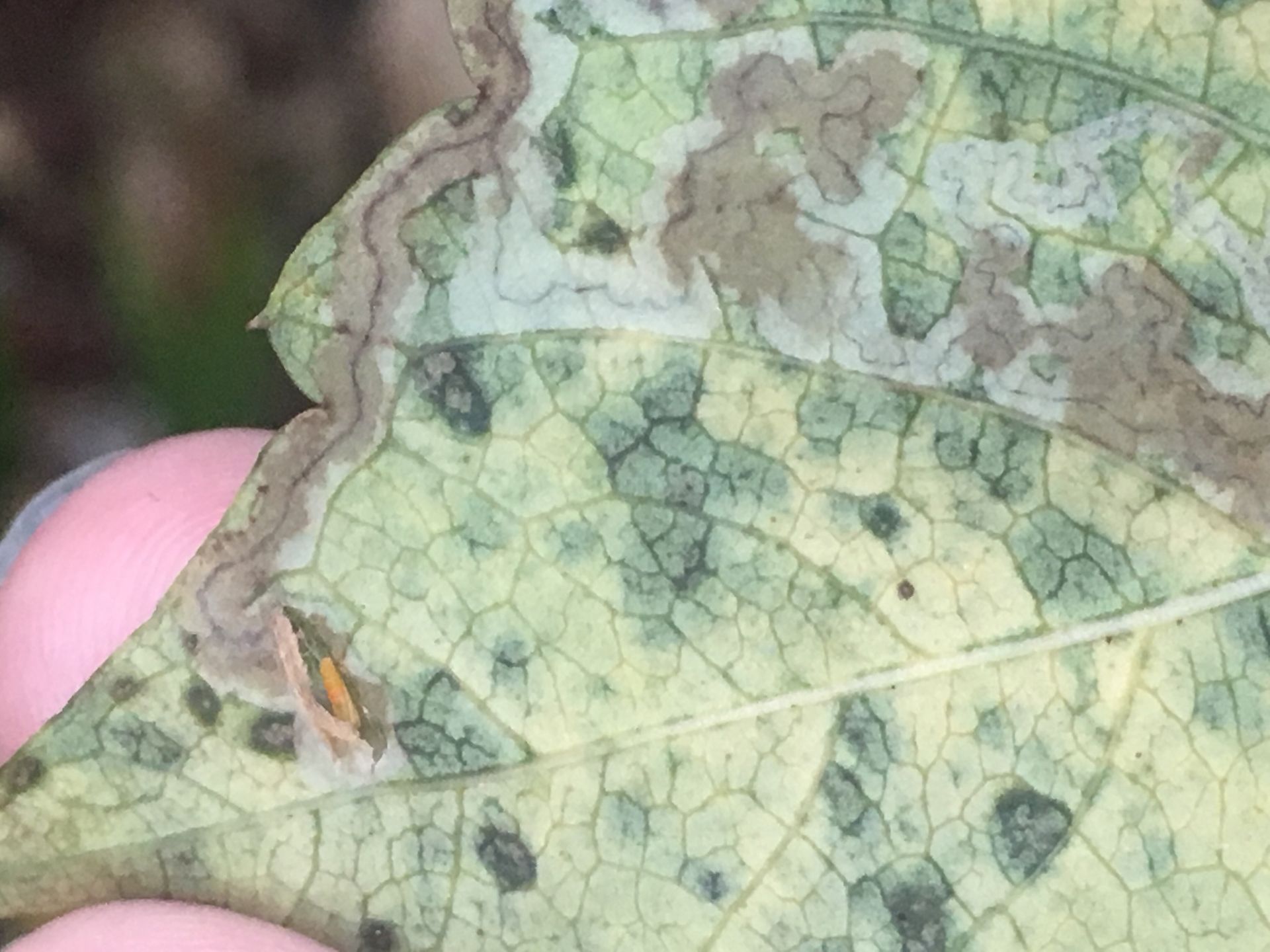
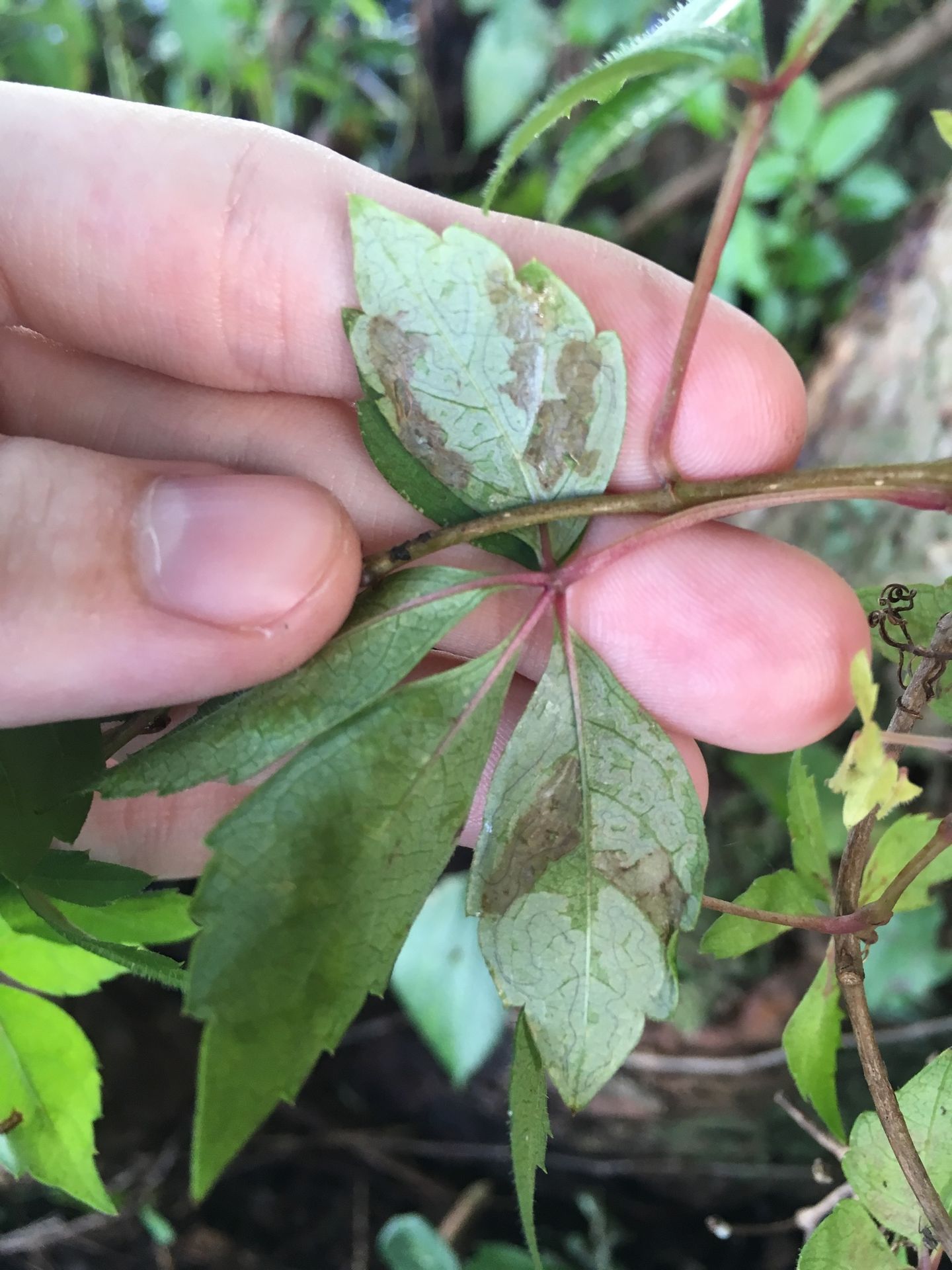
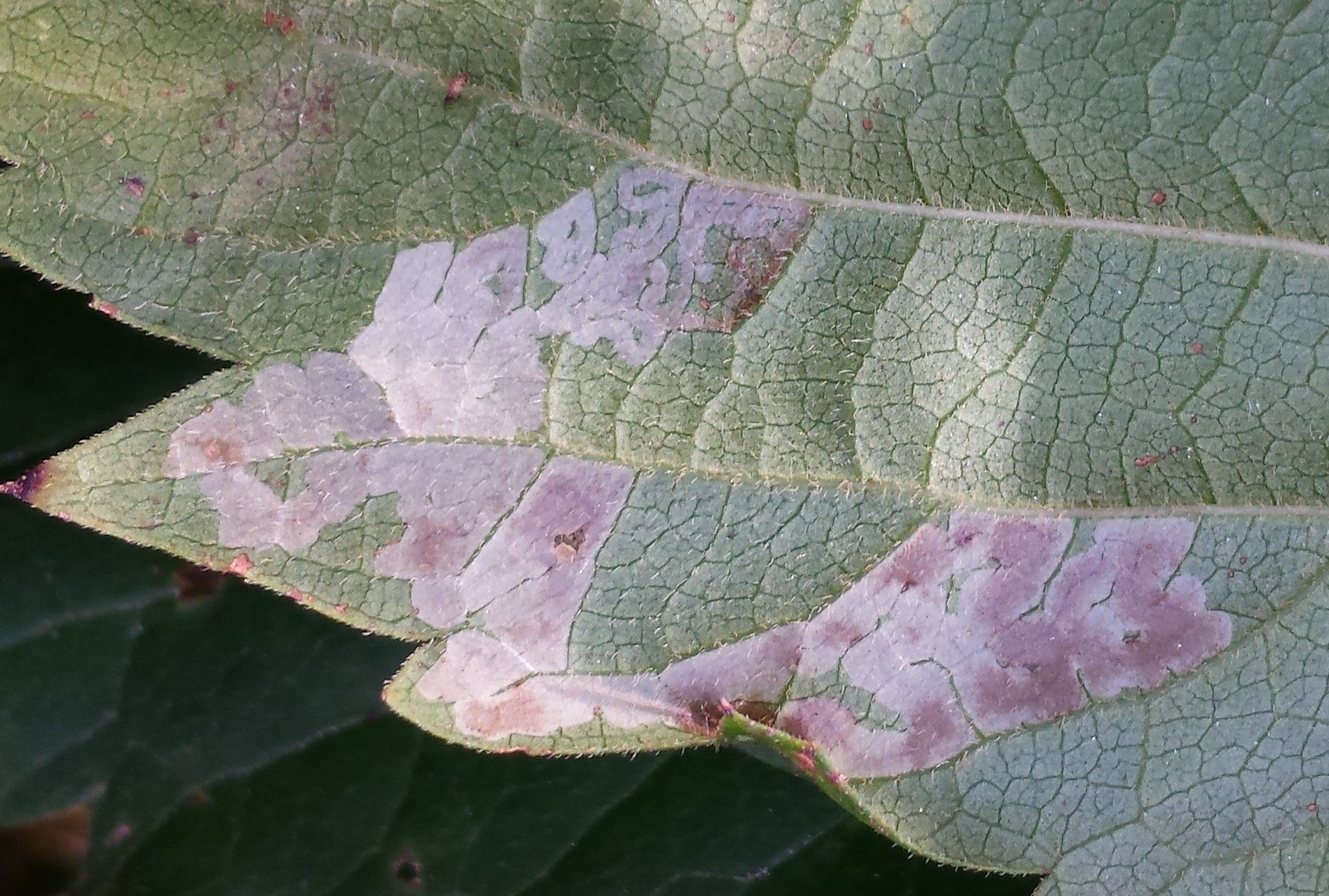
Phyllocnistis ampelopsiella is a microlepidopteran in the Gracillariidae. The larva is a that produces distinctive white, winding mines on the undersides of leaves. The mine pattern is initially somewhat linear but becomes convoluted and blotchy as the larva feeds between the leaf layers, eventually separating the entire cuticle in the mined portion. The is known from eastern North America.
Pronunciation
How to pronounce Phyllocnistis ampelopsiella: //ˌfɪloʊkˈnɪstɪs ˌæmpɪloʊpˈsiːɛlə//
These audio files are automatically generated. While they are not always 100% accurate, they are a good starting point.
Identification
The is identified primarily by its larval leaf mines: white, convoluted mines on the underside of leaves that wind from midrib to margin and back between , eventually becoming blotchy as the separates. identification likely requires microscopic examination of genitalia, as is typical for Phyllocnistis species. The plant association with Parthenocissus, Psedera, or Vitis may aid in identification.
Images
Habitat
Associated with plants in the grape (Vitaceae), including Virginia creeper (Parthenocissus quinquefolia), wild grape (Vitis vinifera), and related . Specific type is not documented beyond this host association.
Distribution
Known from Québec, Canada and the United States (Colorado, Kentucky, Maine, and New York). Distribution records from GBIF also include Ontario, Canada.
Diet
Larva feeds as a between the upper and lower of plant leaves. Host plants include Parthenocissus quinquefolia (Virginia creeper), Psedera quinquefolia, and Vitis vinifera (grape). diet is not documented.
Host Associations
- Parthenocissus quinquefolia - larval Virginia creeper
- Psedera quinquefolia - larval
- Vitis vinifera - larval grape
Life Cycle
Complete with , larval, pupal, and stages. Larval stage is spent mining leaves. Specific details on site, number of , or stage are not documented.
Behavior
Larva produces a white, convoluted leaf mine on the underside of leaves. The mine winds between leaf from midrib to margin and back, eventually becoming blotchy as the separates. This mining is characteristic of the Phyllocnistis.
Ecological Role
As a , the larva creates feeding galleries that damage plant foliage. The ecological impact on host plant and broader role have not been quantified.
Human Relevance
Minor pest of grape (Vitis vinifera). The related Phyllocnistis citrella (citrus leafminer) is a significant agricultural pest, but P. ampelopsiella does not appear to have major economic impact.
Similar Taxa
- Phyllocnistis citrellaSimilar leaf mining and appearance; distinguished by plant (citrus vs. grape/Virginia creeper) and geographic distribution
- Other Phyllocnistis speciesMany in this are morphologically similar and require genitalia dissection for definitive identification; plant association and geographic range may help distinguish
More Details
Taxonomic note
Psedera quinquefolia listed as a plant is likely a synonym or variant of Parthenocissus quinquefolia, as Psedera is sometimes treated as a synonym of Parthenocissus in modern classifications.
Research potential
Like many microlepidoptera, this is poorly documented and may be underreported due to its small size and the specialized knowledge required for identification. Citizen science observations at lights could expand known distribution.