
Phyllocnistis liriodendronella
Clemens, 1863
Tulip Tree Leaf Miner
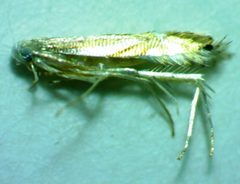
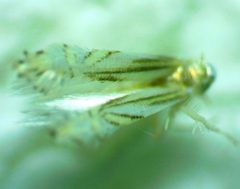
Phyllocnistis liriodendronella is a microlepidopteran in the Gracillariidae, commonly known as the Tulip Tree . The is known from the eastern United States, where its larvae create distinctive serpentine mines on the leaves of plants in the magnolia family. It is one of numerous Phyllocnistis species specialized as leaf miners on woody plants.
Pronunciation
How to pronounce Phyllocnistis liriodendronella: /ˌfɪloʊˈknɪstɪs ˌlɪrioʊˌdɛndrɒˈnɛlə/
These audio files are automatically generated. While they are not always 100% accurate, they are a good starting point.
Identification
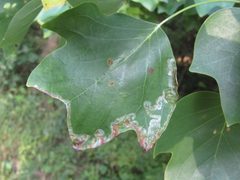
are minute with lance-shaped wings bearing long fringed . Larvae produce characteristic long, winding, linear mines on either leaf surface, particularly on small terminal leaves of plants. The mine form is diagnostic for the Phyllocnistis. -level identification of adults typically requires examination of genitalia or molecular analysis.
Images
Habitat
Associated with deciduous forests and urban plantings containing trees, particularly tulip tree (Liriodendron tulipifera) and magnolias (Magnolia spp.).
Distribution
United States: New York, New Jersey, Maryland, Pennsylvania, and Kentucky.
Diet
Larvae feed internally by mining leaves of Liriodendron tulipifera, Magnolia grandiflora, Magnolia virginiana, and Magnolia glauca. feeding habits are unknown.
Host Associations
- Liriodendron tulipifera - larval tulip tree
- Magnolia grandiflora - larval southern magnolia
- Magnolia virginiana - larval sweetbay magnolia
- Magnolia glauca - larval synonym of Magnolia virginiana
Behavior
Larvae are leaf miners, feeding between the epidermal layers of leaves. are and attracted to light.
Ecological Role
As a , larvae create damage that is generally cosmetic rather than causing significant tree mortality. May serve as prey for and other natural enemies.
Human Relevance
Minor pest of ornamental magnolias and tulip trees; damage is typically aesthetic rather than economically significant. The is not known to be targeted in programs, unlike the related citrus leafminer (Phyllocnistis citrella).
Similar Taxa
- Phyllocnistis citrellaSimilar leaf mining habit and mine , but restricted to citrus (Rutaceae) and more southern distribution; a major agricultural pest with established programs.
- Other Phyllocnistis speciesNumerous exist on diverse plants; identification to requires host plant association and often genitalia dissection.