
Nepticulidae
Pygmy Eye-capped Moths, pigmy moths, midget moths
Genus Guides
9- Acalyptris
- Bohemannia
- Ectoedemia
- Enteucha
- Etainia
- Fomoria
- Glaucolepis
- Stigmella(pygmy leaf-mining moths)
- Zimmermannia
is a of extremely small distributed worldwide except Antarctica. are characterized by distinctive eyecaps covering the and narrow, wings with simplified venation. Wingspans range from 3 mm to 10 mm, making them among the smallest living moths. Larvae are predominantly leaf miners, though some mine seeds or bark. The family contains over 1,000 described species with significant undescribed diversity, particularly in tropical regions. Two are recognized: Pectinivalvinae, to Australia, and Nepticulinae, distributed globally.
Pronunciation
How to pronounce Nepticulidae: /nɛpˈtɪkjʊˌlaɪdiː/
These audio files are automatically generated. While they are not always 100% accurate, they are a good starting point.
Identification
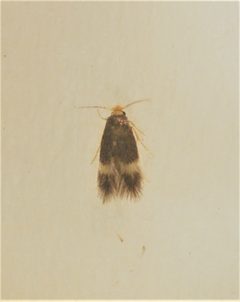
possess diagnostic eyecaps over the —a feature shared with Opostegidae, Bucculatricidae, and Lyonetiidae. Wings are narrow and with highly reduced venation compared to other Lepidoptera. Many exhibit metallic markings on wings. The includes the smallest known living , with some species achieving wingspans as small as 3 mm. Genitalia , particularly in males, provides critical diagnostic characters for species identification.
Images
Distribution
Worldwide distribution except Antarctica. Pectinivalvinae is to Australia. Nepticulinae subfamily occurs globally. Documented from mid-Cretaceous fossil deposits approximately 97 million years old.
Life Cycle
Larvae develop as miners within plant tissues—primarily leaves, but also seeds and bark in some . typically occurs outside the mine. periods vary by species; some species show two per year while others may have extended single generations.
Behavior
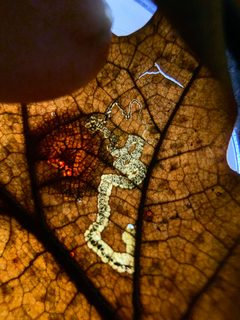
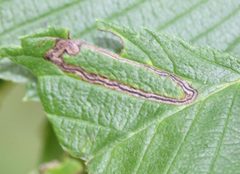
Larvae create characteristic gallery mines in plant tissues, with often deposited in specific patterns within the mine. are frequently collected near host plants. Some have been observed to descend en masse from host trees.
Ecological Role
Larvae function as herbivores through leaf mining activity. The shows high plant specialization, with related typically feeding on taxonomically related plants. Some species act as Castanea and may be impacted by decline of keystone host species. Non-native host plants can serve as for specialist leafminers following host decline.
Human Relevance
Some have been introduced to new regions through plant nursery trade, with documented cases of Asian species establishing in North America. Leaf mining damage is generally minor and not considered economically significant. The serves as a model group for studies of plant specialization, with angiosperms, and impacts of loss on insect .
Similar Taxa
- OpostegidaeAlso possesses eyecaps; distinguished by different wing venation patterns and larval
- BucculatricidaeShares eyecap characteristic; differs in larval habits and
- LyonetiidaePossesses similar eyecap structure; distinguished by genitalia and mine characteristics
- GracillariidaeSimilar leaf-mining larvae; distinguished by including absence of eyecaps and different wing shape
Sources and further reading
- BugGuide
- Wikipedia
- GBIF taxonomy match
- iNaturalist taxon
- NCBI Taxonomy
- Catalogue of Life
- 1000+ pygmy moths classified & catalogued | Blog
- When the American Chestnut Vanished, What Happened to Insects That Fed On It?
- species introduction | Blog
- THE NEPTICULIDAE (LEPIDOPTERA) OF CANADA
- Australian Nepticulidae (Lepidoptera): redescription of the named species
- Morphology, biology and distribution of Stigmella irregularis Puplesis (Lepidopera: Nepticulidae)
- FAUNA AND ECOLOGY OF MICROLEPIDOPTERA (LEPIDOPTERA: NEPTICULIDAE, GRACILLARIIDAE) OF THE ULYANOVSK REGION
- Trophic relationships and mining seasons of the Nepticulidae of Lithuania: an updated survey
- Taxonomic notes on the Ectoedemia suberis and angulifasciella species groups in Japan (Lepidoptera: Nepticulidae)
- Acalyptris Meyrick: revision of the platani and staticis groups in Europe and the Mediterranean (Lepidoptera: Nepticulidae)
- The Nepticulidae and Opostegidae of mainland France and Corsica: an annotated catalogue (Lepidoptera: Nepticuloidea)
- How Tropical Biodiversity Gets Multiplied: Documentation of Entomological Proofs from the Family Nepticulidae, Tiny Lepidopteran Leaf Miners.