
Stigmella
pygmy leaf-mining moths
Species Guides
41- Stigmella altella
- Stigmella anomalella(rose leaf miner)
- Stigmella apicialbella
- Stigmella betulicola
- Stigmella braunella(Catalina Cherry Leaf Miner)
- Stigmella caryaefoliella(hickory leafminer)
- Stigmella castaneaefoliella
- Stigmella ceanothi
- Stigmella corylifoliella
Stigmella is a large of minute in the Nepticulidae, commonly known as pygmy leaf-mining moths. typically measure 2–6 mm in wingspan, making them among the smallest Lepidoptera. The genus is characterized by larvae that feed internally in leaf mines of diverse plants. Many exhibit narrow host specificity, with individual species restricted to particular plant genera or families. Stigmella contains hundreds of described species distributed across temperate and tropical regions worldwide.
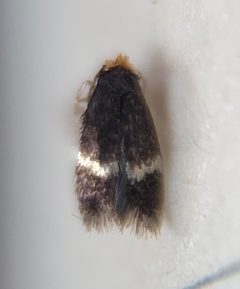
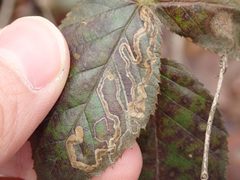
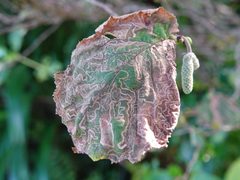
Pronunciation
How to pronounce Stigmella: /stɪɡˈmɛlə/
These audio files are automatically generated. While they are not always 100% accurate, they are a good starting point.
Identification
Identification to requires examination of genitalia, plant association, and larval mine . distinguished from other Nepticulidae by combination of wing venation, scaling patterns, and male genitalia structure. Larval leaf mines often diagnostic: linear to blotch mines with characteristic pattern (linear, broken, or aggregated). increasingly used for species identification. Similar genera in Nepticulidae include Ectoedemia and Phyllonorycter, distinguished by wing shape, mine morphology, and genitalia.
Images
Habitat
Diverse terrestrial supporting larval plants: deciduous and mixed forests, woodlands, scrublands, orchards, and urban parks. Specific habitat determined by host plant distribution. Many associated with particular tree or shrub .
Distribution
in temperate and tropical regions. Particularly diverse in the Palearctic and Nearctic regions. Individual ranges vary from widespread to highly restricted endemics. Some species documented as , spreading with introduced plants.
Seasonality
periods vary by and latitude. Many temperate species or multivoltine, with adults active from spring through autumn. Some species with extended or overlapping . Specific flight periods often correlated with plant .
Host Associations
- Castanea - larval including American chestnut and related ; leafminers documented
- Pyrus - larval multiple pear including P. amygdaliformis and P. elaeagrifolia
- Ulmus - larval including Siberian elm; some associated with introduced elms
- Quercus - larval many feed on oaks
- Betula - larval birch-feeding common in northern regions
- Rosaceae - larval broad association for numerous
- Fagaceae - larval -level association including chestnuts and oaks
Life Cycle
Holometabolous. laid on plant leaves. Larvae mine internally in leaf tissue, feeding between epidermal layers and creating visible mines. Larval development includes several instars. occurs within the mine or in soil/litter. through exit slit in leaf. Voltinism varies: some , others or multivoltine with overlapping .
Behavior
or , attracted to light. Larval specialized: internal leaf mining creates characteristic tunnel patterns visible externally. deposition pattern within mine often -specific (linear, aggregated, or dispersed). Some species demonstrate fidelity, with larvae refusing alternative host plants.
Ecological Role
Leaf miners contribute to nutrient cycling through leaf tissue consumption and accelerating leaf . Serve as prey for and other natural enemies. Some function as indicators of plant health or disturbance. species may influence host plant at high densities.
Human Relevance
Some considered minor pests in orchards or forestry when reach high densities. Several species introduced to new regions via human-mediated plant transport, documented as . Research interest for studies of host specialization, , and invasion . Non-native chestnut and elm species provide for leafminers following decline of native hosts.
Similar Taxa
- EctoedemiaAlso in Nepticulidae; distinguished by wing shape, larval mine (often more blotch-like), and genitalia structure
- PhyllonorycterNepticulidae with larvae typically forming upper-surface blotch mines rather than linear mines; often with more pronounced wing patterning
- AcrocercopsGracillariidae leafminers with similar mining habit; distinguished by wing venation and larval (flattened body form)
Sources and further reading
- BugGuide
- Wikipedia
- iNaturalist taxon
- NCBI Taxonomy
- Catalogue of Life
- When the American Chestnut Vanished, What Happened to Insects That Fed On It?
- biodiversity | Blog - Part 35
- Bug Eric: National Moth Week 2021 Review
- Morphology, biology and distribution of Stigmella irregularis Puplesis (Lepidopera: Nepticulidae)