
Acrocercops
Wallengren, 1881
Species Guides
4- Acrocercops albinatella
- Acrocercops arbutella
- Acrocercops astericola(Aster Tentiform Blotchminer)
- Acrocercops pnosmodiella(Marbleseed Leafminer)
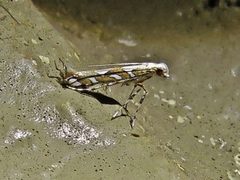
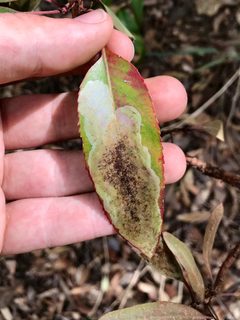
Acrocercops is a of leaf-mining in the Gracillariidae. in this genus are primarily known as internal feeders on plant foliage, creating mines within leaves. Several species have been extensively studied as models for race formation and host-associated speciation, particularly A. transecta, which exhibits distinct host races on distantly related plant families. The genus includes both native and , with some members recognized as agricultural pests.

Pronunciation
How to pronounce Acrocercops: /ˌækroʊˈsɜrkɒps/
These audio files are automatically generated. While they are not always 100% accurate, they are a good starting point.
Images
Distribution
Records from GBIF indicate presence in Denmark, Norway, Sweden, Vermont (USA), and other US locations. Specific distributions vary: A. cramerella occurs in Asia (Brunei, Indonesia, Malaysia, Philippines), Australasia (Australia, Irian Jaya, New Britain, Papua New Guinea), and Pacific Islands (Samoa); A. brongniardella has been documented as in Russia, particularly in St. Petersburg and Voronezh regions; A. syngramma occurs in regions where cashew is cultivated.
Host Associations
- Juglans ailanthifolia - plant race of A. transecta; Juglandaceae
- Lyonia ovalifolia - plant race of A. transecta; Ericaceae; derived host shift
- Theobroma cacao - plantPrimary of A. cramerella
- Nephelium lappaceum - plantRecorded of A. cramerella
- Cynometra cauliflora - plantRecorded of A. cramerella
- Acacia prominens - plant of A. plebeia; phyllode feeder
- Quercus - plant of A. brongniardella; on oaks in Russia
- Anacardium occidentale - plant of A. syngramma; cashew
Life Cycle
A. transecta has been successfully reared continuously over multiple in laboratory conditions, with a short generation time that facilitates experimental study. A. cramerella development period has been studied in the Philippines. Larval stages are leaf miners; specific sites and strategies vary by and require further documentation.
Behavior
Leaf-mining : larvae feed internally within plant tissue, creating visible mines. A. transecta exhibits race-specific behaviors: Lyonia-associated females show significant preference for mating on their host plant, while Juglans-associated host race shows reduced mating success in the absence of host plants. Males of the Lyonia-associated race do not show host-specific mating site preferences. Oviposition behavior is chemically mediated: A. transecta females use contact chemosensilla on to detect host-specific triterpenoid glycosides that stimulate -laying. Multiple larvae may occur in single mines, with interference competition documented in A. plebeia.
Ecological Role
Leaf miners that create internal feeding damage to plant foliage. High larval mortality documented in some due to pressure. A. plebeia shows low food utilization compared to free-living Lepidoptera. Host race formation in A. transecta has led to distinct parasitoid associated with each host race, suggesting the may structure local parasitoid .
Human Relevance
A. cramerella is an agricultural pest of cocoa (cocoa pod borer), with economic impacts in Southeast Asia and Pacific regions; also affects rambutan and other crops. A. syngramma is a documented pest of cashew. A. brongniardella is an in Russia, where it causes on oaks in some regions. The serves as an important model system for studying -associated speciation and the evolutionary genetics of host shifts.
Sources and further reading
- BugGuide
- Wikipedia
- GBIF taxonomy match
- iNaturalist taxon
- NCBI Taxonomy
- Catalogue of Life
- Acrocercops cramerella . [Distribution map].
- Additional Information on the Biology of Acrocercops cramerella Snellen (Lepidoptera: Gracilariidae) in the Philippines
- Host race formation in the leaf-mining moth Acrocercops transecta (Lepidoptera: Gracillariidae)
- Differential introgression causes genealogical discordance in host races of Acrocercops transecta (Insecta: Lepidoptera)
- LEAF BLOTCH MINER MOTH ACROCERCOPS BRONGNIARDELLA IS A POORLY STUDIED INVASIVE SPECIES IN RUSSIA
- The utility of indels in population genetics: The Tpi intron for host race genealogy of Acrocercops transecta (Insecta: Lepidoptera)
- A report on the occurrence of eulophid parasitoids on the Cashew Leaf Miner Acrocercops syngramma Meyrick (Insecta: Lepidoptera: Gracillariidae)
- Parasitoids (Hymenoptera: Pteromalidae, Eulophidae, Braconidae) of the leaf blotch miner moth Acrocercops brongniardella (Lepidoptera: Gracillariidae) in the Ufa City outskirts
- ASPECTS OF EXPLOITATION OF ACACIA PHYLLODES BY A MINING LEPIDOPTERON, ACROCERCOPS PLEBEIA (GRACILLARIIDAE)
- Techniques for continuous rearing and assessing host preference of a multivoltine leaf‐mining moth, Acrocercops transecta (Lepidoptera: Gracillariidae)
- Parasitoids (Hymenoptera: Eulophidae, Braconidae, Ichneumonidae) in the leaf blotch miner moth Acrocercops brongniardella (Lepidoptera: Gracillariidae) of the Voronezh State Nature Biosphere Reserve
- Host‐associated pre‐mating reproductive isolation between host races of Acrocercops transecta : mating site preferences and effect of host presence on mating
- Distinct parasitoid communities associated with host races of the leaf-mining mothAcrocercops transectaon distantly related host plants (Juglandaceae and Ericaceae)
- Multiple host shifts between distantly related plants, Juglandaceae and Ericaceae, in the leaf-mining moth Acrocercops leucophaea complex (Lepidoptera: Gracillariidae)
- Oviposition stimulants underlying different preferences between host races in the leaf-mining moth Acrocercops transecta (Lepidoptera: Gracillariidae)