
Acrocercopinae
Kawahara & Ohshima, 2016
Genus Guides
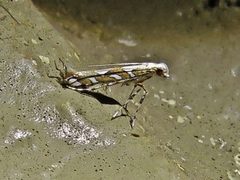
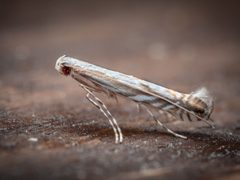
9Acrocercopinae is a of leaf-mining in the Gracillariidae, established by Kawahara & Ohshima in 2016. The subfamily contains approximately 30 including Acrocercops, Cryptolectica, Dialectica, and Spulerina. in this subfamily are known from Australia, Sub-Saharan Africa, and other regions. Recent taxonomic revisions using museomics and mitogenomics have clarified species boundaries and reclassified some Australian species previously placed in Ornixolinae.
Pronunciation
How to pronounce Acrocercopinae: /æˌkroʊˌsɜrkəˈpaɪni/
These audio files are automatically generated. While they are not always 100% accurate, they are a good starting point.
Identification
Acrocercopinae is distinguished from other Gracillariidae by molecular phylogenetic data and genitalic . The subfamily was separated from Gracillariinae and Ornixolinae based on combined evidence from mitochondrial , morphology, and bionomics. Identification to level requires examination of genitalia; key genera include Acrocercops, Cryptolectica, Dialectica, Gibbovalva, and Spulerina.
Images
Distribution
Acrocercopinae occurs in the Australian biogeographical realm and Sub-Saharan Africa. Documented records include Australia, Cameroon, Kenya, and Democratic Republic of the Congo. The has a broad tropical and subtropical distribution.
Diet
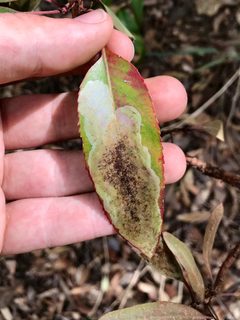
Larvae are leaf miners, feeding endophytically within leaf tissue. plant associations have been documented for several , though many remain unknown.
Host Associations
- Diospyros calycantha - Ebenaceae; new record for Gracillariidae
- Mallotus polyadenos - Euphorbiaceae; for Polydema
- Mallotus paniculatus - Euphorbiaceae; for Polydema
- Macaranga involucrata - Euphorbiaceae; for Polydema
- Acacia dealbata - Fabaceae; for Polysoma
- Acacia melanoxylon - Fabaceae; for Polysoma
- Acacia pycnantha - Fabaceae; for Polysoma
- Acacia trinervata - Fabaceae; for Ornica australis
- Acacia mangium - Fabaceae; for Ornica australis
- Flemingia parviflora - Fabaceae; for Liocrobyla
- Flemingia trifloliastrum - Fabaceae; for Liocrobyla
- Pongamia pinnata - Fabaceae; for Liocrobyla
- Neptunia major - Fabaceae; for Neurostrota
- Breynia cernua - Phyllanthaceae; for Diphtheroptila
- Breynia oblongifolia - Phyllanthaceae; for Diphtheroptila and Epicephala
- Flueggea virosa - Phyllanthaceae; for Diphtheroptila
- Glochidion philippicum - Phyllanthaceae; for Diphtheroptila and Epicephala
- Glochidion xerocarpus - Phyllanthaceae; for Epicephala
- Drypetes deplanchei - Putranjivaceae; new plant for Gracillariidae
Behavior
Larvae exhibit leaf-mining , feeding internally within leaf tissue (endophytic feeding). This feeding strategy is characteristic of the Gracillariidae.
Ecological Role
As leaf miners, larvae may influence leaf physiology and plant growth. Some have documented associations with specific plants in Fabaceae, Euphorbiaceae, Phyllanthaceae, and other .
Similar Taxa
- OrnixolinaeAustralian previously classified in Ornixolinae have been reclassified to Acrocercopinae based on molecular and morphological evidence; the are distinguished by phylogenetic analysis and genitalic characters
- GracillariinaeClosely related within Gracillariidae; some Australian reclassified from Ornixolinae to Gracillariinae rather than Acrocercopinae; separation based on combined molecular and morphological data
More Details
Taxonomic history
The was established in 2016 based on phylogenetic analysis. Recent studies using museomics (genomic data from museum specimens) and mitogenomics have refined the classification of Australian , transferring several from Ornixolinae to Acrocercopinae or Gracillariinae.
Research methods
Studies of Acrocercopinae have employed integrated approaches combining mitochondrial , , and bionomics to associate century-old with recent collections and delimit boundaries.
Sources and further reading
- BugGuide
- Wikipedia
- iNaturalist taxon
- NCBI Taxonomy
- Catalogue of Life
- New species, new country distribution records, and a new generic combination of Afrotropical Acrocercopinae (Lepidoptera: Gracillariidae)
- Diversity of Australian Ornixolinae (Lepidoptera: Gracillariidae) with taxonomic and nomenclatural acts within the related taxa (Acrocercopinae and Gracillariinae) based on the evidence of museomics, bionomics, and mitogenomics