
Gracillariinae
Stainton, 1854
Genus Guides
5- Aristaea
- Caloptilia(leaf cone moths)
- Gracillaria
- Neurolipa
- Povolnya
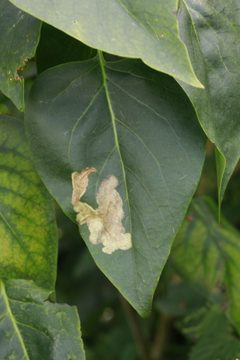
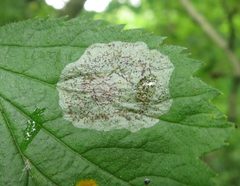
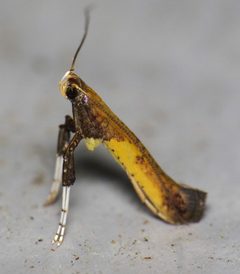
Gracillariinae is a of leaf-mining within the Gracillariidae, first described by Henry Tibbats Stainton in 1854. The subfamily contains diverse including Caloptilia, Gracillaria, and Sabulopteryx. Larvae are predominantly leaf miners, with most exhibiting a characteristic involving an initial sap-feeding instar with modified mouthparts, though some species have been shown to deviate from this pattern. The subfamily has been subject to significant taxonomic revision, with phylogenetic studies in 2017 reorganizing generic placements among related subfamilies.
Pronunciation
How to pronounce Gracillariinae: /ɡræˌsɪlɛərˈaɪniː/
These audio files are automatically generated. While they are not always 100% accurate, they are a good starting point.
Identification
Gracillariinae can be distinguished from related (Acrocercopinae, Lithocolletinae, Ornixolinae, Parornichinae, Marmarinae) by phylogenetic position and morphological characters including wing venation patterns and genitalia structure. Within the subfamily, are separated by features of the male and female genitalia, abdominal characters, and plant associations. The genus Sabulopteryx is distinguished from Aspilapteryx by wing venation, abdominal characters, and male and female genitalia.
Images
Habitat
Associated with diverse plant across various including forests, botanic gardens, and agricultural settings. Specific habitat associations depend on host plant distribution. The includes associated with both native vegetation and cultivated plants.
Distribution
Worldwide distribution with records from all major biogeographical regions. Documented from Brazil (Spinivalva gaucha), New Zealand (Sabulopteryx botanica), China (Caloptilia aesculi), Australia (revised classification of some ), and numerous other localities. The Sabulopteryx was previously known only from the Northern Hemisphere until the discovery of S. botanica in New Zealand.
Diet
Larvae are leaf miners, feeding endophytically within leaf tissue. Most have an initial sap-feeding instar with modified mouthparts, followed by tissue-feeding instars with chewing . However, Spinivalva gaucha has been documented as the first gracillariid without a sap-feeding instar, with larvae possessing chewing mandibles in all instars and feeding on upper leaf tissue from hatching.
Host Associations
- Passiflora - plantPassion fruit and related ; of Spinivalva gaucha
- Teucrium parvifolium - plantLamiaceae; rare shrub in New Zealand, of Sabulopteryx botanica
- Aesculus chinensis - plantHippocastanaceae; Chinese horse chestnut, of Caloptilia aesculi. First report of Hippocastanaceae association in Gracillariinae
Life Cycle
are laid on leaf surfaces. Larvae enter leaf tissue to form mines, typically beginning as narrow serpentine mines that expand to blotch formations. Most have an early sap-feeding instar followed by tissue-feeding stages. occurs either within the mine or after exiting to form a cocoon on the leaf surface. In Sabulopteryx botanica, larvae exit mines through a slit and pupate in transparent cocoons within folded leaves. In Spinivalva gaucha, the pupa discharges light yellow bubbles that scatter along the cocoon periphery before the emerges -first through the cocoon.
Behavior
Larvae are endophytic feeders, creating visible leaf mines. Some produce leaf shelters including rolls and stacks. are typically and can be attracted to light, though some species are rarely collected by standard methods. The includes species with high conservation concern when associated with rare or declining plants.
Ecological Role
Leaf miners that create distinctive damage patterns on foliage. Serve as hosts for including Sympiesis sp. (Hymenoptera: Eulophidae) recorded from Sabulopteryx botanica cocoons. Some are significant as agricultural pests, while others are of conservation concern due to host plant rarity.
Human Relevance
Some are economically important as agricultural pests. The includes species of conservation significance, such as Sabulopteryx botanica which is classified as 'Nationally Vulnerable' in New Zealand due to the rarity and declining status of its plant. of host plants has been suggested as a conservation strategy for threatened species.
Similar Taxa
- AcrocercopinaeFormerly contained some now placed in Gracillariinae; distinguished by phylogenetic position and morphological characters
- LithocolletinaeRelated leaf-mining within Gracillariidae; distinguished by genitalia and wing venation characters
- OrnixolinaeRelated ; some Australian previously assigned to Ornixolinae were reclassified to Gracillariinae based on phylogenetic analysis
- ParornichinaeRelated ; distinguished by morphological and molecular characters
More Details
Taxonomic History
The has undergone significant revision. A 2017 phylogenetic study by Kawahara et al. reorganized the classification, moving multiple among subfamilies. The genus Sabulopteryx was removed from synonymy with Aspilapteryx. Some Australian previously considered part of Ornixolinae were reclassified to Gracillariinae based on combined evidence from mitochondrial , , and bionomics.
Evolutionary Significance
The discovery of Spinivalva gaucha, which lacks the characteristic sap-feeding instar present in other gracillariids, has important implications for understanding the evolution of feeding habit diversity within the . This demonstrates that the typical gracillariid is not universal within the .
Conservation Biology
Some Gracillariinae have high conservation status due to dependence on rare or plants. The rediscovery of Sabulopteryx botanica from herbarium specimens after more than 50 years, followed by discovery of living , illustrates the importance of museum collections and cultivated plantings for conservation of specialized herbivores.
Sources and further reading
- BugGuide
- Wikipedia
- iNaturalist taxon
- NCBI Taxonomy
- Catalogue of Life
- Uncategorized | Blog - Part 38
- The exciting life cycle of a new Brazilian leaf miner | Blog
- A new leaf-mining moth, Caloptilia aesculi, sp. nov. (Lepidoptera: Gracillariidae: Gracillariinae) feeding on Aesculus chinensis Bunge (Hippocastanaceae) from China
- Diversity of Australian Ornixolinae (Lepidoptera: Gracillariidae) with taxonomic and nomenclatural acts within the related taxa (Acrocercopinae and Gracillariinae) based on the evidence of museomics, bionomics, and mitogenomics
- A new leaf-mining moth from New Zealand, Sabulopteryx botanica sp. nov. (Lepidoptera, Gracillariidae, Gracillariinae), feeding on the rare endemic shrub Teucrium parvifolium (Lamiaceae), with a revised checklist of New Zealand Gracillariidae