
Ectoedemia
Busck, 1907
Species Guides
11- Ectoedemia argyropeza(Virgin Pigmy)
- Ectoedemia clemensella
- Ectoedemia nyssaefoliella
- Ectoedemia platanella(sycamore leaf blotch miner)
- Ectoedemia populella(Poplar Petiole Gall Moth)
- Ectoedemia quadrinotata
- Ectoedemia rubifoliella
- Ectoedemia similella(Broken-banded Ectoedemia Moth)
- Ectoedemia trinotata
Ectoedemia is a of minute in the Nepticulidae, established by August Busck in 1907. The genus comprises four subgenera: Ectoedemia, Etainia, Fomoria, and Zimmermannia. are distributed across multiple continents including Europe, Asia, Africa, Australia, and the Americas. The genus is notable for its leaf-mining larval , with many species exhibiting narrow plant specificity on trees and shrubs.
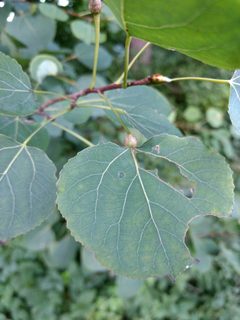
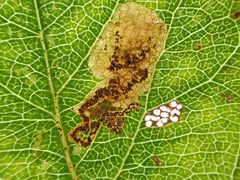
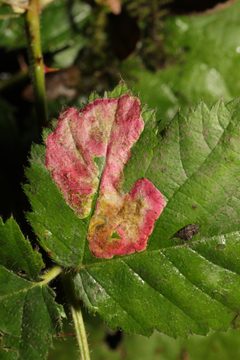
Pronunciation
How to pronounce Ectoedemia: //ˌɛk.toʊ.əˈdiː.mi.ə//
These audio files are automatically generated. While they are not always 100% accurate, they are a good starting point.
Identification
Members of Ectoedemia are distinguished from other Nepticulidae by genital and wing venation patterns, though specific diagnostic characters vary by subgenus. Subgenus Zimmermannia typically mine bark rather than leaves, separating them from leaf-mining subgenera. Species-level identification often requires examination of genitalia and knowledge of plant associations.
Images
Habitat
Forests and woodlands containing trees and shrubs, particularly those with Fagaceae (oaks, chestnuts), Betulaceae (alders, birches), Salicaceae (willows, poplars), Ulmaceae (elms), and Rosaceae. Some occupy more specialized such as cork oak woodlands in the Mediterranean region.
Distribution
Holarctic region (Nearctic and Palearctic), Oriental region, Indo-Malayan ecozone, Africa, and Australia. Within the Holarctic, the Ectoedemia (Fomoria) vannifera group shows a disjunct distribution between Nearctic and Palearctic regions with no shared . European species include those with disjunct distributions such as E. rosae in the French Alps and Norway.
Host Associations
- Quercus suber - for E. hendrikseni
- Quercus petraea - for E. heckfordi
- Quercus robur - for E. heckfordi
- Quercus ilex - probable for E. phaeolepis
- Quercus rotundifolia - probable for E. phaeolepis
- Quercus coccifera - for E. coscoja
- Quercus dentata - for E. chasanella
- Quercus serrata - for E. chasanella
- Quercus crispula - for E. chasanella
- Quercus acutissima - for E. chasanella
- Quercus gilva - for E. cerviparadisicola
- Castanea - Fagaceae
- Lithocarpus - Fagaceae
- Alnus - Betulaceae
- Betula - Betulaceae
- Ulmus - for E. ortiva
- Populus tremula - for E. argyropeza
Life Cycle
laid on plant; larva develops as (or bark miner in subgenus Zimmermannia), forming characteristic mines within host tissue; occurs in a cocoon, usually on the ground. Larval development time varies by and host plant. Some species exhibit a preliminary galling ('cecidian') stage before mine formation, as observed in E. argyropeza.
Behavior
Larvae are endophytic feeders, mining leaves or bark of plants. Leaf-mining create distinctive serpentine or blotch mines visible on host leaves. The includes both monophagous and oligophagous species, with many showing narrow host specificity at the genus or species level. E. argyropeza is parthenogenetic and highly sedentary, with clonal structure and limited . are typically and .
Ecological Role
Herbivore; leaf and bark miner on woody plants. Contributes to nutrient cycling through leaf damage and serves as prey for and other natural enemies. Some are associated with economically and ecologically important tree (Fagaceae, Betulaceae).
Similar Taxa
- StigmellaAlso in Nepticulidae with leaf-mining larvae; distinguished by genital and wing venation patterns, though definitive separation often requires microscopic examination
- Other Nepticulidae generaEctoedemia is distinguished by subgeneric classification (Ectoedemia, Etainia, Fomoria, Zimmermannia) based on and , particularly the bark-mining habit of Zimmermannia
Sources and further reading
- BugGuide
- Wikipedia
- GBIF taxonomy match
- iNaturalist taxon
- NCBI Taxonomy
- Catalogue of Life
- Western Palaearctic Ectoedemia (Zimmermannia) Hering and Ectoedemia Busck s. str. (Lepidoptera: Nepticulidae): five new species and new data on distribution, hostplants and recognition
- Western Palaearctic Ectoedemia (Zimmermannia) Hering and Ectoedemia Busck s. str. (Lepidoptera: Nepticulidae): five new species and new data on distribution, hostplants and recognition. Appendix A
- Gondwanan Nepticulidae (Lepidoptera)? Systematics and Biology of the Ectoedemia (Fomoria) Vannifera Group
- Taxonomic notes on the Ectoedemia suberis and angulifasciella species groups in Japan (Lepidoptera: Nepticulidae)
- Clonal diversity, population structure, and dispersal in the parthenogenetic moth Ectoedemia argyropeza
- Ectoedemia rosae, a new species with disjunct distribution in the French Alps and Norway (Lepidoptera: Nepticulidae)
- Ectoedemia rosae, a new species with disjunct distribution in the French Alps and Norway (Lepidoptera: Nepticulidae)
- A Global Phylogeny of Leafmining Ectoedemia Moths (Lepidoptera: Nepticulidae): Exploring Host Plant Family Shifts and Allopatry as Drivers of Speciation
- Early Leaf Abscission Has Little Effect on Larval Mortality of Ectoedemia cerviparadisicola (Lepidoptera, Nepticulidae) Associated with Quercus gilva
- Ectoedemia argyropeza (Zeller, 1839) sur Peuplier Tremble : traits de comportement inférés à partir de la distribution des traces d’activités subsistant sur les feuilles-hôtes (Lepidoptera, Nepticulidae)
- Phylogenomic inference of two widespread European leaf miner species complexes suggests mechanisms for sympatric speciation (Lepidoptera: Nepticulidae: Ectoedemia )
- The genome sequence of the Sycamore-seed Pygmy moth, Ectoedemia decentella (Herrich-Schäffer, 1855) van Nieukerken, 1986.